Most financial remedy cases don’t ‘go to trial’, for a host of good reasons: litigation is expensive, stressful and uncertain: even the strongest looking cases have been known to develop cracks when exposed to cross-examination.
Sometimes, these emerge after methodical and attritional cross-questioning, where counsel leads the witness through a series of narrowing possibilities before delivering the coup de grace. In other cases, the defects appear almost instantly, in answer to the gentlest of questioning, e.g.
Barrister: “Mr X, you say in your witness statement that you won’t earn a bonus”
Witness: “Do I?”
Barrister: “Yes, you do. Please turn to page 184”
Witness: “[pause]… That’s… the first time I’ve seen that document” [Cue side-eyed glance from counsel back to instructing solicitor]
Now, there’s often an innocent explanation for a witness not recognising his own statement: he might have ignored the advice to re-familiarise himself with it in advance, or he might simply have frozen. Everyone is familiar with the ‘Mastermind effect’, where contestants fluff easy questions under the spotlight. Giving evidence can be bewildering and some people momentarily get confused as to whether they are being referred to a witness statement, a position statement or one of the other myriad statements of case. (See my earlier blog on Skeletons, Position Statements & Notes).
But sometimes the witness doesn’t recognise his statement because, while it bears his signature, it’s not really his own account, written in his own words. It’s a collaborative effort between lay client and his legal team: drafted by an associate, advised upon by counsel, edited by the partner, sometimes over and over by email, before being ultimately signed off by the witness.
So what? you might say. There is nothing wrong with lawyers assisting in the drafting of a witness statement. Indeed, every witness statement involves a degree of artifice. Lay clients don’t generally express themselves in grammatically correct, numbered paragraphs, which address all of the relevant MCA s.25 factors. A lawyer’s guidance is helpful, if not essential, to ensure a witness statement covers the relevant issues, omits the irrelevant or inadmissible ones, and conforms to good case management standards without descending…
“…into a number of personal, and prejudicial matters, directed at H which, in my view, were irrelevant to the matters at hand” (Peel J, WC v HC [2022] EWFC 22 at [1(i)].
The twin dangers of drafting witness statements
Sometimes, with the best intentions of ensuring a client’s best evidence is heard on all relevant issues, a witness statement can be so heavily re-drafted that it ends up reading more like a position statement. Conversely, in others, the re-drafting has been so light to allow a client free rein to cover all sorts of material that shouldn’t be contained in a witness statement.
Legal ventriloquy
In the first case, the witness’s own voice becomes replaced by the ventriloquised arguments of the lawyers (‘gottle o’ geer’); whereas, somewhat ironically, an advocate’s position statement ends up looking a witness statement. The witness sets out his ‘evidence’ in relation to legal concepts (non-matrimonial assets), argues the case, or – and I have seen this done – cites case law.
Conversely, the advocates lodges a position statement/ skeleton argument which effectively gives evidence by proxy (‘my client would / will say’). This is perhaps unavoidable at an FDR that takes place before exchange of s.25 statements, where the tribunal is not making findings of fact, and is helped by getting the gist of what the parties will say. It is not acceptable for a hearing where live evidence is actually being heard.
Maybe this is all to do with evolution. A generation or two ago, barristers, solicitors and lay clients had very distinct, even siloed roles in litigation. Barristers were independent and distant figures, separate both from instructing solicitors (when attending a solicitor’s party risked a charge of touting for work), and lay clients (from whom, mindful of the cab rank rule, they were careful not to personally identify with). Nowadays, such formality has broken down, arguably for good reason: litigants who are paying for an expensive service should expect a sympathetic and supportive ear. But with barristers increasingly referring to ‘my legal team’, suggesting a united front and common purpose, there is a danger that the distinction between lawyer and client – and between advocacy and evidence – is watered down and sometimes lost altogether.
Letting the client get it off his chest
In the second case, all rules about witness statements – which actually do exist, even in the family court – are roundly ignored, and what is produced is a series of opinions, comments and argument about the case. The family court has always applied a more relaxed regime in terms of evidence than the Crown Court or the county court, and this is not to suggest that family lawyers need to dust off a copy of Archbold to work out the statutory exceptions for the admissibility of hearsay. But even in the family court/ Financial Remedies Court, there comes a point.
What are the rules and what do they say?
FPR 22 and PD22A, which are closely based on CPR 32 and PD32A, set out a series of detailed provisions about evidence generally and witness statements in particular (22.4) which, let’s be honest, isn’t an overly worn out section in most copies of the Family Court Practice. Evidential arguments don’t often arise (hands up, who has drafted a witness summary, notice to admit facts, or dealt with a deposition in a family case: see FPR 22.15, 22.9 and 24.7) . And where they do, most judge’s preference is to get on with it, and not have valuable court time used up on sterile argument about something which ultimately isn’t going to make much of a difference.
Happily, when it comes to witness statements, there is no need to wade through all of the detailed provisions. On 10 November 2021, Sir Andrew McFarlane handed down a three page President’s Memorandum on Witness Statements which should be essential reading for anyone drafting a statement. The ‘fundamental requirements’ are stated as follows:
4. Witness statements tell the parties and the court what evidence a party intends to rely on at a final hearing. Their use has the key added benefit of promoting the overriding objective by helping the court to deal with cases justly and proportionately, including by helping to put parties on an equal footing, saving time at the final hearing and promoting settlement in advance of the final hearing.
5. Witness statements must only contain evidence from the maker of the statement.
6. The statement must be expressed in the first person using the witness’s own words (PD 22A para 4.1).
7. A witness statement must not:
a. quote at any length from any document;
b. seek to argue the case;
c. take the court through the documents in the case;
d. set out a narrative derived from the documents;
e. express the opinions of the witness; or
f. use rhetoric.
Facts, information and belief
8.A witness statement may only set out matters of fact and matters of information and belief (para 4.3).
9.Matters of fact include past facts (i.e. events which have happened) and future acts (i.e. events which are expected to happen). A statement may state only those matters of fact of which the witness has personal knowledge and which are relevant to the case (para 4.3(a)).
10. The statement must indicate the source of any matters of information and belief (para 4.3(b)). Evidence about proposed child arrangements or, in a financial remedy case, about needs, will be matters of information and belief. Therefore, where such evidence of such information and belief is given, the source or basis for that belief must be stated
In relation to length, and potential sanctions
Length of the statement
15. A witness statement must be as concise as possible without omitting anything of significance.
16. As a general standard, a witness statement should not exceed 15 pages in length (excluding exhibits). This page limit is a statement of best practice and does not derogate from the limit of 25 pages in PD 27A para 5.2A.1, which should be regarded as a maximum.
Finally, in relation to sanctions, the Memorandum states as follows:
17. The court has a power under FPR 22.1(2) to exclude evidence that would otherwise be admissible. The court will consider excluding under this rule a witness statement which materially fails to comply with the standards in this memorandum. The court also has power under CPR 44.11(1)(b) to disallow the costs incurred in preparation of a non-compliant witness statement.
The President’s Memorandum is repeated at paragraph 22 of the Efficiency Statement below a High Court level (paragraph 22). The earlier Efficient Statement for cases allocated to. High Court judge contains the following pithy warning:
[11] The parties’ section 25 statements must only contain evidence. By virtue of FPR PD22A para 4.3(b) the statement must indicate the source for any matters of information and belief. On no account should a section 25 statement contain argument or other rhetoric (before a High Court judge)
Citations of the President’s Memorandum
It’s perhaps surprising, given its importance, and given the increasing tendency of family courts to pick up on procedural fubars, that the President’s Memorandum has been cited in a total of two published judgments in the past four years:: Mostyn J in the child abduction case of AO v LA [2023] EWHC 83 (Fam), where a passing reference is made at [57], and HHJ Reardon in DP v EP (conduct: economic abuse: needs) [2023] EWFC 6 (B)
“The President’s Memorandum… made it clear that the purpose of a witness statement is to “tell the parties and the court what evidence a party intends to rely on at a final hearing” [para 4]; they “must only contain evidence from the maker of the statement” [para 5]; and they “must be expressed in the first person using the witness’s own words” [para 6]. H’s s 25 statement did not comply with the guidance in that Memorandum. It would, in my judgement, have been much better if H’s witness statement had been confined to matters about which he did have direct knowledge, and the remaining evidence had been produced by whoever had in fact obtained it: presumably his legal team, or in some instances, I believe, his son-in-law who H says has assisted him throughout this litigation.”
So, in terms of judicial comment, it is necessary to look beyond to family court to see how other jurisdictions deal with the problem of witness statements straying from their proper purpose.
Commentary from another jurisdiction.
The first point to acknowledge is that caution must be exercised before transplanting judicial utterances from a different area of law, particularly where different procedural rules and Practice Directions apply. For example, within the Business and Property Court, CPR Practice Direction, PD57A-C and PD32 para 18 are highly prescriptive, the purpose of which is
These provisions have no application to the family court (McFarlane P observed, the family court did not need an equivalent, ‘at least not at the present time’)
However, while different procedural rules apply, it is interesting to note the sanctions exercised by judges sitting in the Business and Property Court or Commercial Court, to attach no weight to such evidence or to exclude it altogether:
[39] Mr Goldberger would not be allowed at trial to give oral evidence which merely recites the relevant events, of which he does not have direct knowledge, by reference to documents he has read. Nor would he be permitted at trial to advance arguments and make submissions which might be expected of an advocate rather than a witness of fact. These points are made clear in paragraph 7 of Appendix 9 to the Chancery Guide 7th ed (2013) which is as follows:
“A witness statement should simply cover those issues, but only those issues, on which the party serving the statement wishes that witness to give evidence in chief. Thus it is not, for example, the function of a witness statement to provide a commentary on the documents in the trial bundle, nor to set out quotations from such documents, nor to engage in matters of argument. Witness statements should not deal with other matters merely because they may arise in the course of the trial.”
[40] Nor would Mr Goldberger be permitted to give expert opinion evidence at the trial. A witness of fact may sometimes be able to give opinion evidence as part of his or her account of admissible factual evidence in order to provide a full and coherent explanation and account…..Mr Goldberger, however, has expressed his opinions on market practice by way of commentary on facts of which he has no direct knowledge and in which he cannot give direct evidence. In that respect he is purporting to act exactly like an expert witness giving opinion evidence. Permission for such expert evidence has, however, been expressly refused.
[41] I recognise, of course, that these rules as to witness statements and their contents are not rigid statutes. It is conceivable that in particular circumstances they may properly be relaxed in order to achieve the overriding objective in CPR r 1 of dealing with cases justly. I can see no good reason, however, why they should not apply to Mr Goldberger’s witness statement in the present proceedings.”
[29] …I am unable to give the three witness statements any weight in these proceedings. In my judgment, Mr Fulstow’s fourth witness statement was based heavily on advice received from his solicitors as to what he should and should not say. It is not his independent recollection of events. It is a carefully constructed analysis of the documents then available to the Claimants. I can place no reliance on it. Mr Woods’ fourth witness statement was copied from Mr Fulstow’s, and, again, does not represent his independent recollection of events. Ms Rodrigues’ second witness statement is the result of what she was told by Mr Fulstow to say, and, again is not her independent recollection of events. Where the contents of these witness statements are not corroborated by other sources (such as contemporaneous documents), I can have no confidence that the statements are truthful.
Conclusion
While procedural standards have been tightened up over the past few years, no one is suggesting that the court is going to impose an ultra-strict regime when it comes to the contents of a witness statement;
However, anyone drafting a witness statement should be conversant with the contents of the President’s Memorandum and para 7 in particular;
While the pressures of litigation, or the force of a client’s instructions, might mean that one can never remove all impermissible material or comment, these should be borne in mind as best practice;
While the strictures of CPR PD57A-C do not apply, McFarlane P has raised the prospect that this might change.
Ultimately it is in the interests of any client that he can come up to proof in the witness box, and not be exposed as someone who is unfamiliar with the contents of his own statement, or who has been allowed too much leeway in setting out what he might really thing – but shouldn’t say!
It’s often the financial remedy cases that involve non-family barristers or judges, which are the most interesting. There’s something about an outsider’s perspective which can illuminate legal principle and remind us that ‘…the Family Court is not a desert island’.
Lord Sumption put it best in his speech to the At A Glance conference (‘Family Law at a Distance’, 2016) when he wrote:
“…I have always taken the view that legal specialisations are essentially bogus. At the bar, I liked to trespass on other people’s cabbage patches. As a judge I do it most of the time.”
On 16 May 2025, the Court of Appeal handed down judgment in Awolowo v Awolowo and Linksave Ventures [2025] EWCA Civ 641 in which the earlier decision of HHJ Vincent (sitting as a s.9(1) judge) was overturned. The Court of Appeal comprised Moylan LJ and two ‘non-family’ judges (Popplewell LJ, Sir Christopher Floyd). H retained family counsel (Mr Paul Infield) while the other parties (W and the intervening company [IV]) were represented on appeal by leading (non-family) public law specialists.
Issue
The case concerned the family court’s treatment in financial remedy proceedings (Part III) of debts allegedly owed by one party (the first respondent husband) to his brother’s company in Nigeria (the second respondent interveners), and the application of the rule in Harman v Glencross [1986] Fam 81 which is one of those authorities that sounds familiar, but only rarely crops up in practice.
Adowolo is a rare example of a successful appeal against a judge’s findings of fact. The appellant (wife) appealed against the order of HHJ Vincent dated 14 September 2023, on the basis that the court had erred in law, in relation to (1) the effect of a foreign order; (2) the failure to draw adverse inferences in relation to H and the IV’s lack of evidence; (3) the criticism of W’s lack of evidence, and (4) mis-applying the burden of proof.
Facts
The essential facts of this complicated case were as follows:
In his Form E, H asserted that the family home in Hendon, worth £1.8m, was effectively held on trust for his brother’s company, who had allegedly advanced a loan of £1.6m for its purchase;
W applied to set aside this loan pursuant to s.23 of the 1984 Act (counterpart to s.37 MCA), asserting that the loan was a sham intended to defeat W’s claim
H relied upon a ‘Loan Agreement’ between the intervener company, H and another Nigerian company which recorded an interest free loan in the Naira equivalent of £1.6m, repayable “by installments [sic]” after a year. No repayment schedule was attached;
The IVs relied upon a ‘Charge of Whole’ dated 20 May 2019 wherein H purported to grant a charge over the family home;
In March 2019 H, the IVs and another company entered into a settlement before the Nigerian courts, providing for H to repay £1.6m in four instalments within one year (June 2019 to June 2020). The IVs duly applied to register this judgment in the (English) High Court
H thereafter stated that he was unable to pay the agreed instalments, but would agree to a sale of the family home;
Charging Order application
In October 2019, the IVs applied for a charging order against the family home. Master Eastman granted an interim charging order but adjourned the application for a final order, pending the hearing of W’s Part III application, which had been listed on 8-10 June 2020. As Moylan LJ commented in the CA, “[39] …the terms of this order… would be consistent with the decisions in Harman v Glencross [1986] Fam 81,Austin-Fell v Austin-Fell [1990] Fam 172 andKremen v Agrest[2013] EWCA Civ 41 [per Moore-Bick LJ]
[40] These cases establish that, as set out in Kremen v Agrest at [11], when “the available assets are insufficient to satisfy both the financial claims of one former spouse (usually the wife) and the debts of the other (usually the husband) a conflict arises between the interests of the claimant and those of the creditors”. In those circumstances, at [13], a balance has to be struck between the interests of a judgment creditor and the interests of a wife. In my view, although it is not necessary to decide the question for the purposes of this appeal, the effect of these authorities is that the issue of whether a charging order should be made in favour of a creditor, and on what terms, is determined by the court when also determining the financial application (through the balancing exercise referred to) and not prior to that determination. They also support the conclusion that this balance has to be struck before a charging order is made or, at least, before it is made final.
First Instance
As noted above, within W’s Part III application, she asserted the loan document and other documents relied upon by H and the IV were sham; alternatively, had been created with the intention of defeating W’s claims, whereby it should be set aside. The IVs defence was that the loan agreements were genuine and that if she sought to set aside the Nigerian court’s order (the settlement) she should apply to set it aside in Nigerian, and not England and Wales, which lacked jurisdiction.
The original hearing of W’s Part III claim was adjourned, seemingly because the family court had no jurisdiction to deal with the Master’s charging order. W accordingly, in May 2022, applied to set aside the Nigerian judgment and also the interim charging order.
The general procedural muddle caused the case to be referred to Peel J who listed the hearing before HHJ Vincent, sitting as a Deputy Judge of the High Court, who found (in effect) that she could not attach much weight to W’s evidence because of the absence of documentary evidence produced by her in support. The court concluded that while W had ‘established reasonable grounds for suspicion’ she was unable to establish that the loan agreement was a sham.
Court of Appeal
In the CA, the applicant wife and the intervening third party were represented by public law silks and juniors. Only the first respondent husband was represented by a family barrister.
W argued that the court’s decision was materially flawed in that the judge:
failed to analyse the evidence property or taken into account a range of material factors such as conflicting dates within the documentation relied upon, or reference to a company which had not by that date been incorporated;
misunderstood aspects of the case, including the status of the Nigerian judgment, which had been taken as ‘effectively determinative of the genuineness of the alleged loan’, and
failed to take into account H and the IVs lack of documentary evidence in support, whereby the court should properly have drawn adverse inferences against them;
H and the IV responded that the judgment had been careful and balanced, in accordance with its obligations to identify the crucial legal points and advance reasons for deciding them (Fage UK Ltd v Chobani UK Ltd [2014] EWCA Civ 5 per Lewison LJ at [114-117], Volpi v Volpi [2022] EWCA Civ 464per Lewison LJ at [2-5] at [65], and that the appeal was no more than an ‘impermissible attempt to re-argue that judgment, based upon a selective reading of the judgment…’. Counsel for IV accepted that while the burden of proof might shift but on the facts of this case, that position had not been reached.
Determination per Moylan LJ (with whom other members of the court agreed)
(1) The trial judge had made a number of errors which vitiated her decision. Accordingly, this was one of the rare case (cf. Volpi) in which an appellate court would interfere with a trial judge’s findings of fact;
(2) Firstly, in relation to the status of the Nigerian settlement:
[94] I have, of course, considered the judgment as a whole and have borne well in mind the advantages the judge had over this court and that the appeal could not succeed if it was based on the type of arguments referred to by Lewison LJ in Volpi v Volpi. I have, however, been persuaded that the judge’s finding that the loan was genuine cannot stand, in particular, because a critical element of her analysis was wrong and because she failed to consider, and misunderstood, a highly relevant part of the evidential picture.
…
[96] Put simply, the judge’s understanding of the effect of what had happened in Nigeria and London was wrong. The Nigerian court had not “scrutinised” the steps taken by the Intervenor; the Nigerian court had not “judged [the debt] to be legitimate”; the loan agreement and other “documents” had not been “accepted and approved by the High Court in Nigeria as valid evidence of a debt owed by the husband to the intervenor company”; and the judgment had not been ”entered on that basis”. As set out in that court’s order of 27 March 2019, all it provided was that: “Terms of settlement dated and filed on 21/3/2019 is entered as Judgment in this suit”. There was, I repeat, no adjudication in respect of the validity of the debt at all.
[97] The judge was also wrong because the English court had not “judged” the debt to be “legitimate”. The Nigerian judgment had simply been registered without any consideration of whether the underlying debt was legitimate.
[98] These, therefore, comprise a “demonstrable misunderstanding of relevant evidence” as well as “critical” findings of fact which have no basis in the evidence.
(3) Second, in relation to failure of H and the IV to produce documentation that should have been available. Adverse inferences should have been drawn:
[99] The second substantive error which vitiates the judge’s conclusion is that she failed to consider, and misunderstood, a highly relevant part of the evidential picture. The judge seemed to consider that her analysis was limited to the oral and documentary evidence which had been given in the case and that the absence of further documentary evidence was a point against the wife and not the husband and the Intervenor.
[100] In my view, this was a case as referred to by Arden LJ, in which the absence of documents was significant. It was a significant factor against the husband and the Intervenor which the judge failed to take into account at all. In respect of the Intervenor, there clearly would be company accounts and other documents which would be expected to be corroborative of a loan. The Intervenor produced no documents corroborative of the loan agreement or of the existence of the loan or which went to the company’s financial circumstances at relevant and material dates, including 2009.
[101] The absence of such evidence was a striking and clearly materially significant factor which required to be included in the judge’s analysis of the evidence, including as to the credibility of the evidence given by the husband and his brother. If, as the husband’s brother said, “the money loaned was made to De Skyline in Nigeria” (my emphasis), it would be expected that both companies would have documents evidencing the same.
[102] The judge did not refer to this at all when considering their evidence and case. Rather, and with all due respect of the judge, she inverted the position and took the absence of such evidence against the wife…
[103] As Sir Christopher Floyd observed during the course of the hearing, any balanced analysis of the evidence required the judge to take into account the almost complete absence of any documents (contemporary and otherwise) from the husband and the Intervenor in support of their case. The judge could not undertake the required balanced assessment without taking that into account.
(4) Third, the court failed to take into account certain relevant evidence, or inconsistencies in H and IV’s account as to how money had been lent, and in its approach to the burden of proof:
[108] Finally, I noted above (paragraph 62) that another way of describing the preliminary issue would be, instead of being whether the loan agreement was a sham, simply to determine whether any such debt existed. This is, of course, relevant to the burden of proof, an issue which was addressed, albeit briefly, during the course of the hearing. Was it for the wife to prove that there was no such debt or was it for the Intervenor and the husband to prove that there was such a debt? If it was the latter, then (see paragraph 66 above) the burden of proof would be on the husband and the Intervenor. If, as in my view they are, Mr Infield and Mr Stein are correct in saying, respectively, that the “main issue was, in effect, the provenance of the money for the purchase of the family home” and the “issue at the heart of the case is the source of the funds for the purchase of the” family home, it was for the husband and the intervenor to prove the provenance/source and that it was a loan from the Intervenor. This will, therefore, be an additional matter which will need to be addressed at the rehearing below.
“[44] It does not seem to me that the law is now much in doubt. It is encapsulated in the following passages from Baroness Hale of Richmond’s judgment in In re B [In re B (Children) (Care Proceedings: Standard of Proof) (CAFCASS intervening)[2009] AC 11) which, though stated to be applicable to care proceedings are, I think, of more general application in civil proceedings: ’64. … Lord Nicholls’s nuanced explanation [in In re H] left room for the nostrum, ‘the more serious the allegation, the more cogent the evidence needed to prove it’ to take hold and be repeated time and time again in fact-finding hearings in care proceedings …’
One of the sobering experiences of training to be a lawyer – the dawning realisation that it isn’t all dramatic cross-examination and fighting for the underdog – is legal research. Like learning a new language (let’s say, German), it’s a long and often tedious process. Some trainees, admittedly, seem to enjoy the tedium more than others. I was firmly in the ‘not enjoying this tedium’ camp.
My own experience as a pupil in the mid-90s involved a mixture of the mundane and the complicated.
Mundane: going to the law library to find the authority, going back to the law library to find the correct authority (Official Law Report best, then All England, then FLR etc.) and the endless photocopying: should it be one or two pages of judgment per page of photocopy? An outsider might be surprised at the strength of senior lawyers’ views about zoom magnification and borders. So, back to the copier I would go, to fantasise about the claim I would bring against chambers for the damage to my retinas from exposure to all of the UV light. When this task was completed, then came creating bundles of authorities, making sufficient hard copies of my pupil master’s skeleton, and generally becoming dextrous with treasury tabs and tying red tape over briefs.
Complicated: developing an understanding of how the law works: the relationship between primary and secondary legislation, the concept of precedent (‘stare decisis’), and, above all, learning how to read a reported judgment. This may sound obvious to a non-lawyer, but it is often very difficult in considering a judgment to separate out the wheat (the binding ratio of a judgment) from the chaff (the non-binding comments, or dicta), particularly in a discretionary area of law such a family law.
In short, there were – and there are – no shortcuts to becoming a good lawyer and for all of the aforesaid tedium, this was all necessary and part of learning the essential craft of becoming a barrister (in my case), a solicitor or a legal executive.
Impact of internet and paperless working
Over time, some of these mundane tasks have become redundant. The photocopiers which were once the engine room of chambers now lie almost dormant. A trainee’s daily step count is, I suspect, a fraction of what it used to be: nowadays, there is rarely any need to leave the office or visit a law library, with the attendant opportunities for dragging one’s feet and stopping to have a cigarette. Practically everything is online, ranging from (eye-wateringly expensive) subscriptions to practitioner text books and law reports to the free resource of court judgments on BAILII and the National Archives.
While BAILII and the National Archives are tremendous legal resources and exercises in open justice, they should be used with the following health warning in mind: these judgments are, in effect, raw material. They have not been curated by professional law reporters who have summarised the essential facts and the ‘ratio’ in the headnote.
While the impact of the internet has been hugely positive in some areas (notably how quickly legal research can be undertaken), the free availability of judgments creates its own problems: reliance on inadmissible authority, not applying the rules of precedent, failing to distinguish the ratio from the dicta. To put it bluntly, a little knowledge can be a dangerous thing.
Just as there are no short cuts to learning German (despite building up a long streak on Duolingo) there is no short cut to becoming a good lawyer.
AI
And then came Artificial Intelligence. At some point in 2023, instead of being asked ‘How can you represent a client who is guilty?’, lawyers at social occasions would be asked, ‘Will AI replace you altogether?”. For the record, the model answer to these questions is “I don’t do criminal law, and I’m not the judge, but if I did, it would be fine provided I’m not misleading the court”, and ‘Not yet, but a lot of ‘legal work’ is bound to become automated. It’s difficult to see how AI would ever be able to provide legal advice but then again, we’ve all seen the film Terminator…”
I have dabbled with ChatGPT and found it quite impressive in some areas. Open questions like “should I take my dispute to court?” or “should I always trust my barrister?” elicited impressive answers which covered points such as proportionality, delay, a barrister’s professional duties to the court and client, the assessment of evidence etc. I then asked “why are English judgments anonymised?” and ChatGPT instantly provided me a comprehensive ten point response, at the sort of level I would expect from a trainee who had been given a couple of hours to think about the question.
AI Hallucinations
Out of interest, I then asked “What are the leading cases in financial remedies”, and AI suggested a case I had not heard of before, decided in 1996 which dealt with the overarching objective of ‘fairness’.
This was both surprising and anachronistic – because that principle arose from the later case of White [2000] UKHL 54. The proffered case title, which seemed plausible, turned out not to exist. The machine learning behind AI had invented a case: a superficially plausible case with what appeared to be a correct neutral citation but a false one nevertheless. Jennifer Lee has written an excellent article on these AI ‘hallucinations’ (‘Fabricated Judicial Decisions and Hallucinations‘)
Legal research, as described above, can be a slow and tedious process. In the last decade we have all come to rely on the internet instead of the law library as the repository of statute law, judgments and (for those who can afford it) practitioner text books. Thanks to the internet it is infinitely quicker to undertake legal research and there is an obvious temptation given the pressures of time to take the short cut of quoting from an online blog or using AI.
But here lies the real danger…
The canary in the mineshaft: R (Ayinde) v LB Haringey
On 30 April 2025, Mr Justice Ritchie handed down judgment in the above case [2025] EWHC 1040 (Admin), which arose out of a claim for homeless accommodation under s. 188(3) of the Housing Act 1996. Ritchie J dealt with two applications: (1) relief from sanctions and, notably, (2) a wasted costs application made against the claimant’s barrister and solicitors. The latter application, which is relevant to this blog, concerns a barrister (who I will not name, although she is named in the judgment) who cited five cases that it turned out did not exist.
My attention was first drawn to this case from two outstanding articles which set out the facts in greater detail, from the perspective of a housing lawyer (Giles Peaker’s Nearly Legal‘The cases that weren’t) and a general civil lawyer (Gordon Exall’s Civil Litigation Brief, ‘When Cases Relied Upon…Were Simply False’, both of which I would strongly recommend for a more detailed consideration of the legal issues.
The essential facts of the ‘wasted costs’ application were as follows:
The claimant’s statement of facts and grounds for a judicial review contained references to five non-existent cases (‘fake cases’ to adopt Ritchie J’s phrase);
When the defendant local authority sought copies of these authorities, they were palmed off in the following terms from the claimant’s solicitor (who, it should be noted, operate as a charitable law centre):
“there could be some concessions from our side in relation to any erroneous citation in the grounds, which are easily explained and can be corrected on the record if it were immediately necessary to do so. What you have not done is to refute the veracity of the points and legal arguments that prevailed against your position and any failures of your client to measure up to its obligations under the 1996 Act… let us agree that the citation errors can be corrected on the record ahead of our April hearing. Apart from adding our deepest apologies, we do not consider that we are obliged to explain anything further to you directly. You may better serve your organisation by giving attention not to the normative discoveries you have made, but whether you can locate the authorities in support of the points raised, which points you are clearly in agreement with“
This correspondence was condemned by the court in the strongest terms:
[46] That was, I must say, a remarkable letter. I do not consider that it was fair or reasonable to say that the erroneous citations could easily be explained and then to refuse to explain them. Nor do I consider it was professional, reasonable or fair to say it was not necessary to explain the citations. The assertion that they agreed to correct the citations before April never came true, for they never did. The assertion that no further explanation or obligation to provide an explanation was necessary or arose is, in my judgment, quite wrong. Worst of all, the assertion that the citations are merely cosmetic errors is a grossly unprofessional categorisation.
In court, counsel gave the following explanation for her reliance on the five fake cases;
“[53] …she kept a box of copies of cases and she kept a paper and digital list of cases with their ratios in it. She dragged and dropped the case of El Gendi from that list into this document. I do not understand that explanation or how it hangs together. If she herself had put together, through research, a list of cases and they were photocopied in a box, this case could not have been one of them because it does not exist. Secondly, if she had written a table of cases and the ratio of each case, this could not have been in that table because it does not exist. Thirdly, if she had dropped it into an important court pleading, for which she bears professional responsibility because she puts her name on it, she should not have been making the submission to a High Court Judge that this case actually ever existed, because it does not exist. I find as a fact that the case did not exist. I reject [her] explanation”
Matters proceeded to become worse for counsel:
“[55] What [counsel] says about this twice in submissions was that these are “minor citation errors”. When I challenged her the first time she backtracked on that and accepted they are serious. However, in her later submissions she returned to them being “minor citation errors”. She said there was no dishonesty and submitted that there was no material prejudice. Then she sought, remarkably, without having put in a bundle of authorities or anything in writing, to provide in submissions references to further cases which she did not put before the court, which she says made out the principles that she had put out in each paragraph containing the fake cases.”
“[58] The problem with that paragraph was not the submission that was made, which seems to me to be wholly logical, reasonable and fair in law, it was that the case of Ibrahim does not exist, it was a fake. I do find this extremely troubling. I do not accept [counsel’s] explanation for how these fake cases arose. I do not accept that she photocopied a fake case, put it in a box, tabulated it and then put it into her submissions. The only other explanation that has been provided before me, by Mr Mold, was to point the finger at [counsel] using Artificial Intelligence. I do not know whether that is true, and I cannot make a finding on it because [counsel] was not sworn and was not cross examined. However, the finding which I can make and do make is that [counsel] put a completely fake case in her submissions. That much was admitted. It is such a professional shame. The submission was a good one. The medical evidence was strong. The ground was potentially good. Why put a fake case in?”
…
[63] [Counsel] had moved on from fake High Court cases to fake Court of Appeal cases. I have no difficulty with the submission that the Respondent local authority had to ensure fair treatment of applicants in the homelessness review process, but I do have a substantial difficulty with members of the Bar who put fake cases in statements of facts and grounds.
[64] I now come to the relevant test. Has the behaviour of [counsel] and the Claimant’s solicitors been improper, unreasonable or negligent? I consider that it has been all three. It is wholly improper to put fake cases in a pleading. It was unreasonable, when it was pointed out, to say that these fake cases were “minor citation errors” or to use the phrase of the solicitors, “Cosmetic errors”. I should say it is the responsibility of the legal team, including the solicitors, to see that the statement of facts and grounds are correct. They should have been shocked when they were told that the citations did not exist. [Counsel] should have reported herself to the Bar Council. I think also that the solicitors should have reported themselves to the Solicitors Regulation Authority. I consider that providing a fake description of five fake cases, including a Court of Appeal case, qualifies quite clearly as professional misconduct.”
The court proceeded to make a wasted costs order against counsel and solicitor. One cannot help but think that a more experienced advocate would have either admitted the seriousness of the problem sooner or not made matters worse by proffering an explanation which the court rejected and found ‘extremely troubling’.
Conclusion
On a personal level, it is possible to feel sympathy for a very junior member of the Bar who appears to have taken a shortcut and relied on case citations seemingly thrown up by AI. While there was no factual finding to that effect, it is difficult to conceive of another explanation. And this problem is likely to recur, particularly in cases involving litigants in person.
There clearly was no attempt on her part to present a dishonest argument: the problem was that counsel was relying on fictitious cases rather than having undertaken proper legal research and found the actual cases in support.
This case has naturally drawn significant interest and the making of a wasted costs order, with the prospect of disciplinary proceedings, is little short of a professional nightmare.
However, Ayinde illustrates a number of broader points which are of general application, i.e.
The dangers of taking short cuts and relying on AI. Put simply, AI should either not be used at all, or should be used with the greatest possible care (with all authorities double checked and produced);
The seriousness with which a court will approach these issues when they arise;
Any lawyer proceeding in this way, making reference to cases that have been generated (hallucinations) will face the risk of wasted costs, public exposure (through publication of judgment online) and potentially disciplinary proceedings, regardless of whether the argument is properly made or not.
Ultimately, just as one cannot learn German by spending five minutes a day on Duolingo, one cannot litigate (certainly not in front of a High Court Judge) by taking the shortcut of using AI to do one’s legal research.
Alexander Chandler KC
8 May 2025
PS I am aware of the irony of having used AI to create the above image.
Intervenor claims take us – family lawyers – out of our comfort zone.
In financial remedy (‘FR’) work we habitually deal with discretion and grey areas: how generously needs should be assessed; whether a PNA has covered ‘real’ financial need; to what extent an asset should be regarded as marital and shareable? A bad day in court involves an outcome at the bottom end of a bracket. When a client’s evidence doesn’t come up to proof, that generally isn’t fatal: after all, the court’s function is ‘quasi-inquisitorial’, and the overarching objective is fairness. Generally speaking, there isn’t much risk on costs.
By contrast, intervenor (‘IV’) claims tend to be binary: either the IV can or cannot establish his interest. Where the parties have given materially different accounts and there is a dearth of documentary evidence, issues of credibility can be pivotal – so a bad day in court can mean the case is won or lost, and costs generally do follow the event – and IV cases can be very expensive indeed.
So, while IV claims are challenging and interesting, compared to the usual horse trading at FDR, they are not for the faint hearted. They can go wrong, spectacularly so.
[1] These are feral, unprincipled and unnecessarily expensive financial remedy proceedings.
Uddin is a lengthy judgment (200 paragraphs) but, for the purposes of this paper, its facts can be stated briefly:
H issued Form A in 2018. W issued a separate claim form seeking declarations that H held beneficial interest in properties held by third parties, and a controlling interest in an Indian restaurant in Essex (the New Chadni Restaurant, Burnham on Sea);
W’s trust claim was initially given priority over the FR claim – proceedings transferred to Business and Property Court, then to County Court, finally to the Family Court at Bristol where it was allocated to HHJ Wildblood KC;
The case had by that stage accumulated, in addition to H and W, seven respondents, including the legal owners and occupants of the two properties, in relation to the restaurant, a company and main its shareholder;
Spoiler alert: the judgment doesn’t start well for the W:
[7] … Before descending into the mass of detail in this case, I want to give an overview. Apart from the trust claims (which, as I explain, are meritless and misconceived), this case should have been simple.
…
[13]… I wish to emphasise that I have given repeated warnings, both during this hearing and in the pre-trial review in April that the pursuit of the trust claims could leave at least one party ‘wiped out’ by the costs. Further, because of the arguments that were advanced at the hearing in April, that hearing should have given the wife cause to reflect very carefully about the trust case that she was arguing. The arguments that I have heard at this hearing, even in the closing speech on her behalf, showed that no heed had been taken to my warnings or to the obvious weaknesses in her trust case.
It proceeds to get worse for the applicant – and here we are only at paragraph 24/200
[24] (ii) … The case has been in and out of court due to procedural infighting. In relation to the trust claims the wife has never set out in any meaningful sense how it is that she seeks to justify the claims or the shares that she seeks in the two relevant properties (High St and 4 Morland Rd); for instance, the case of Laskar v Laskar [2008] EWCA Civ 347 (to which I refer later) has simply been ignored by her.
(iii) The trust claims are hopeless. It is simply not necessary to descend into any form of lengthy analysis of the equitable principles of resulting and constructive trusts. In relation to both properties in issue (50-52 High St and 4 Morland Rd) there is no evidence that the husband made any direct financial contribution to the purchase of either property or to mortgage payments. There is no evidence of a common intention (express, implied or imputed) that he would have a share in them – quite the reverse, since it was the very clear intention that the legal title holders would be the beneficial owners of the two properties. From the start, the trust claims as presented bore the evidential difficulty of the wife (an outsider) seeking to establish that the holders of the legal title and the husband shared beneficial interests in properties that both title holders and the husband denied; that evidential reality has not been reflected in anything that I have heard on her behalf.
This downward trajectory continues for W’s advisers (for the avoidance of any doubt, this was not me) until a brutal conclusion:
[146] Regrettably, I think that it is extremely disappointing that the points that were made so clearly by the Respondent parties at the hearing in April about the applicable trust principles were not absorbed more carefully on behalf of the wife. The above passage shows a confusion of analysis between the law relating to constructive trusts and that relating to resulting trusts. The very short passage, cited as coming from Jones v Kernott (which it does not), is not a complete analysis of the law. No further arguments about the applicable law were advanced on behalf of the claimant. I have no bundle of authorities. No mention was made by the wife’s counsel of Laskar v Laskar [2008] EWCA Civ 347 or Marr v Collie [2017] UKPC 17. No explanation has ever been given as to why the wife asserts the beneficial interests that she does.
…
[152] In my opinion the wife’s trust claims have been unprincipled and have stuck rigidly to the contentions made at the outset of these proceedings without there being any sufficient analysis of the evidence as it is has come in or the law applicable to it.
…
[200] …these proceedings are a disgraceful example of how financial remedy proceedings should not be conducted. The wife may wish to take advice about why her case was presented in this way and why so much expense has been incurred.
While Uddin was a very unusual (and readable) case, it is far from unique when it comes to reported case of IV claims going spectacularly wrong, e.g.
Everybody’s favourite FR authority, TL v ML [2005] EWHC 2860, where the parties had incurred £474,000 in relation to assets worth £560,000);
KSO v MJO [2008] EWHC 3031 where case imploded under the weight of the costs incurred in interlocutory squabbling: Munby J (as he then was) commented:
“[80] The picture is deeply dispiriting. And it is not as if it is only the adults who suffer from the consequences of such folly. The luckless children do as well. The present case is a sobering, and for me deeply saddening, example. If, instead of spending – squandering – over £430,000 in costs, the wife and the husband had been able to resolve their differences at a more modest and, dare I say it, more seemly level of costs, there might very well have been enough left in the matrimonial ‘pot’ to house the wife and children and to enable the children to remain at their school, whilst still leaving something more than a mere consolation prize over for the husband. As it is, it is hard to see much being left from the wreck, not least after the trustee in bankruptcy has had his costs, expenses and remuneration. It is difficult not to be reminded at this point of Jarndyce v Jarndyce (see the Appendix). And the wife and the husband – and for this purpose I refer to them as the mother and the father, for that is what they are – are faced now with the wretched and thankless task of trying to explain to their daughters how it has all come to this.”
What lessons from these cases? IV claims are legally complicated, they can be procedurally messy, they turn not on issues of broad discretion but whether the various elements of a trust argument can be made out and evidenced, and they can be very expensive indeed.
Indeed, a good rule of thumb in an IV case (and indeed a TLATA claim involving family lawyers) is that, given the complexities of the law (‘the witches brew’ per Carnwath LJ[1]), there’s a good chance that someone – one of the barristers, solicitors or judge – is going to get the law very wrong.
Indeed, in terms of the court occasionally falling into error, one of the curious quirks about IV claims is that they are heard by judges sitting in the financial remedies court/ family court – who can make declarations as to beneficial interest in a IV claim, applying principles of constructive trust etc – but who have no jurisdiction to deal with freestanding TLATA claims, where currently (and there have been proposals to change this, since 2016) the family court/ FR court has no jurisdiction[2].
So, with apologies to those of who are already well versed in the lore/ law of IV claims, let’s go back to basics:
[B] WHAT IS AN INTERVENOR CLAIM?
Financial remedy claims normally involve two parties: Husband and Wife, or in same sex cases, Applicant and Respondent.
Pursuant to FPR 9.26B, the court (i.e. the family court) can join a third party (‘intervenor’) either (a) where it is ‘desirable’ to do so that the court can resolve all the matters in dispute, or (b) there is an issue involving the new party and an existing party which is connected to the matters in dispute, or desirable to join to resolve that issue.
The seminal point to note is that, where an intervenor is joined for the determination of a disputed preliminary issue (e.g. who is the beneficial owner of property/ shares etc.), the FR court resolves those issues not on the basis of the discretionary principles that only arise between divorcing spouses (MCA 1973) but as on general common law principles, e.g. constructive trust or resulting trust.
This was put most clearly by Mostyn J in TL v ML [2005] EWHC 2860, which is reputedly the single most cited judgment (at High Court level) in financial remedies:
[34] It is to be emphasised, however, that the task of the judge determining a dispute as to ownership between a spouse and a third party is, of course, completely different in nature from the familiar discretionary exercise between spouses. A dispute with a third party must be approached on exactly the same legal basis as if it were being determined in the Chancery Division
This can be a culture shock for family lawyers, because we live in a siloed legal world where FR practitioners normally steer clear of Chancery work (and vice versa). Normally, in FR work, we don’t have to concern ourselves with issues of beneficial ownership. I made this point, while sitting as a s.9(1) judge, in DDR v BRD [2024] EWFC 278:
[1] The family court does not normally have to resolve issues of beneficial ownership between divorcing spouses.
[2] In most financial remedy claims, a declaration as to the parties’ equitable interests would be: “…of very little value… it simply adds confusion and trouble and achieves nothing” (Fielding v Fielding [1977] 1 WLR 1146, per Ormrod LJ). A claim for financial remedies should normally “…be determined within the four corners of the Matrimonial Causes Act and on the application of the statutory criteria there set out”, not by reference to equitable interest (Prazic v Prazic [2006] EWCA Civ 497, per Thorpe LJ at [25])
“…ordinarily, in financial remedy proceedings, it matters little as between a husband and wife in whose name an asset is beneficially held. The court has wide dispositive powers to adjust ownership as part of its overall determination of the fair outcome. An exception to this general proposition is where a third party [intervenor] asserts a beneficial interest…”
[C] WHEN DO INTERVENOR CLAIMS ARISE?
Disputes over beneficial ownership
While a third party can be joined to a FR claim in many situations, the most common situation is in relation to a dispute about beneficial ownership of real property. For example, a Husband might assert in Form E that while he is the legal owner of a property, he holds it for his parents/ uncle/ brother etc. because they were too old/ didn’t have enough income to obtain a mortgage, so the family agreement is that it would be put in H’s name.
The Wife might in response say, that’s the first I’ve heard of it. Also, that the separation was horrendous, H’s family are thick as thieves and they did something similar when H’s brother got divorced (etc.) and they asserted an interest, produced a declaration of trust etc.
This creates the classic scenario for an IV case – whereby, at the First Appointment, someone (usually counsel for H) submits that with H’s family in the background chomping at the bit, it might be sensible to have some case management directions to enable H’s family to be heard, which can begin a process which sometimes takes months to resolve, but can take well over year, to resolve the preliminary issue of the ‘intervener’s interest.
Other situations
The power to join a third party intervenor is not restricted to claims for beneficial ownership between family members. It can arise in other situations, e.g.
Exceptional situations where, on the particular facts of a case, the court is satisfied that third parties should be joined – e.g. the extraordinary facts of the litigation funder case of Simon v Simon and Integro Ltd [2024] EWFC 160.
[D] WHYDO WE HAVE INTERVENOR CASES?
Essentially, the point is to determine which assets come within the court’s reach: if the beneficial owners of a property are third parties, then obviously it cannot form part of the FR computation and distribution exercise. The late lamented Val le Grice QC put it best when he submitted: “…the size of the cake should be ascertained before the knife is applied to it” Gourisaria [2010] EWCA Civ 1019 per Hughes LJ at [12]
In terms of modern case law, this all dates back to the CA decision in Tebbutt v Haynes [1981] 2 All ER 238, to an age before neutral citations. BAILII and the National Archives; when reported judgments were more difficult to fine, outside a law library.
Tebbutt v Haynes was a case about issue estoppel. In the original ancillary relief proceedings, the court joined H’s mother and aunt before making declarations as to beneficial ownership. Aunt proceeded to issue a fresh set of proceedings in the Chancery Division. Could she do this? No, obviously she couldn’t.
The court dealing with financial remedies (then ‘ancillary relief’) had to be able to establish what property came within its reach:
“…It is fundamental to the s 24 [MCA] jurisdiction that the judge should know over what property he is entitled to exercise his discretion. If there is a dispute between a respondent spouse and a third party as to the ownership of a particular item of property which stands in the respondent spouse’s name, that dispute must be resolved before the judge can make an effective final order under s 24. There are only two ways of resolving such a dispute. Either the Family Division proceedings must be adjourned pending the trial of the claim in other proceedings, or the dispute must be decided in the s 24 proceedings by allowing the third party to intervene”
Where the court had joined third parties, inquired into those disputed issues and reached findings of fact, those findings were conclusive – in other words Aunt could not just re-start the litigation in another Division:
“…It seems to me that, under s 24 of the 1973 Act, if an intervenor comes in making a claim for the property, then it is within the jurisdiction of the judge to decide on the validity of the intervenor’s claim. The judge ought to decide what are the rights and interests of all the parties, not only of the intervenor, but of the husband and wife respectively in the property. He can only make an order for the transfer, to the wife, of property which is the husband’s property. He cannot make an order for the transfer to the wife of someone else’s interest. So, in order to make an order under s 24, it must be within the jurisdiction of the judge to determine what are the various rights and interests in the property not only of husband and wife but also of any other persons who claim an interest.” per Denning MR at p. 242.
So, there are two alternatives: (1) join the third party so that the (family) court can resolve the disputed issues of beneficial ownership (etc.) preliminary to resolving the financial claims of the main parties (H and W), or (2) stay the financial remedy proceedings pending the conclusion of ongoing proceedings which would determine those disputed issues.
First alternative (normally preferred) – joining a third party intervener
Subsequent authority has established that the first alternative (joining a third party intervener) is normally preferable.
In Baker v Rowe [2009] EWCA Civ 1162, Wilson LJ (as he then was) observed that it was normally ‘convenient’ for a third party to intervene as a party in the ancillary relief proceedings:
[23] …Ever since the decision of this court in Tebbutt v Haynes [1981] 2 All ER 238, it has been recognised as convenient that a third person who asserts a beneficial interest in property which is the subject of an application for ancillary relief following divorce should either be permitted as an intervenor, or ordered as a further respondent, to make his assertion within, and thus as a party to, the application, rather than that the existence or otherwise of his alleged interest be determined in separate proceedings in a separate court at a separate time, with the consequential risk of inconsistent decisions. It would be highly unfortunate, as well as unprincipled, if such a person, when joined as an intervenor or as a respondent only for convenience, were to find that, even were his assertion successful, a general rule against making any order for costs inter partes would operate against him.”
An important caveat is that for the determination to be effective and binding, the third party intervener must be joined as a party, per CA in Gourisaria v Gourisaria [2010] EWCA Civ 1019, per Hughes LJ (as he then was)
[19] I have no doubt that, ordinarily, intervention, if it is accepted, is much the best means of achieving a decision on all material matters in a manner which binds not only the spouses but also any third party…
[20] I also agree that a simple invitation to intervene is not by itself sufficient to produce an order which binds a third party who does not accept the invitation. That was the point which troubled Munby LJ. For my part, I respectfully agree with him and I particularly agree that neither TL v ML or Rossi v Rossi or any of the other cases go anywhere near suggesting otherwise. On the other hand, of course if an invitation to intervene is given and not taken up, that is undoubtedly something that the English court can and should take into account in deciding whether to proceed or not. There was in this case a plain means available to the brother to make his voice heard on the issue before the court, which was well advanced in considering the case.
…
[23] Accepting as I do the general proposition that it is highly desirable that issues between a third party and spouses should be resolved at the same time as the issue between the spouses, there will be some cases in which it simply cannot be done and there will be others where it could be done only at the cost of a price which ought not to have to be paid.
[24] In all those cases, indeed in every case, the question is a case management one, it is a case specific one and it calls for the exercise of the judge’s discretion.
As with all good things in life and law, there are exceptions, where FR proceedings are better stayed, e.g. where the disputed issue involves technical issues that might be more suitable to be heard at a specialist court, as recognised recently by the Court of Appeal in Bogolyubova v Bogolyubov and Privatbank [2023] EWCA Civ 547, where King LJ commented that: “[48] The dangers of second guessing the outcome of substantial future third party litigation was highlighted in George v George [2003] EWCA Civ 202”
[E] WHERE DO THEY ARISE?
An IV claim might arise anywhere. Anecdotally, for what it’s worth, the majority of IV cases I’ve dealt with have been heard in places like the Thames Valley (Reading, Slough, Staines) with large second and third generation immigrant populations. Almost all of my IV cases have involved families who originate from the Indian sub-continent.
I can’t explain why this might be, although it may relate to different cultural traditions, the importance of wider family ties, conventions of (sometimes extremely) generous familial support, and expectations of newlyweds living at first with the paternal family. Or it could just be that Anglo-Saxon families are much meaner when it comes to supporting children, and are more atomised (in terms of putting the nuclear family ahead of the wider family) so the subject matter of an IV claim is less likely to arise.
[F] HOW DOES AN IV CLAIM (OR HOW SHOULD IT) ARISE?
As a reminder, the test at FPR 9.26B mirrors CPR 19.2, i.e.
“(a) it is desirable to add the new party so that the court can resolve all the matters in dispute… or
(b) there is an issue involving the new party and an existing party which is connected to the matters in dispute… and it is desirable to add the new party…”;
(v) Under the first limb it must be clearly shown that an existing matter in dispute between the parties cannot be effectually and validly resolved without the joinder of the proposed new party.
(vi) Under the second limb it must be shown that there is a separate dispute between a party and the proposed new party and that it is desirable to hear the matters together. The question of whether it is desirable to hear the matters together extends to the commonality of evidence as well as the saving of costs.
Procedural rules that apply (but are rarely follows)
While these provisions are more honoured in the breach, this rule also that while the court can join an IV of its own motion (r.9.26B(4)), r.9.26B(5) confirms that the Part 18 procedure should apply whereby a proposed IV should
Issue an application notice (FPR 18.4), stating what order is sought and why the application is being made, attaching a draft order ( 18.7);
the application should be supported by evidence setting out the proposed intervener’s interest or connection with the proceedings (9.26B(5));
the application notice should be made on notice, and served in accordance with the provisions of 18.8; and
at least seven days’ notice must be given of the application ( 18.8(b)(i))[3].
Court’s discretion whether to join
The court accordingly exercises a discretion whether or not to join. No third party is entitled as of right to become a party in a FR case, causing untold delay and additional expenses (a.k.a. creating leverage for one spouse to wrest a better settlement).
Whether it will be desirable to join a third party IV will depend on the facts. This point cannot be too strongly emphasised. In Behbehani v Behbehani [2019] EWCA Civ 2301, the Court of Appeal underlined the following:
“[69]… It all depends on the circumstances…It would be wholly disproportionate to insist that, even where the wife is not seeking the transfer of the assets, all such persons should be joined to the proceedings and the issue of ownership determined before any financial remedies order can be made. There may be cases where joinder is appropriate in those circumstances, but it should certainly not be the rule.”
In some cases, the case for joining a third party may be overwhelmingly strong: the third party may have issued an application, set out a strong prima facie case, the issue at stake may be so pivotal to the FR proceedings that the case is going to be stuck until this issue (e.g. beneficial ownership) is resolved.
In others, it may be far obvious, e.g.
Where the disputed asset is of peripheral importance – e.g. an asset with limited net equity, or an asset which was inherited / non-marital in character;
Where the case can be resolved (or at least, an effective FDR can take place) without needing to go down the line of an active intervener claim, e.g. where the issues are narrow, or mainly concern points such as periodical payments;
Where the subject matter of the IV claim can reasonably dealt without joinder, e.g. if a family member seeks to recover a loan, could he attend as a witness, upon the undertaking of one party to repay him back from any award. (NB the court has no power to make orders in favour of third parties: Burton v Burton [1986] 2 FLR 419, Wodehouse v Wodehouse [2018] EWCA Civ 3009))
WHERE AN IV IS JOINED, WHAT DIRECTIONS SHOULD BE MADE?
TL v ML directions
The starting point has to be TL v ML where Mostyn J held as follows
[36] In my opinion, it is essential in every instance where a dispute arises about the ownership of property in ancillary relief proceedings between a spouse and a third party, that the following things should ordinarily happen:
The third party should be joined to the proceedings at the earliest opportunity.
Directions should be given for the issue to be fully pleaded by points of claim and points of defence;
Separate witness statements should be directed in relation to the dispute; and
The dispute should be directed to be heard separately as a preliminary issue before the financial dispute resolution (FDR).
Taking each of these four sub-paragraphs in turn:
Joinder (i) we have covered. In order to make the court’s determination binding on a third party, he has to be joined as a party.
Directions for pleadings (ii)
In A v A [2007] EWHC 99 (Fam), Munby J (as he then was) underlined the importance of points of claim and defence in an intervener claim:
[24] I do, however, entirely share the deputy judge’s view that directions should normally be given for such issues to be properly pleaded by points of claim and points of defence. In the present case the muddle, confusion and ambiguities in the wife’s case would have been more pitilessly exposed, and at a much earlier stage in the proceedings, had the presentation of her case been exposed to the intellectual stat which is one of the advantages of any system of pleading. Moreover, if the wife had been required to plead her case everyone would have had a much clearer idea, and at a much earlier stage, as to exactly what she was or was not asserting and as to exactly what the husband and the intervenors were or were not saying by way of defence. As it was, matters were wholly unclear even as late as the first day of the final hearing.
These should be directed to be filed sequentially, i.e., IV to file points of claim, then a defence from the party who will likely support the IV (e.g., Husband, if claim is made by his family), then a defence from the opposing party.
“[39] …Of course the ultimate trial required the family division judge to apply the law of property and the law of sham just as his brother judge would do in the Chancery Division. Careful preparation for that trial was necessary. However these impeccable directions do not require or permit the import of the CPR. In its essence the claim remains a claim by the wife against the husband. Ultimately it is a claim for discretionary relief. In this, as in many cases, there must be a preliminary issue trial to establish the extent of the assets over which the discretion is ultimately exercised. Here, as in many cases, the preliminary issue trial determines the claims and the rights of third parties. The preliminary issue trial is pendent on the originating application. It has no independent existence.
However, while the full panoply of CPR costs budgeting etc. has no application, principles of good case management and the overriding objective are common between the FPR and CPR – and it is suggested that practitioners drafting points of claim and defence in IV claims should be aware of the requirement that such documents should be “concise” (CPR 16.2)
Disclosure relating to IV claim.
When the court is giving a third party the opportunity to apply to intervene, it should direct the service of (a) Form A, (b) the relevant parts of the Form E etc., and (c) a copy of the relevant part of the First Appointment direction.
In due course, the court may have to provide for disclosure of the documentation relied upon (e.g. declaration of trust, conveyancing file etc.). In some cases, something approximating to standard disclosure might be needed.
But a point which is often lost in practice is that an intervenor should not generally receive all of the FR papers. The IV should receive everything relevant to the subject at large but FR proceedings are confidential and there generally should not be a direction for ‘a copy of the bundle to be disclosed to the interveners’ – since this will contain a huge amount of material which is private to the parties and irrelevant to the preliminary issue.
The court can rule on the extent of disclosure pursuant to its case management powers at FPR Pt 4.The point arose most recently in Bogolyubova v Bogolyubov and Privatbank [2022] EWFC 199 where Peel J joined the intervenor but directed that it:
“[43] …shall not be entitled to disclosure of any documents within the financial remedy proceedings unless agreed by the parties or ordered by the court. I refuse the specific disclosure sought by PrivatBank which in my view is not necessary, particularly in the light of my primary decision.:
Witness statements (iii).
I would suggest that in many cases, the costs of preparing pleadings and then witness statement may be disproportionate, and/ or could be await the FDR. Query if they should they be exchanged simultaneously (as in civil litigation) or sequentially?
Listing hearing before or after FDR (iv)
Similarly, given wider trends in the law towards NCDR, it many cases an FDR will be directed before the preliminary issue hearing. In a typical medium asset case, it may be preferable to bring all parties (including the IV) to an FDR to see if some sort of agreement is possible, before the costs have escalated all round. This, again, will depend on the facts in the case. Is it going to be possible to resolve the case with the intervenor issue still at large? Will the FDR judge/ private FDR evaluator be able to give a helpful indication in relation to the intervenor claim?
In Shield v Shield [2013] EWHC 3525 (Fam) Holman J declined to make any general comments about the timing of a FDR but observed that it would have been desirable and proportionate on facts of that case to list a FDR before the preliminary issue hearing:
[17] I would have thought that in this case this was a particularly opportune moment to have assembled all concerned (not necessarily the husband himself if he was physically or mentally unfit to attend) in a forum such as an FDR and to have a sustained attempt to see if a resolution to this awful conflict could not be found at a stage when there may be high litigation risk for all concerned.
[108] I note that there was no FDR in relation to the preliminary issue. Whilst, as been made clear in a number of cases, an FDR will not necessarily be appropriate to the resolution of a preliminary issue, I express the view that consideration should at least be given to the possibility of an FDR prior to the hearing of a preliminary issue. It may well have been the case here that the input of an experienced FDR judge might have helped to save this family from the course which it has taken.
SOME LAW (VERY BRIEF)
The critical point, already made, in every intervenor claim is that the applicable law:
“[66] …differs importantly from the law to be applied between the wife… [as to the former] the court is not performing a discretionary exercise but is determining issues of property law and associated fact. It is salutary for family practitioners to keep the distinction clearly in mind” Goldstone v Goldstone, (above) Hughes LJ
Accordingly, the determination of an intervenor claim involves the civil approach (has the party proven his/ her case to the required standard of proof[4]) as opposed to the family approach (what is fair, applying a quasi-inquisitorial approach).
In cases concerning real property, the operative law will be the law of trusts. Where the subject property was acquired as a home (i.e. within the ‘domestic consumer context’), the presumption will be that the legal owner(s) is also the beneficial owner(s) and that the most appropriate tool of analysis will be the constructive trust: see Stack v Dowden [2007] UKHL 17 at [56]; Abbott v Abbott [2007] UKPC 53 at [4]).
The court presumes that the legal owner(s) of property are also the beneficial owner(s), and the burden of proof will be on the party who asserts otherwise[5]. The standard of proof is the civil standard, i.e. balance of probabilities. If a party fails to discharge the burden of proof, the claim fails: there is no overarching duty of the court to consider the overall fairness of the outcome.
Where a property is acquired as an investment, these presumptions may not apply (Laskar v Laskar [2008] EWCA Civ 347). Equally, the court is not obliged to adopt a resulting trust approach with an investment property acquired by co-owners are domestically linked: see Privy Council case of Marr v Collie [2017] UKPC 17.
COSTS
Family Costs: the General Rule and the Clean Sheet
By way of overview, there are two main costs regimes that apply in respect of family proceedings:
the ‘General Rule’ is that, presumptively, each party will pay their own costs. This is set out at FPR 28.3, and covers ‘financial remedy proceedings’, which is defined at FPR 28.3(4)(b). Under the general rule, each party pays their own costs, save where, applying the checklist of factors at FPR 28.3(7), a party’s conduct warrants that they should pay the other side’s costs. Only open offers are admissible on costs, save at the FDR (where without prejudice proposals are admissible)’
the ‘Clean Sheet’, where the court applies a broader discretion and may make such order as to costs as it thinks fit. The clean sheet applies in cases that fall between two stools; that are neither (i) ‘financial remedy proceedings’ for the purposes of the (financial remedy) general rule, nor (ii) civil proceedings that involve the (civil) general rule that the unsuccessful party normally pays the successful party’s costs.
In ‘Clean Sheet’ cases, Calderbank (‘without prejudices save as to costs’) offers are admissible once judgment has been handed down.
The ‘clean sheet’ applies to intervenor claims because they are not proceedings for a financial remedy to which FPR 28.5 applies but proceedings ‘about’ or ‘in connection with’ them. In Baker v Rowe [2009] EWCA Civ 1162, Ward LJ explained at [35]: ‘…The orders might well have been made in ancillary relief proceedings but they were not orders for nor even in connection with ancillary relief. The rule must be construed purposively as my Lord explained in Judge v Judge … and in his judgment above. Proceedings between interveners do not come within the ambit of the rule. The judge making the costs order has, therefore, a wide discretion.’
The ‘clean sheet’ has been interpreted in some cases, and by some judges, as involving a ‘soft costs-following-the-event principle’ whereby the fact that one party has been successful will be the decisive factor:
In Baker v Rowe [2009] EWCA Civ 1162 per Wilson LJ at [25]. ‘…the fact that one party has been unsuccessful and must therefore usually be regarded as responsible for the generation of the successful party’s costs, will often properly count as the decisive factor in the exercise of the judge’s discretion.’
KS v ND (Schedule 1: Appeal: Costs) [2013] EWHC 464 (Fam) per Mostyn J at [21] ‘… It is certainly correct that by virtue of CPR 44.3(4) (which is applied to these proceedings by FPR 2010 rule 28.2(1)) the court has to consider the conduct of the parties; whether a party has been successful in whole or in part; and any admissible offers made by the parties (which, as I have pointed out, include Calderbank offers). These would be the first things to write on the clean sheet.’
In other words, contrary to the normal position in a FR claim (between H and W), the successful party or parties have a reasonable expectation of recovering the costs in an intervenor claim from the unsuccessful party. One might ask, since the court has been engaged in the equivalent to a civil claim (“…A dispute with a third party must be approached on exactly the same legal basis as if it were being determined in the Chancery Division”[6]), why should the outcome be materially different on costs?
SOME CONCLUSIONS
Drawing together the main strands of this paper:
Too often, an intervener will be joined – and enormous delay and cost will ensure – without (a) the procedural rules have been complied with, or (b) the court having applied its mind to whether this really is ‘desirable’, or can it be reasonably put off, e.g. for NCDR, or dealt with another way;
Where joinder may be desirable where an issue arises as to the beneficial ownership of real property, it may not be desirable (or proportionate) where the issue is an alleged loan, or where the property at issue is peripheral to the FR claim;
Bear in mind the detailed provisions of FPR r. 9.26B, which include that there “must” be a Part 18 application, supported by evidence (save, where an intervenor is joined of the court’s own motion);
In terms of case management directions, TL v ML remains the seminal authority, and the applicable rules are the Family Procedure Rules (not the CPR). Be careful when ordering disclosure of existing papers, not to infringe on the confidential nature of the FDR proceedings between H and W;
Recognise that an IV claim involves the application of principles (generally) of trust law and property law, and not the exercise of a broad-based discretion. Can the IV prove his/ her case?
It is important to get one’s tackle in order at the outset – as with TLATA – the factual and legal basis of the claim has to be established (and pleaded) at the outset. In IV claims the parties do not have the option of freewheeling along and working out their arguments just before FDR/ final hearing;
Costs will generally be at large (i.e. will generally follow the event) since IV claims fall outside the scope of FPR r. 28.3! Calderbanks can – and should – be sent.
Finally, for further reading, can I recommend two further resources
Dictionary of TLATA and Inheritance Act claims (3rd edition, 2025)
[3] Cf. requirement for 14 days’ notice where an application is sought for an interim order such as maintenance pending suit (r.18.8(1)(b)(i) and r. 9.7)
[4] As Lord Hoffman explained in Re B (Care Proceedings: Standard of Proof) [2008] UKHL 35 at [2]: “… If a legal rule requires a fact to be proved (a ‘fact in issue’), a judge or jury must decide whether or not it happened. There is no room for a finding that it might have happened. The law operates a binary system in which the only values are 0 and 1. The fact either happened or it did not. If the tribunal is left in doubt, the doubt is resolved by a rule that one party or the other carries the burden of proof. If the party who bears the burden of proof fails to discharge it, a value of 0 is returned and the fact is treated as not having happened. If he does discharge it, a value of 1 is returned and the fact is treated as having happened”.
Cast your mind back to the first time you sat in court and heard a judgment handed down, before you became familiar with its content, structure and duration.
I recall sitting as a pupil in the back of an overheated district judge’s chambers in Kent. The final hearing had largely passed me by. I hadn’t really followed either counsel’s submissions and in the soporific atmosphere I alternated between drifting off and waking up with an unpleasant jolt. (I blame the radiators.)
At the end of the hearing, the court’s judgment was thoughtful, balanced and thorough. But to a novice like me, and I suspect also to the lay clients, it was a strange and alienating experience. What was the point of the judge narrating the parties’ marriage? Why was he reading back to them extracts of their own oral evidence? Above all why was it taking so long, with the important bit – the decision – left, like a Victorian crime novel, until the very end?
I’m not sure what I was expecting. Possibly something closer in form and length to sentencing remarks after a criminal trial. I’ve subsequently come to understand that a judgment needs to tell the story, identify the issues, analyse the evidence, and explain findings of fact, all of which should be done before turning to the outcome. I’ve come to respect the art of pulling together the threads in a case, of making factual findings where, as often is the case, it is finely balanced. I’ve also learned, like many advocates, that while the outcome is only stated at the end, judgments tend to contain early warning signals (or ‘tells’): lavish praise of an advocate (‘Mr Chandler has made his points persuasively and tenaciously’) generally does not herald good news.
But what is the point of a court judgment, and to whom is it actually directed?
CONVENTIONAL REASONS FOR A JUDGMENT
Traditionally, there have been three main reasons for the court to deliver a judgment: the first two concern the parties and arguably (depending on your views about transparency) are private to them; the third, when it arises, involves a public interest in the judgment being published.
First, a judgment explains the court’s reasoning to the parties; rather like how you’d get one mark for getting a maths question right at school and four for showing your workings. In Flannery v Halifax Estate Agencies Ltd [1999] EWCA Civ 811, Henry LJ described the court’s duty to give reasons as a ‘function of due process, and therefore of justice’:
“…Its rationale has two principal aspects. The first is that fairness surely requires that the parties – especially the losing party – should be left in no doubt why they have won or lost. This is especially so since without reasons the losing party will not know (as was said in Ex p. Dave [1994] 1 All ER 315) whether the court has misdirected itself, and thus whether he may have an available appeal on the substance of the case. The second is that a requirement to give reasons concentrates the mind; if it is fulfilled, the resulting decision is much more likely to be soundly based on the evidence than if it is not.”
Sir Robert Megarry, formerly Vice-Chancellor of the Chancery Division, put it best when he wrote that:
“…the most important person in the court room… is the litigant who is going to lose… [every court should consider whether] …when the end comes, will he go away feeling that he has had a fair run and a full hearing”[1].
Conversely, successful parties aren’t normally as interested in knowing the reasons why they have won. They may feel that they were always in the right, whereby the court has vindicated their position. This is particularly frustrating for the lawyers who have toiled long and hard on a difficult case, where a lay client feels ‘it was already in the bag’.
Second, in the event of an appeal (always a perilous enterprise in financial remedies), the grounds are usually focused upon what was said or written in the judgment, with the following well-known caveats borne in mind:
“…The exigencies of daily court room life are such that reasons for judgment will always be capable of having been better expressed. This is particularly true of an unreserved judgment such as the judge gave in this case … These reasons should be read on the assumption that, unless he has demonstrated the contrary, the judge knew how he should perform his functions, and which matters he should take into account… This is particularly true when the matters in question are so well known as those specified in section 25(2). An appellate court should resist the temptation to subvert the principle that they should not substitute their own discretion for that of the judge by a narrow textual analysis which enables them to claim that he misdirected himself.” Piglowska v Pigloswki [1999] UKHL 27, per Lord Hoffman;
“…the judgment… has to be read as a whole and having regard to its context and structure. The task facing a judge is not to pass an examination, or to prepare a detailed legal or factual analysis of all the evidence and submissions he has heard. Essentially, the judicial task is twofold: to enable the parties to understand why they have won or lost; and to provide sufficient detail and analysis to enable an appellate court to decide whether or not the judgment is sustainable. The judge need not slavishly restate either the facts, the arguments or the law. To adopt the striking metaphor of Mostyn J in SP v EB and KP [2014] EWHC 3964 (Fam), para 29, there is no need for the judge to “incant mechanically” passages from the authorities, the evidence or the submissions, as if he were “a pilot going through the pre-flight checklist.” Re F (Children) [2016] EWCA Civ 546, per Munby P at [22]
Third, where the judgment has been handed down by the higher courts and either resolves a contentious legal argument or contains important guidance that can be cited in the lower courts, it will be in the public interest for the judgment to be reported. That after all is how the common law develops.
Law reporting used to be a slow and stately business: there was often a delay between a judgment being handed down and reported, sometime measured in years (to take a recent example, Munby J’s judgment in L v L [2006] EWHC 956 (Fam) is dated 2 May 2006 but was reported at [2008] 1 FLR 26). Then there was then the problem of access: it is increasingly hard to remember a time, before BAILII and the National Archives, where legal research involved trips to the law library, leafing through dusty volumes of old reports and endless and expensive photocopying.
Substantial growth in the publication of judgments
At the turn of this century a quiet legal revolution took place resulting in a massive increase in available judgments online. BAILII started operating in 2000 and following the Practice Direction of 11 January 2001 non-proprietary neutral citations were introduced. It is now infinitely easier to search case law, even without the assistance of expensive services such as Westlaw.
The “substantial growth in the number of readily available reports of judgments” around the turn of the century led to Sir Harry Woolf’s PD on Citation of Authority (9 April 2001). This remains essential reading. It applies to all courts apart from the criminal courts (cl. 5) and states which judgments can and cannot be cited in court. Clause 6 provides that the following “…may not in future be cited unless it clearly… purports to establish a new principle or to extent the present law… that indication must take the form of an express statement [by the judge] to that effect’.
“Applications attended by one party only”;
“Applications for permission to appeal”;
“Decisions on applications that only decide that the application is arguable”;
“County Court cases unless … (b) cited… in order to demonstrate current authority at that level on an issue in respect of which no decision at a higher level of authority is available”.
While the Practice Direction has not been updated to take into account the nomenclature of the family court, its effect is that family court judgments below High Court level (i.e. circuit judge[2], district judge, recorder or deputy district judge) cannot be cited unless the judgment expressly purports to extend the law or it provides authority where there is no superior (High Court or above) judgement on point. To illustrate that point, Wright v Wright [2015] EWCA Civ 201, a favourite case of the Daily Mail, because it “ended the meal ticket for life”, is not a citeable authority because it is an application for permission to appeal (leaving aside the question of whether the judgment in fact said anything controversial). Conversely, some judgments from the circuit bench, e.g. His Honour Judge Hess’s judgments in P v Q [2022] EWFC B9 and YC v ZC [2022] EWFC 137 are, in the writer’s view, eminently citeable, either because they develop the current law (in relation to soft loans and adding back costs), or they deal with issues upon which there is no superior authority.
A NEW, FOURTH REASON: TRANSPARENCY
In addition to the above three reasons (i.e. explaining the court’s reasons to the parties, enabling the appeal court’s review, establishing precedent) a fourth has more recently emerged: that judges in the family court, at any level, are encouraged to publish online judgments as part of the drive towards greater transparency in the family court. Plainly, the publication of a judgment does not of itself achieve full transparency, just as reading a film review or a sports report isn’t the same as attending the film or event. It is one of a range of initiatives taken to cast some light into family court (also see: press access, bloggers etc).
The encouragement to publish was contained in Sir James Munby’s practice guidance of 16 January 2014, and advanced in Sir Andrew McFarlane’s paper, ‘Confidence and Confidentiality’ (28 October 2021), where the President suggested, albeit in the context of public law proceedings, that judges sitting at all levels in the family court should be encouraged to publish 10% of their judgments. In its final report dated April 2023, the Farquhar Committee endorsed this view for the Financial Remedies Courts, whereby members of the district and circuit bench should publish more judgments, which (per Farquhar III) “…should occur whenever there is a written judgment available… would provide a greater understanding of how such cases are resolved in the Financial Remedies Court”
Following this encouragement, many family court judges (myself included) have, after careful anonymisation, put judgments online.
There are undoubtedly benefits to this:
The scope of published financial remedy judgments has widened. Whereas traditionally, reported financial remedy cases tended to involve large fortunes, trusts and international issues, there is a growing number of cases which concern more normal issues and deal with small and medium asset cases, including knotty issues such as state benefits; and
In terms of encouraging transparency: the publication of judgments serves to demystify the workings of the family court in that anybody could now access several dozen recent financial remedy judgments.
But this represents a significant change in terms of why a court judgment has been disseminated. Traditionally, editors of the Official Reports (or All England Law Reports, Family Law Reports etc.) would decide which judgments to publish. In practice this meant decisions of the House of Lords/ Supreme Court, Court of Appeal and the High Court. On occasion specialist reporters such as the FLR would publish interesting judgments from influential circuit judges and possibly even recorders. The purpose of law reporting was professional, to ensure that important and precedent-setting cases were disseminated within the legal professions. In addition to the reported decisions there would be unreported decisions although these were often inaccessible.
What has emerged is a situation where individual family court judges, having heard submissions from the parties, obtain a neutral citation reference so that judgments are instantly posted, without the professional filter of law reporters deciding whether or not the case is significant or precedent-setting. Several of the resulting judgments that now appear online contain well-balanced and thoughtful summaries of the law and are almost indistinguishable from judgments from High Court judges. (Some may have been written by judges who are on their way to the High Court bench). But unless these judgments come within one or other of the exceptions set out in the PD of 9 April 2011 (referred to above), they cannot be cited. They are examples rather than authorities.
If the purpose of publishing judgments as examples is informing the public of how the court works, the thought occurs, will the point ever come a sufficient number of (non-citeable) examples has been published? Or will this encouragement continue, with the publication online of more and more judgments that serve no legal purpose (in that they cannot, or should not be cited) but inform the general public of how an individual judge has dealt with a specific set of circumstances in a non-citeable way?
I recently raised this question on Twitter and received a range of interesting responses, including:
That judges should in fact be encouraged to publish more rather than fewer judgments, regardless of the legal status of the reports, in the interests of transparency; and
In other fields of law, such as employment tribunals, and tribunals more generally, whereby several tens of thousands of ET judgments have already been published online, creating a sort of Panopticon where there is visibility of the outcome of all litigation in that area of law.
Commentary
Personally, I regard the encouragement to publish non-citable judgments as a means to an end; that end being greater transparency and in particular de-mystifying what happens in a typical claim for financial remedies. That end does not in my view require open-ended publication of non-precedent setting judgments. This stream of judgments, interesting as they are to read, will likely cause confusion where where non-lawyers (or lawyers who are not conversant with the PD of 9 April 2001) attempt to place weight on the contents. I’m similarly unconvinced of the merits of putting up judgments endlessly which have no direct use (aka the Panopticon) beyond raising popular awareness. This might mean that I’m still wedded to the 20th century view of utility: but if a judgment cannot be cited in court, for all of its eloquence and articulacy, it’s practical use is very limited. And for the avoidance of doubt, I’m not against opening up the family court; I’m just sceptical as to this part of the drive towards transparency.
After all, it’s not as though this is an area of law where collections of unreported cases can usefully produce tables of damages a la Kemp & Kemp. Thinking back to that first judgment I heard 25 years ago, I wonder if the lay clients who sat it would have felt more or less satisfied if the judgment had been even longer, with a lengthy section on the law (including a section entitled ‘Discussion’), later consigned to writing and (after anonymisation) published online with the National Archives.
Alexander Chandler KC
29 April 2024
[1] Sir Robert Megarry, “Temptations of the Bench” (1977)
A paradox in financial remedies is that the cases involving the fewest assets are often the hardest ones to resolve. That isn’t to say that ‘big money’ cases are easy; far from it. But whereas the complexity in a significant asset case tends to arise at the computational stage (valuing the shareholdings, carried interest, investigating hidden assets, considering where to cut the deck between marital and non-marital assets); in a small asset case, the difficulties arise at the distributional stage.
Where there is only one meaningful asset, such as the tenancy of the family home, the outcome may have to be binary, which might leave one party reliant on the assistance from the State. Thanks to the Government’s withdrawal of legal aid, these questions tend to arise in cases where one or both parties cannot afford representation and act in person, where bundles have been inadequately prepared, and where case management directions may have been overlooked.
This blog concerns the case of Tousi v Gaydukova, in which the court ordered a transfer of tenancy in favour of the ‘wife’. The ‘husband’s’ appeal was heard by Mostyn J, and a second appeal has now been dismissed by the Court of Appeal. The key dates are as follows:
25 March 2022 Final hearing before Recorder Allen KC
14 April 2022 Supplemental judgment of Recorder Allen KC
4 May 2022 Permission to appeal granted by Arbuthnot J
The applicant or ‘wife’ (Gaydukova) is a Ukrainian national who holds British citizenship, whereas the respondent or ‘husband’ (Tousi) is an Iranian national. The parties underwent a ceremony of marriage in Kyiv in 1997, conducted in Farsi in the Iranian Embassy, which was not registered with the Ukrainian State, as is required under local law. There was, accordingly, a substantial dispute as to whether the parties had been legally married. In this blog, the terms ‘marriage’, ‘husband’ and ‘wife’ have been used advisedly (with inverted commas).
In or around 2000 the parties relocated to the UK, and in March 2010 they were granted an assured tenancy of a property in Acton by the local housing association. This became the family home of the parties and their two daughters, now aged 24 and 15. The parties separated in December 2019, when the ‘wife’ moved out of the family home. In April 2020 she obtained an ex parte non-molestation order. In June 2020 following a contested hearing the court continued the non-molestation order but refused to make an occupation order in the ‘wife’s’ favour.
‘Wife’ then petitioned for divorce, at which stage the court suggested she should apply for a declaration under s.55 of the Family Law Act 1986 to resolve the uncertainty as to its status. Rather than pursue that avenue, the ‘wife’ withdrew her divorce petition and applied in September 2021 for a transfer of tenancy.
Transfers of tenancy under Family Law Act 1996, Schedule 7
The power to transfer a tenancy is set out at s.53 and Schedule 7 of the Family Law Act 1996, which will be more familiar to practitioners because of Part IV (ss.30-63) which covers non-molestation and occupation orders. The court’s powers arise in relation to ‘relevant’ tenancies, as defined at Sch 7, para 1, which includes assured tenancies under the Housing Act 1988 and protected tenancies under the Housing Act 1985, where the landlord is a local authority or housing association, but not assured shorthold tenancies in the private renting sector.
Schedule 7 provides that the court can transfer a relevant tenancy in one of two scenarios: following a divorce order (etc.) (“paragraph 2”) or where cohabitants cease to cohabit (“paragraph 3”). While an order under paragraph 2 can only be made “upon” the making of a divorce order (and not before), an order under paragraph 3 can be made at any time once the cohabitants cease to cohabit.
Where the court has jurisdiction to transfer a tenancy, it should have regard to the short checklist of factors at Schedule 7, paragraph 5, and
In a paragraph 2 case, the checklist of factors at s.33(6) (a-c) of the Family Law Act 1996, i.e. the parties housing needs and resources, their financial resources more generally, and the likely effect of any order on the health, safety and wellbeing of the parties and relevant children; and
In addition, in a paragraph 3 case (cohabitation), the checklist of factors at s.36(6)((e-h) of the Family Law Act 1996, which adds to the s33(6)(a-c) factors, consideration of the nature of the parties’ marriage, the duration of cohabitation etc.
It may be apparent that the Family Law Act 1996 is not an easy statute to navigate. Anyone who has sought an occupation will be familiar with the mental gymnastics involved in the balance of harm test, e.g. at s. 33(6)-(7). Practitioners with longer memories may recall its unhappy history: Part II, which related to divorce, was never brought into effect and was finally repealed in 2014; the provision for payments of bills at s.40 was found by the Court of Appeal to be seriously defective and unenforceable (Nwogbe v Nwogbe [2000] 2 FLR 744).
First instance decision of Recorder Allen KC
On 15 February 2022 Recorder Allen KC heard the application and reserved judgment. Six weeks later on 26 March 2022, the learned judge handed down a detailed judgment which recorded that there was a factual dispute between the parties as to the status of their marriage, which did not fall to be determined at that stage. Having considered the parties’ evidence and the statutory factors, the court transferred the tenancy to the ‘wife’, with the ‘husband’ giving vacant possession by 4 April.
The ‘husband’ then drew to the court’s attention the jurisdictional issue that if the parties were married (as the husband contended) the court could not transfer a tenancy under paragraph 2 until a divorce order, or similar, was made. In response, Recorder Allen KC observed that the status of the parties’ marriage, which would have required expert evidence, had not been set down for hearing in the earlier case management directions orders, had not been addressed in the parties’ witness statements or even the position statements. However, by consent, the order was stayed.
In a detailed supplemental judgment dated 14 April 2022, to the effect that: (i) the jurisdictional issue raised by the husband could be resolved by the court proceeding on the basis that the parties were former cohabitants (i.e. ‘paragraph 3’), (ii) there was no need to resolve the vexed question of the status of whether or not the parties had been validly married, whereby (iii) the stay would therefore be lifted, although the ‘husband’ was allowed additional time before giving vacant possession.
The ‘husband’ appealed on ten grounds. He was granted permission by Arbuthnot J on a single ground, that the court erred in making a transfer of tenancy order without first determining whether the parties were legally married; consideration of the other seven grounds was adjourned to a ‘rolled up’ appeal hearing before Mostyn J. Arbuthnot J also permitted the parties to instruct a Ukrainian lawyer as a single joint expert to report on the status of the parties marriage.
In a magisterial judgment, Mostyn J surveyed the history of the legal formation of a marriage from 1140 AD when Camaldolese monk Gratian commenced his great work of codification of canon law (see paras. 30-79) concluding with a flow chart setting out the complexities of whether under English law a marriage was valid, void or voidable (para 62). From para 63, the learned judge deals with overseas ceremonies and concludes that the lex loci celebrationis, the foreign law (Ukrainian in this case) should determine not only the essential validity of the marriage but also ‘the ramifications of that finding under the foreign law… provided that it is not contrary to justice, the relief awarded by this court should reflect those ramifications” (para 73).
On the facts of the case, Mostyn J cited with approval the SJE’s conclusion that “…if a marriage said to have been contracted in Ukraine is not recorded in the civil status acts register of Ukraine, then there is no such marriage in Ukraine. The court in Ukraine would decline to hear a claim for recognition of such a marriage as valid or concluded” (para 80(viii). In summary, Mostyn J concluded that the marriage was void ab initio, and that the power to transfer the tenancy had been validly exercised by the recorder (para 85). Accordingly the husband’s appeal was rejected.
The specific question raised by the husband’s second appeal was whether the term ‘cohabitants’ (i.e. under Schedule 7, paragraph 3) includes parties to a void marriage. Moylan LJ observed at the outset that:
“[3]. The resolution of this issue has, frankly, been side-tracked by other legal points which, as set out below, are not relevant to that core issue. The provisions for the transfer of a tenancy are clearly intended to provide a prompt remedy in particular in respect of former cohabitants. It is, therefore, very regrettable that some two years after the wife made her application, it remains unresolved.”
Moylan LJ observed at para 10 that “…it can be seen that, by implication, the judge [Mostyn J] must have decided that paragraph 3 of Schedule 7 applied. He did not, however, deal with this expressly”.
The ‘husband’, now represented by leading and junior counsel on a pro bono basis, made three main submissions: (i) that the parties marital status needed to be determined before the court could make a transfer of tenancy under paragraph 2, (ii) that the judge (Mostyn J) had been wrong to conclude that Ukrainian law ‘presumptively’ determined the relief available under the English courts, and (iii) that paragraphs 2 and 3 of Schedule 7 are mutually exclusive: a party to a marriage cannot also proceed as a cohabitant, thereby side-stepping the requirement that an order be made “upon” the making of a divorce order etc.
The ‘wife’, now similarly represented by leading and junior counsel, took a rather more direct approach to the issue – that if the parties were not validly married, the court could proceed to make an order under paragraph 3, on the basis that they had been cohabitants.
Between paragraphs 46 and 61 Moylan LJ reviewed the legal framework and concluded that the relationship between paragraphs 2 and 3 (i.e. whether a party could seek a transfer of tenancy as a spouse and also as a cohabitant) was a ‘straightforward question of statutory interpretation’, which
“[51] …involves an objective assessment of the meaning which a reasonable legislature as a body would be seeking to convey in using the statutory words which are being considered. Lord Nicholls, again in Spath Holme [2001] 2 AC 349, 396, in an important passage stated:
‘The task of the court is often said to be to ascertain the intention of Parliament expressed in the language under consideration. This is correct and may be helpful, so long as it is remembered that the ‘intention of Parliament’ is an objective concept, not subjective. The phrase is a shorthand reference to the intention which the court reasonably imputes to Parliament in respect of the language used. It is not the subjective intention of the minister or other persons who promoted the legislation. Nor is it the subjective intention of the draftsman, or of individual members or even of a majority of individual members of either House … Thus, when courts say that such-and-such a meaning ‘cannot be what Parliament intended’, they are saying only that the words under consideration cannot reasonably be taken as used by Parliament with that meaning.’”
The Court of Appeal (McFarlane P and Holroyde LJ concurring with Moylan LJ) concluded as follows:
The court would have to determine that the parties were validly married, because: “…if the parties were married, paragraph 2 and not 3 would apply so that an order could only be made “on making a divorce, nullity of marriage or judicial separation order or at any time after making such an order” and could only take effect, pursuant to paragraph 12, when the divorce/nullity order was made final” (para 62);
However the parties to a void marriage are within the scope of paragraph 3 (cohabitants) as well as paragraph 2. With a void marriage, “…the remedy of a nullity decree is available but available at the option of the parties (or a person with sufficient interest). Accordingly, parties to a void marriage have the same status as unmarried people who are living together and therefore are, in general terms, cohabitants.” (para 64);
Similarly, parties to a void marriage can fall within the definition of cohabitants in s.62(1). At para 68:
“…once the power to make a transfer of tenancy order was extended to cohabitants it makes evident good sense that parties to a void marriage should no longer be required to start nullity proceedings for the purposes of obtaining immediate access to justice in this way. Accordingly, adopting the formulation from R (O) v SSHD, at [31], “an objective assessment of the meaning” of the provisions of the FLA 1996 leads to the clear conclusion that parties to a void marriage can be cohabitants for the purposes of paragraph 3 of Schedule 7.”
It was unnecessary for the judge (Mostyn J) to consider whether a void marriage was ‘analogous to a domestic non-qualifying ceremony’: “…Once it was clear that the marriage was at least void, the court had jurisdiction to make an order under paragraph 3” (para 69);
However, the Court of Appeal disagreed with Mostyn J’s view that “the binding determination by the foreign law does not necessarily come to a halt at the question of the validity of the ceremony”
“…the remedy or relief which would or might be available if proceedings were taking place in the country in which the marriage or alleged marriage took place are irrelevant to the remedy or relief available under English law. Also, for the avoidance of doubt, it is not necessary to consider what remedy or relief would be available for the purposes of deciding how the marriage is to be classified as a matter of English law: i.e. void, voidable or a non-qualifying ceremony. This is wrong as a matter of principle and would add an unnecessary factor which would potentially be difficult and expensive to determine.” (para 71)
“…The simple principle is that the formal validity, and only the formal validity, of a marriage is determined by the law of the place in which the marriage was celebrated. This clear principle has been well established certainly since Sottomayor v De Barros (No. 1) and has not previously been questioned. Nor has it previously been suggested that this principle might have wider “ramifications” as suggested by the judge. Indeed, with all due respect to the judge, there is nothing in any of the relevant authorities which supports his view that the principle extends to the “ramifications of invalidity”. The principle is confined to the simple question of the formal validity (or invalidity) of the marriage and goes no further.” (para 72)
In conclusion, the Court of Appeal dismissed the ‘husband’s’ appeal: the recorder had jurisdiction to make a transfer of tenancy pursuant to paragraph 3.
Commentary
We are all creatures of habit. Even the most seasoned family law practitioner and judge is more comfortable on the well-travelled paths of the Matrimonial Causes Act 1973 than the rarely visited mountain passes of Schedule 7 of the Family Law Act 1996. Particularly in a case like Tousi v Gaydukova where the status of the parties’ marriage was only drawn to the recorder’s attention after judgment was handed down.
It is axiomatic that the lex loci celebrationis – Ukrainian law – would determine the essential validity of this marriage. The SJE’s evidence, when it eventually arrived, ruled out a finding that this was a valid marriage under Ukrainian law. Rather, it showed that under Ukrainian law this marriage was absolutely null and utterly void. In consequence, under English law this could only have been seen as either a void marriage or a “non-marriage”. Therefore, as Moylan LJ pointed out at para 66, given the definition of cohabitants at s. 62 of the Family Law Act 1996, paragraph 3was going to apply come what may, and the transfer of the tenancy was going to stand.
It could be argued that having taken on board the SJE evidence, Mostyn J should have summarily revoked Arbuthnot J’s grant of permission to appeal, and refused PTA on all other grounds, on the footing that the appeal was doomed as the tenancy transfer was going to stand, come what may. If that is correct, it could also be argued that Mostyn J’s learned exegesis was somewhat superfluous and that the subsequent grant of permission for a second appeal was misconceived.
The interesting academic question left unanswered by Moylan LJ’s judgment is what the decision of the English Court would have been had the question of the validity of this marriage come before the court in the normal way i.e. via a nullity petition[1]. Would the decision have been to grant a decree of nullity, or would it have been to dismiss the petition? Mostyn J’s judgment says that the petition should be dismissed, because we should respect the consequences or ramifications of the finding that would be made under Ukrainian law, namely that this marriage is absolutely null and utterly void and is in character akin to our concept of a “non-marriage”. Moylan LJ would not allow those consequences to be taken into account, but his judgment does not give a guide how as a matter of English public policy the court should treat a marriage celebrated in a foreign place which was celebrated in blatant breach of the requirements of form in that place. Thus, it is it is hard to predict on the facts of this case whether the outcome would have been the grant of a decree of nullity or a dismissal of the petition.
Alexander Chandler KC
9 March 2024
[1] the recorder’s judgment pre-dated the coming into force on 5 April 2022 of the Divorce, Dissolution and Separation Act 2020 with, among other things, the change of language for divorce and nullity procedure
FINANCIAL REMEDIES IN BITE SIZED CHUNKS (UPDATED, 25.11.25)
As practitioners, what we like above all is a concise summary of the law, ideally set out in Roman sub-paragraphs, under the heading “Pulling the threads together…”. This avoids the difficult and time-consuming task of having to analyse for ourselves what guidance can properly be drawn from a case, or even what was its ratio1.
Sir Nicholas Mostyn was the master of slicing and dicing complex issues of procedure and law into bite-sized chunks. It is unsurprising that the most cited financial remedy cases include Mostyn J’s judgments on intervenors (TL v ML [2005] EWHC 2860 (Fam)), freezing orders (UL v BK [2013] EWHC 1735 (Fam)) and spousal maintenance (SS v NS [2014] EWHC 4183 (Fam).
Following Mostyn J’s retirement, the baton has passed to Mr Justice Peel who since 26 April 2022 has held the position as National Lead Judge of the Financial Remedies Court. Peel J has followed Mostyn’s lead in succinctly summarising the law in judgments ranging from an overview of the general principles (WC v HC [2022] EWFC 22), how to plead conduct (Tsvetkov v Khayrova [2023] EWFC 130), Daniels v Walker applications (GA v EL [2023] EWFC 187) and, most recently, Schedule 1 claims (Y v Z (Schedule 1) [2024] EWFC 4
The attached table sets out the location of concise summaries of the law, contained in judgments handed down generally at High Court level. The table does not contain all of the leading cases such as White and McFarlane; it is more of a ‘summary of the summaries’.
To some extent, this is a companion piece to blogs I have written about procedure (e.g. The Winds of Change). Or if you like, it is a guide to the Financial Remedies Multiverse.
While only the ratio of a case has binding effect, dicta and other guidance can be highly influential on another court. See Moore Bick LJ in MK v CK [2011] EWCA Civ 793 at [86] “…it is binding in the true sense only for its ratio decidendi. Nonetheless, I would also accept that where this court gives guidance on the proper approach to take in resolving any particular kind of dispute, judges at all levels must pay heed to that guidance and depart from it only after careful deliberation and when it is clear that the particular circumstances of the case require them to do so in order to give effect to fundamental principles”. Also see Brooke LJ in KU v Liverpool [2005] EWCA Civ 475 at [48] “…Practice directions provide invaluable guidance to matters of practice in the civil courts, but in so far as they contain statements of the law which are wrong they carry no authority at all.” ↩︎
Clarke v Clarke[2022] EWHC 2698 (Fam), at [36] Mostyn J proposed adding a 17th principle, that the court’s goal “should be to achieve, if not immediately, then at a defined date in the future, a complete economic separation between the parties.↩︎
With thanks to Nicholas Allen KC for suggesting this and the following entry ↩︎
CASE MANAGEMENT IN THE FINANCIAL REMEDIES COURT: EXPECTATIONS OF COMPLIANCE
This paper was originally given as a talk at Wilberforce Barristers, Hull, on 19 January 2024.
INTRODUCTION
Once upon a time, not so long ago, ‘ancillary relief’ was something of a legal backwater. Cases were determined solely by reference to ‘reasonable requirements’[1]. Procedural rules were short[2] and loosely applied. Parties filed narrative affidavits of means and answered requests for further and better particulars. As a junior tenant, I experienced the tail end of this old regime: the pilot scheme which introduced Forms E and the FDR, coincided with my first day at work a pupil (1 October 1996), but only went nationwide on 5 June 2000.
In a single generation, ‘ancillary relief’ has developed from a relatively minor area of practice, typically heard by civil registrars/ district judges, into ‘financial remedies’, with its own court, specialist judges and bespoke procedural rules and guidance. The legal principles, post-White and Miller; McFarlane, have evolved from ‘the discipline of the budget’[3] to an often complex balancing of factors in the ultimate objective of fairness. The growth of rules, practice directions, forms and FRC guidance has been exponential.
The theme of this paper is the court’s increasing expectation that parties and their advisers will be aware of, and will comply with, this growing corpus of guidance. This is set out most clearly in a series of judgments from the National Lead Judges of the FRC, Mr Justice Mostyn (2018-2022) and Mr Justice Peel (2022-):
“…Court Orders, Practice Directions and Statements of Efficient Conduct are there to be complied with, not ignored… Why is it fair for one party to follow the rules, but the other party to ignore them? Why is it fair for the complying party to be left with the feeling that the non-complying party has been able to adduce more evidence to his/her apparent advantage?” Peel J, WC v HC (Financial Remedies: Agreements) [2022] EWFC 22at [1(i)] (22 March 2022)
“…s25 statements must only contain evidence, and ‘on no account should contain argument or other rhetoric’. In this case, W’s over long statement crossed the line and descended into a number of personal, and prejudicial matters, directed at H which, in my view, were irrelevant to the matters at hand. Parties, and their legal advisers, may be under the impression that to describe the other party in pejorative terms, and seek to paint an unfavourable picture, will assist their case. It is high time that parties and their lawyers disabuse themselves of this erroneous notion. Judges will deal with relevant evidence, and will not base decisions on alleged moral turpitude or what Coleridge J once famously described disapprovingly…as a ‘rummage through the attic’ Peel J, WC v HC (Financial Remedies: Agreements) [2022] EWFC 22at [1(ii)] (22 March 2022)
“…This utter disregard for the relevant guidance, procedure, and indeed orders is totally unacceptable. I struggle to understand the mentality of litigants and their advisers who still seem to think that guidance, procedure, and orders can be blithely ignored. In Re W (A Child) (Adoption Order: Leave to Oppose) [2013] EWCA Civ 1177, paras 50-51, Sir James Munby P, having referred to “a deeply rooted culture in the family courts which, however long established, will no longer be tolerated”, continued:
“I refer to the slapdash, lackadaisical and on occasions almost contumelious attitude which still far too frequently characterises the response to orders made by family courts. There is simply no excuse for this. Orders, including interlocutory orders, must be obeyed and complied with to the letter and on time. Too often they are not. They are not preferences, requests or mere indications; they are orders.”
“…I have said before on countless occasions, in court and publicly, that breaches of the two Efficiency Statements (one for High Court allocated cases, and one for cases allocated below High Court Level) are wholly unacceptable…I make no apology for speaking out in strong terms on this subject once again. Case management is a vital part of the financial remedies process, and legal representatives have a duty to assist the court in managing the cases efficiently and fairly. If counsel and solicitors are unfamiliar with these basic, essential requirements contained in the two Efficiency Statements (as seems to have been the case here), they should swiftly put that right.”, Peel J,GA v EL [2023] EWFC 187 (18 October 2023)
I do not suggest that family lawyers have thereby magically been transformed into civil litigators, whereby relief from sanctions will have to be sought every time a deadline is missed. But the direction of travel (‘Winds of Change’) in terms of the court’s expectation of compliance with increasingly detailed guidance is clear.
And while not every district judge or circuit judge may take as exacting an approach to, e.g. the contents of a s.25 statement, in my view this heightened expectation of compliance (comparable to some extent with the Jackson Reforms in civil litigation) is going to trickle down, and an awareness of the guidance described in this paper is going to make a difference on important matters of case management. In other words, this paper is not meant as a counsel of perfection, rather a summary of the lesser known provisions which may make an actual different in terms of how a court looks at a proposed questionnaire or witness statement, or deals with issues of conduct.
This paper assumes a working knowledge of FR procedure and does not deal with every single step such as filing Forms E etc. Its purpose is to cover the lesser known rules and authorities, structured around the stages of a typical financial remedy claim[4]. The key provisions are as follows:
Some of the points in this paper are expanded in my blog (‘Familybrief’). All underlined passages include hyperlinks to the relevant judgment or rule.
PREPARATION BEFORE THE FIRST APPOINTMENT
(1) Documentation that should be provided “…14 days before First Appointment the following steps should be taken”[6]
(a) Joint valuation of family home
Parties shall file a jointly obtained market appraisal of the family home. If a joint appraisal isn’t possible, each party should file a market appraisal “and must be expected to explain the reason for the impossibility to the court” : Efficiency Statement § 10a
(b) Property particulars and mortgage capacity
Each party should ‘use their best endeavours’ to file (i) ‘no more than 3 sets of property particulars’ setting out housing need for themselves and the other party, and (ii) indicative material as to borrowing capacity: Efficiency Statement§ 10b
(c) Exchange of statements of issue, chronology, Form C, service of mortgagees and… questionnaire
“…should not exceed four pages of A4 in length (using not smaller than a 12-point font with 1.5 spacing). The court is likely to approve a questionnaire in excess of 4 pages in a case where complexity (including alleged non-disclosure) justifies a longer set of questions”: Efficiency Statement § 10c
(2). Proposed instruction of experts
“Wherever possible” this should be on a SJE basis: FPR PD 25D § 2.1. The application should generally be made ‘no later than the first appointment’: FPR 25.6(d);
A list of proposed experts should be given to the other party, who should have two weeks (’10 business days’) to respond: FPR PD 25D §2.1-2.2;
Preliminary enquiries of the experts should have been made ‘in good time for the information requested to be available’ at the First Appointment, whereby basic information is sent to the proposed expert (FPR PD 25D § 3.3), the expert’s availability is ascertained along with timescale and cost (FPR PD 25D § 3.4; FPR PD 25B §8.1);
Part 18 application should be made, stating details of proposed expert (FPR PD 25D §3.11) with a draft order.
(3) Accelerated Procedure
Where directions can be agreed, the costs of a First Appointment can be avoided by the parties using the ‘Accelerated Procedure’, which involves agreed directions (etc.) being sent to the court to be approved by a DJ on paper: see ‘Primary Principles’, Sch. 4.
(4) Non-court dispute resolution
Effective April 2024 are new rules that strengthen the court’s power to stay to enable NCDR: FPR 3.3(1A) provides that parties will be required to complete a form “…setting out their views on using non-court dispute resolution as a means of resolving the matters raised in the proceedings”, and a new FPR 3.4(1A) which will enable the court to adjourn proceedings to encourage ADR without the parties’ consent (cf. recent CA decision in Churchill v Merthyr Tydfil [2023] EWCA 1416)
(5) Court Bundle
Index agreed 4 days before; actual bundle lodged 2 days before First Appointment.
The pagination of an ebundle must be sequential (i.e. no Section A, B, C etc.), following the PDF numbering: see General Guidance on E-Bundles dated 29 November 2011. Bookmarks should be added. Speaking as a part-time judge, I cannot underline how aggravating it is to conduct a hearing where every single reference has to be given twice “…page C10 and for your honour it’s PDF page 64”. From a judicial point of view, complicance with the above guidance is a ‘three-line whip’ point.
THE FIRST APPOINTMENT
(1) What’s in a name?
If one wants to be pedantic, and let’s face it who doesn’t, it’s a ‘First Appointment’ not a First Directions Appointment – there are no references in the FPR 2010 to a ‘FDA’ or a ‘First Directions Appointment’ in the context of a financial remedies claim[7]. (Thanks here to Nicholas Allen KC who first put me right on this point).
(2) Top tips for attending a First Appointment
Two tips to anyone who is attending a First Appointment (or any hearing): (1) keep your note short, (2) attach draft directions which should always be based on the Standard Order templates (see ‘Position Statements’, below). Also bear in mind that FR orders should not summarise what happened at a hearing, or set out the parties positions, but only “record, shortly and neutrally, those essential background matters which are not part of the body of the order”: Efficiency Statement § 32
(3) Questionnaires
Strictly speaking, a questionnaire should be structured around a concise statement of issues and not the paragraphs of a Form E (FPR 9.14(5)(c)) – the significance being that a questionnaire should be focused on the issues, not a general audit of the Form E;
My personal view is that questionnaires often generate a lot more heat than light. If the litmus test is how often in preparing cross-examination does one refer back to replies or the documents produced, the answer is rarely. (See ‘The Unbearable Pointlessness of the Questionnaire’)
Useful questions tend to be directed to gaps in the disclosure (missing statements) or open questions that seek narrative responses in relation to issues such as earning capacity, housing need. It is also helpful to think ahead to what are likely to be the issues and lines of questioning at a final hearing, and consider what questions or documents might be relevant;
Useless questions and questions that tend to be struck out are questions that relate to schedules of outgoings, repetitive questions from the Form E, questions that duplicate directions (e.g. property particulars, mortgage capacity);
Judges aren’t meant to direct a party to answer a questionnaire ‘saving just exception’, since this derogates from the judicial task to actively case manage: FPR 9.15(2)(a) and (b). It also tends to store up problems in the future and make enforcement more difficult;
As to schedules of deficiency, bear in mind the difference between a deficient answer (which arguably can be resolved without a specific direction or permission) and a supplemental question which, strictly speaking, cannot: FPR 9.16(1) provides that:
(1) Between the first appointment and the FDR appointment, a party is not entitled to the production of any further documents except –
(a) in accordance with directions given under rule 9.15(2) [i.e. answering the questionnaire]; or
(b) with the permission of the court.
(4) Experts
Permission to rely on an expert report: The test, as everyone knows, is necessity (FPR 25.4(3)), which means, err, that the evidennecessary’[8]. The court must have regard to checklist of factors at FPR 25.5(2) including (e) cost;
Bear in mind the President’s Memorandum on Experts (4 October 2021) which, applying Kennedy v Cordia (Services) LLP [2016] UKSC 6, sets out four governing criteria: (i) will the proposed expert evidence assist the court, (ii) does the witness have the necessary knowledge and experience, (iii) is the witness impartial, and d(iv) is there a reliable body of knowledge to underpin the expert’s evidence
The length of the expert report is covered in FPR PD27A, at §5.2A.1: maximum of 40 pages subject to court specifically directing otherwise (not including exhibits);
Questions to the expert “must” be for the purpose of clarification of the report, copied to the other side, and put 10 days after the report is received: FPR 25.10(2)
(4a) Expert pensions actuaries/ PODE
Pension reports range from being very useful in some situations e.g. equalising incomes in retirement, particularly where there are Armed Forces or services pensions which are notoriously difficult to value; to being of limited utility in a case where the parties are some way off retiring and there is going to be a clean break (e.g. where pensions can be divided by reference to notional capital/ cash equivalent value).
Bear in mind proportionality. Possibly not essential where parties are looking at equal sharing of cash equivalent values of pensions. According to the latest PAG report (aka PAG 2), a PODE report is rarely justified where the parties are under 40 or combined pensions are under £100k (see p.31-32)
“[50] … If assets are to be divided equally, they should be divided equally. In general, there is no justification for awarding more to one party because they are younger or have a longer life expectancy. Both parties should share the fruits of the marriage equally. Moreover, in my experience, the only thing that can be said is that life hardly ever goes to plan, whether it be one party living far longer than expected or another remarrying immediately. It follows that I have become very troubled by directions that ask a pensions actuary to calculate a division on the basis of equality of income in retirement. Apart from the fact that such reports tend to be very expensive, the simple fact is that such a direction almost enshrines the Duxbury paradox into practice. It cannot be right, in general, that the younger you are, the greater your award. In any event, it has no place whatsoever in equal division cases.
The above guidance needs to be read with some caution, i.e. it related to a substantial asset case where the assets were £24mn. But if the outcome is going to be based on equal sharing (as opposed to a needs based outcome) query if there’s any need in a detailed report.
(4b) Forensic accountants / company valuations
Questions to the forensic accountant typically address: the value of company/ shareholding, liquidity (i.e. can any surplus funds be withdrawn, and if so when), tax and sustainable level of remuneration. Issues of discount (whether held as quasi partnership) are factual matters for the court. Only rarely will a forensic accountancy report involve a detailed audit (i.e. checking the veracity of the accounts) due to issues of proportionality.
If there is to be a SJE report relating to the business, this might militate the need for the shareholding spouse replying to a lengthy questionnaire seeking disclosure of company documents – since the SJE will be making his/ her own enquiries.
There is an excellent recent judgement by Peel J (HO v TL [2023] EWFC 215) which summarises seven legal principles relating to the court’s treatment of company shareholdings (see §21 to 27), including (ii) that “…valuations of private companies can be fragile and uncertain”.
[20] On any application for financial remedies, the judge has to apply s.25 of the Matrimonial Causes Act and has to make an assessment of the earning capacity of both parties, including any increase in such earning capacity as it would be reasonable for the litigant to take steps to acquire in the foreseeable future. That is what judges do every single day of the week. How do they do it? They do it by listening to cross examination; by the provision of advertisements for suitable jobs; by the results of job applications; by considering the CVs of the parties; and the like. They assess all this evidence. It is extremely rare for an expert to be called. Indeed, that was the case before the rules changed to require necessity.
[21] Is it necessary for a judge to hear evidence from an expert? I have already indicated in this judgment that I take the opposite view to Mr Buehrlen. I fear that giving permission to rely on this evidence will make it less likely that this case will settle rather than more likely. Such evidence tends to polarise parties. The evidence is then challenged whether by questions to the expert or an alternative report.
CONDUCT
In OG v AG [2020] EWFC 52Mostyn J described how conduct arises in four distinct scenarios: (1) gross and personal misconduct which only arises very exceptionally, (2) add back, (3) litigation misconduct, (4) drawing adverse inferences – where the exercise relates to the process of computation rather than distribution;
More recently, there has been an important authority relating to case management of where a party seeks to raise conduct based on inequitable conduct (not litigation misconduct): Tsvetkov v Khayrova [2023] EWFC 130, which concerned a Russian couple where the court made a series of findings about the wife’s conduct including how she had ‘spirited away’ jewellery and hidden handbags worth £800k.The important section is as follows (my use of bold):
“[43] A party asserting conduct must, in my judgment, prove: (i) the facts relied upon; (ii) if established, that those facts meet the conduct threshold, which has consistently been set at a high or exceptional level; and (iii) that there is an identifiable (even if not always easily measurable) negative financial impact upon the parties which has been generated by the alleged wrongdoing. A causative link between act/omission and financial loss is required. Sometimes the loss can be precisely quantified, sometimes it may require a broader evaluation. But I doubt very much that the quantification of loss can or should range beyond the financial consequences caused by the pleaded grounds. This is stage one.
[44] If stage one is established, the court will go on to consider how the misconduct, and its financial consequences, should impact upon the outcome of the financial remedies proceedings, undertaking the familiar s25 exercise which requires balancing all the relevant factors. This is stage two.
[45] I have noted an increasing tendency for parties to fill in Box 4.4 (the conduct box) of their Form E by either (i) reserving their position on conduct or (ii) recounting a litany of prejudicial comments which do not remotely approach the requisite threshold. These practices are to be strongly deprecated and should be abandoned. The former leaves an issue hanging in the air. The latter muddies the waters and raises the temperature unjustifiably.
[46] In my view, the following procedure should normally be followed when there are, or may be, conduct issues:
Conduct is a specific s25 factor and must always be pleaded as such. It is wholly inappropriate to advance matters at final hearing as being part of the general circumstances of the case which do not meet the high threshold for conduct. That approach is forensically dishonest; it impermissibly uses the back door when the front door is not available: para 29 of RM v TM [2020] EWFC 417.
A party who seeks to rely upon the other’s iniquitous behaviour must say so at the earliest opportunity, and in so doing should; (a) state with particularised specificity the allegations, (b) state how the allegations meet the threshold criteria for a conduct claim, and (c) identify the financial impact caused by the alleged conduct. The author of the alleged misconduct is entitled to know with precision what case he/she must meet.
Usually, if relied upon, the conduct allegations should be clearly set out at Box 4.4 of a party’s Form E which exists for that very purpose.
The court is duty bound by FPR 2010 1.1 to have regard to the overriding objective
In furtherance of the overriding objective, it is required to identify the issues and empowered to determine which issues should be investigated. At FPR 2010 1.4 […]
The court should determine at the First Appointment how to case manage the alleged misconduct. In my judgment, in furtherance of the overriding objective and FPR 2010 1.4, the court is entitled at that stage to make an order preventing the party who pleads conduct from relying upon it, if the court is satisfied that the exceptionality threshold required to bring it within s25(2)(g) would not be met. The court should also take into account whether it is proportionate to permit the allegation to proceed, for a pleaded conduct claim usually has the effect of increasing costs and diminishing the prospects of settlement. Finally, the court should take into account whether the allegation, even if proved, would be material to the outcome.
Of course, in some instances alleged conduct may rear its head after provision of Forms E. One obvious instance is where a party wantonly dissipates monies in the lead up to trial. Should a party seek to advance a conduct claim, this must be brought before the court as soon as possible so that it can be case managed appropriately.
Wherever conduct is relied upon, and the court permits it to be advanced at trial, it should be pleaded. It will be for the court to decide how best to manage the issue. Usually, an exchange of short, focussed narrative statements will suffice (page limits are an indispensable tool in the judicial armoury and should be deployed) but such statements must set out in particularised detail (a) the facts asserted, (b) how such facts meet the conduct threshold, and (c) what consequential financial loss or detriment has occurred.
[47] Finally, and for the avoidance of doubt, this suggested procedural route will not be necessary or appropriate where a party relies only on litigation misconduct. The court will ordinarily be able to deal swiftly with costs at the hearing in time honoured fashion.”
This is an important and radical interpretation of the court’s general case management powers (FPR Pt 4.1 which includes at (l) the power to “exclude an issue from consideration”). Accordingly, where conduct is relied upon, the Form E should set out concise details of the argument and its alleged impact (I would suggest in a rider), and parties should be prepared to argue the question of whether permission should be granted to proceed with conduct arguments including ‘add back’ arguments (but not litigation conduct) .
What about ‘coercive control’?
Conduct has traditionally involved an extremely high hurdle (‘the gasp factor’[9]), and attempts thus far to bring ‘coercive control’ into account (at a level that does not meet the conventional s.25(2)(g) standard) have thus far been unsuccessful: see Traharne v Limb [2022] EWFC 27, where the allegations were found not proven;
Northern Ireland is a separate jurisdiction to England and Wales and the decisions of the NI courts are not binding on English courts, but there is an interesting recent decision (Seales v Seales [2023] NIMaster 6), where (NI) Master Bell suggested that in light of cases such as Re H-N & Ors[2021] EWCA Civ 448, the law should now be reviewed:
“[42] …it may be that other expressions used by lawyers, such as “the gasp factor” (used in S v S), should now be regarded as overstating the position and raising the high threshold above what Parliament actually intended. There is, in my view, a clear obligation on the court in ancillary relief proceedings to recognise cases of coercive control because it would be inequitable to disregard that coercive control. I recognise that there is a clear risk that, in taking coercive control into account in ancillary relief proceedings, courts will be asked to delve into factual situations which are not “obvious and gross”. In my view that risk should not be overstated.
There is also an interesting potential argument following the enactment of the Domestic Abuse Act 2021, whether a financial remedies award can include an element to encompass ‘economic abuse’, see decision of HHJ Reardon DP v EP (Conduct; Economic Abuse; Needs) [2023] EWFC 3
FDR
There probably isn’t much to say about preparing for an FDR, save that the Efficiency Statement confirms that “…it is unacceptable for the court to be presented at the FDR or final hearing with competing asset schedules and chronologies” (§ 13).
But as a matter of good practice, if there is an issue about housing need (which invariably there will be) please (a) make sure the particulars relied upon are consistent with one’s own case, (b) produce a map which identifies where the properties are located, (c) include full particulars which have a floor map – so the court can actually see the size of the properties, (d) think about objective relevant factors (catchment areas for local schools, drive time to work etc) so the FDR tribunal isn’t faced with low quality ‘evidence by proxy’ (my client says this is a rough area, my client’s support network isn’t there etc). See my blog on housing need (‘Housing Need: A Plea for Change’)
Private FDRs
If the parties propose a private FDR, and the court agrees to this course, the order permitting this course shall: a. identify the private FDR evaluator; b. dispense with the in-court FDR; c. state that the private FDR once fixed may only be adjourned by agreement or pursuant to an order of the court; and d. provide that the matter shall be listed for a mention shortly after the private FDR, with this hearing to be vacated if a consent order is filed and approved by a judge in advance of the hearing. The order will normally be made at the first appointment. If the identity of the private FDR evaluator has not been agreed by that point the parties must bring to the appointment details, including the fees, of their proposed evaluator. If the identity of the evaluator cannot be agreed at the appointment the court will resolve the issue: Efficiency Statement § 15;
Also see guidance in AS v CS (Private FDR) [2021] EWFC 34, e.g. where one party seeks to back out of an private FDR (not without consent or the court’s permission) – see Mostyn J at [16].
DIRECTIONS AFTER FDR
It’s sometimes difficult to know where to draw the line between those directions a FDR judge can make and those he/ she should not: see the recent blog of Nick Allen KC in the FLJ (“Myerson No 1 and FPR 9.17(2): What Can the FDR Judge Actually Do?”). The court should make directions but might be reluctant to deal with hotly contested issues such as Daniels v Walker applications. Generally speaking, the following should be directed:
(1) Open proposals
The FPR 2010 provide for two rounds of open proposals (although there is nothing preventing a party repeating their first proposal):
Firstly, after FDR, normally 21 days (FPR 9.27A); Secondly, before the final hearing, 7 and 14 days before the final hearing (FPR 9.28);
FPR 28.3(6) provides that costs orders might be made where appropriate, in case (28.3(7)) of litigation misconduct, having regard to the terms of (“b”) open proposals. FPR PD28A §4.4 provides that:
“…the court will take a broad view of conduct for the purposes of this rule and will generally conclude that to refuse openly to negotiate reasonably and responsibly will amount to conduct in respect of which the court will consider making an order for costs. This includes in a ‘needs’ case where the applicant litigates unreasonably resulting in the costs incurred by each party becoming disproportionate to the award made by the court”
There are a growing number of cases in which the court can take a party’s failure to make a reasonable open proposal into account on costs, e.g. the leading decision of Mostyn J in OG v AG [2020] EWFC 52, who commented at [31]
“…It is important that I enunciate this principle loud and clear: if, once the financial landscape is clear, you do not openly negotiate reasonably, then you will likely suffer a penalty in costs. This applies whether the case is big or small, or whether it is being decided by reference to needs or sharing”
(2) Pre-trial review
Must be listed (ideally before the trial judge) where the final hearing is listed for 3 days or more (Efficiency Statement § 17)
NB Where a party is relying on auditing spreadsheets (i.e. showing how a party has spent capital), this must be dealt in advance (i.e. at the PTR) and not on the morning of the final hearing:
“[1(v)] … I deprecate the practice, which appears to be prevalent, of lawyers producing at the eleventh hour spreadsheet analysis of expenditure during the marriage… If an exercise such as this is to be relied upon, it must be provided well in advance… before the PTR.’ WC v HC (Financial Remedies: Agreements) [2022] EWFC 22 (Peel J)
(3) Final hearing template
This “must” be prepared, to: a. allow a reasonable and realistic time for judicial reading and judgment writing; b. not normally allow longer than 30 minutes for opening; and c. not normally allow for any evidence-in-chief. Pursuant to FPR 22.6(2), the parties’ section 25 statements will normally stand as their evidence-in-chief. Efficiency Statement §19
As a general rule of thumb, it is not a good idea to list a final hearing for 1 day unless the evidence can be finally heard by 1pm. If the court is still hearing evidence after 2pm, there will probably be insufficient time for closing submissions, consideration and delivery of judgment;
A template should not be agreed on the expectation that a case will either have to go part-heard or a reserve judgment will be required: see Augousti v Matharu [2023] EWHC 1900 (Fam) per Mostyn J:
“[31] Going part-heard is a bane with potentially damaging consequences on a number of fronts. One consequence may well be that another case will be thrown out of the list. Another is that parties, as here, often seem to think that the delay opens the door to the adducing of further evidence. A further downside is that the evidence about facts in issue begins to fade from the judicial memory. And obviously, circumstances can change during the interregnum.
[32] What all this means is that at the pre-trial review there must be the most careful examination of the time estimate, and of the trial template, to ensure that going part-heard at trial is avoided at all costs…”
“[1] too many witness statements are prepared in breach of proper professional standards…
[7] A witness statement must not: a. quote at any length from any document; b. seek to argue the case; c. take the court through the documents in the case; d. set out a narrative derived from the documents; e. express the opinions of the witness; or f. use rhetoric…
[15] A witness statement must be as concise as possible without omitting anything of significance.
[16] As a general standard, a witness statement should not exceed 15 pages in length (excluding exhibits). This page limit is a statement of best practice and does not derogate from the limit of 25 pages in PD 27A para 5.2A.1, which should be regarded as a maximum.
Conduct should not be covered in s.25 statement (even though it appears as one of the factors), particularly when they are to be exchanged simultaneously. Where it is being pursued, separate directions should be made for evidence on conduct (setting out what is relied upon, the basis, and what effect the alleged conduct should have) with the respondent then having the opportunity to respond. Also, per Tsvetkov v Khyarova (see above), permission should be sought.
It may be helpful to identify in the directions which issues (or sub-sections in s.25) are being relied upon, together with the maximum page count: best practice is 15 pages; maximum is normally 25 pages (Efficiency Statement §22(j));
(5)Daniels v Walker applications
Where a party disagrees with a SJE’s report (and has exhausted the avenues of raising clarification questions) there is the possibility of an application to rely on a second expert’s report.
This has always involved a far steeper climb in family proceedings than in civil. There has also been a dearth of FR authority until very recently. In GA v EL [2023] EWFC 187 Peel J confirmed that the test would be whether additional expert evidence was necessary, having regard to a number of civil authorities:
[28] Whether the further expert evidence is ‘necessary’ will be informed by the approach advanced in
Daniels v Walker[2000] EWCA Civ 508 and several subsequent cases including Cosgrove & Anor v Pattison [2001] CPLR 177, Peet v Mid-Kent Healthcare NHS Trust[2001] EWCA Civ 1703andKay v West Midlands Hinson v Hare Realizations Ltd. From these authorities, I draw the following principles:
(i) The party seeking to adduce expert evidence of their own, notwithstanding the fact that a single joint expert has already reported, must advance reasons which are not fanciful for doing so
(ii) It will then be for the court to decide, in the exercise of its discretion, whether to permit the party to adduce such further evidence.
(iii) When considering whether to permit the application, the following non-exhaustive list of factors adumbrated in Cosgrove & Anor v Pattison (supra) may fall for consideration:
“… although it would be wrong to pretend that this is an exhaustive list, the factors to be taken into account when considering an application to permit a further expert to be called are these. First, the nature of the issue or issues; secondly, the number of issues between the parties; thirdly, the reason the new expert is wanted; fourthly, the amount at stake and, if it is not purely money, the nature of the issues at stake and their importance; fifthly, the effect of permitting one party to call further expert evidence on the conduct of the trial; sixthly, the delay, if any, in making the application; seventhly, any delay that the instructing and calling of the new expert will cause; eighthly, any special features of the case; and finally, and in a sense all embracing, the overall justice to the parties in the context of the litigation’.
(iv) For my own part, I would draw particular attention to the words “the overall justice to the parties in the context of the litigation” which seems to me to encapsulate neatly the court’s task.
POSITION STATEMENTS GENERALLY
Length and content
Length: should be concise and as best practice should not exceed 6 pages (First Appt), 8 pages (interim hearing), 12 pages (FDR), 15 (final hearing): Efficiency Statement ¶ 24(a). The maximum is as per FPR PD 27A §5.2A.1.
Content: should ‘define and confine the areas of controversy… not include extensive quotations from documents’ and should include a summary of the parties’ open negotiations: FRC Efficiency Statement ¶ 24(b-h)
Citation of legal authority
First state the proposition of law, then identify the parts of the authority that support the proposition, without extensive quotation: FRC Efficiency Statement ¶ 24
Give the neutral citation where it exits (post 11 January 2001)[10] and where possible give the Official Law Report citation (i.e. [2022] Fam 1[11]);
“…leading counsel on both sides referred to the authorities in a measured and controlled way and spared the court the incontinent citation of numerous vaguely relevant causation authorities, all too common in appeals of this type. We are very grateful to them”.
What cannot be cited as an authority?
It is important to bear in mind the difference between a judgment that has been published on the National Archives / BAILII, and a judgment that can properly be cited as an authority. While all judges in the family court have been encouraged to publish 10% of their judgments online (see Confidence and Confidentiality § 53), judgments at DDJ, DJ, circuit judge or recorder level cannot generally be cited unless they purport to establish a new principle, or extend the present law (or unless there is no available decision at a higher level). Following the Lord Chief Justice’s Practice Direction on Citation of Authority (9 April 2001) § 6, the following cannot be cited as authority:
Applications attended by one part only;
Permission to appeal
Decisions of circuit judge and below unless there is no available decision at a higher level
COSTS
The general rule is that there will be no order as to costs in financial remedy proceedings (FPR 28.3(5))[12]. The points to note are as follows:
A different order will be made in cases of litigation misconduct, which includes where a party has failed to negotiate openly and reasonably (see above);
The court may also make orders adjusting for a gross disparity between the parties’ costs. In YC v ZC [2022] EWFC 137 W’s costs were almost three-times as high as H’s (£463k / £159k) and the court added back £200k:
“[42(viii)] …The court should be slow to allow the grossly disproportionate spender (and the solicitors representing such a person) to feel that there is no check on legal costs spending. A proportionality assessment taking into account the costs being incurred in the context of what is in reality at stake in the dispute is surely an essential requirement at all stages… In obvious cases, and absent any proper explanation for the differential in spending, the court can deal with any unfairness arising from the differential in legal costs spending by making an adjustment in the court’s asset schedule before distribution, for example by excluding a portion of the over-spender’s unpaid costs and/or adding back a portion of the over-spender’s costs already paid, thus appropriately penalising the over-spender without actually making an inter partes order for costs”
Increasingly, in future, costs arguments may relate to a refuse to engage in NCDR with the coming amendments to the rules and in light of cases such as Mann v Mann [2014] EWHC 537 (Fam) and CA’s decision not to follow the ‘Halsey’ rule in Churchill v Merthyr Tydfil [2023] EWCA 1416) whereby parties can now be ordered to attend NCDR.
Finally, as a general observation, practitioners should resist the temptation to habitually threaten ‘wasted costs’ and ‘indemnity costs’, without recognising that these terms have specific meanings, i.e.
a wasted costs order is payable by a legal representative as a result of improper, unreasonable or negligent acts or omissions (Senior Courts Act 1981 s.51(6, 7)) – not the same as a costs order following a hearing that turned out to be a waste of time;
indemnity costs involve any doubt on an assessment of costs being resolved in favour of the receiving party (as opposed to the general basis, where doubts are resolved in favour of the paying party) and are made in cases of unreasonable conduct – rare in practice.
[7] It exists in relation to adoption proceedings, e.g. FPR PD 14B.
[8] “What is meant by ‘necessary.’… The short answer is that ‘necessary’ means necessary. It is, after all, an ordinary English word…If elaboration is required, what precisely does it mean? That was a question considered, albeit in a rather different context, in Re P (Placement Orders: Parental Consent)[2008] EWCA Civ 535, paras [120], [125]. This court said it “has a meaning lying somewhere between ‘indispensable’ on the one hand and ‘useful’, ‘reasonable’ or ‘desirable’ on the other hand”, having “the connotation of the imperative, what is demanded rather than what is merely optional or reasonable or desirable.” Re H-L [2013] EWCA Civ 655 per Munby P
[9] Expression of Nicholas Mostyn QC in S v S (Non Matrimonial Property: Conduct) [2007] 1 FLR 1496
[12] As defined by FPR 28.3(4)(b) excluding interim maintenance/ MPS, interim orders and cases where the ‘clean sheet’ applies, such as intervenor claims
In Griffiths, the claimant pursued a consumer claim against the defendant package holiday provider, having allegedly contracted gastric illness while on holiday in Turkey. Churchill concerned the alleged encroachment of Japanese knotweed into the claimant’s property at (spell check on) 9 Gellifaelog Terrace, Penydarren, Merthyr Tydfil.
What relevance, one might ask, does either decision have to family law in general and financial remedies specifically? Or, for those old enough to remember the Not The Nine O’Clock News skit about That’s Life, what does this have to do with us?
The answer involves general legal issues of some importance; namely (1) does the court does have the power to compel non-court-based dispute resolution?, and (2) fair trial principles including whether in civil litigation a party who criticises an uncontroverted expert has to call them to test their evidence, as opposed to criticising it in submissions. Some tentative conclusions are set out at the end of this blog.
Churchill : Headline point: the court does have the power to compel ADR/ NCDR
In Churchill the defendant local authority applied to stay the claim, arguing that the claimant should have made use of its Corporate Complaints Procedure. At a directions hearing on 12 May 2022, DDJ Kempton Rees dismissed the stay application, concluding that the court was bound to follow Dyson LJ’s earlier statement of the law in Halsey v Milton Keynes General NHS Trust [2004] EWCA Civ 576 (“Halsey”), to the effect that the court could not compel parties to mediate. In Halsey at [9], speaking for the court (Ward, Laws LLJ), Dyson LJ commented:
“It seems to us that to oblige truly unwilling parties to refer their disputes to mediation would be to impose an unacceptable obstruction on their right of access to the court”
The local authority appealed, which was referred by the circuit judge (HHJ Harrison) to the Court of Appeal. The central issue was whether the court could compel parties to mediate (or otherwise attend ADR (alternative dispute resolution), which some have re-branded as NCDR (non-court dispute resolution)). However the first question was whether or not the Court of Appeal in Griffiths was bound by its earlier (2004) decision in Halsey.
Precedent
Without wanting this blog to become a law lecture, it is important at this stage to remind oneself of the rules of precedent. The decisions of a superior court bind an inferior court. The main reasoning or ‘ratio decidendi’ of a judgment has binding effect, whereas extraneous judicial comment or ‘obiter dicta’ does not. Or, as the Earl of Halsbury put it in Quinn v Leathem [1901] UKHL 2
“…a case is only an authority for what it actually decides. I entirely deny that it can be quoted for a proposition that may seem to follow logically from it.”
It follows that the Court of Appeal is bound by the Supreme Court/ House of Lords, and its decisions binds circuit judges and district judges.
Must the Court of Appeal follow its own earlier decisions? In Young v Bristol Aeroplane [1944] KB 718 the Court of Appeal held that it generally should, save in three areas: (i) where two decisions are in conflict, (ii) where an earlier CA decision cannot stand with higher authority or (iii) where a decision has been made in ignorance or forgetfulness of inconsistent authority (‘per incuriam’ – a concept which has been of great assistance to Mr Justice Mostyn in cases such as UL v BK [2013] EWHC 1735 (Fam) at [27-34]). Or, indeed, where it turns out that there has been a confusion between what part of an earlier decision was binding, or, on the facts of Griffiths, have parts of the judgment of Dyson LJ in Halsey been applied as binding / ratio when in fact it should have been regarded as non-binding obiter?
Outcome in Churchill
Vos MR handed down the judgment of the court. The following points should be noted:
As to whether the above passage from the judgment of Dyson LJ was binding (as the main reasoning or ‘ratio’ of the case) or not (because it amounted to comment, or ‘obiter’), the court followed Leggatt LJ in R (Youngsam) v Parole Board [2019] EWCA Civ 229 to the effect that ‘the ratio is… part of the best or preferred justification for the conclusion reached’. The passages contained at [9] and [10] at Halsey (quoted in part above, and relied on at first instance) were not a necessary part of the reasoning that led to the decision in the case, and so were not part of the ratio decidendi (i.e. were not binding) (Vos MR at [19-21]);
Having reviewed international (ECtHR and CJEU) and domestic cases on the constitutional right of access to the court, Vos MR concluded that the power does exist to stay proceedings for, or order the parties to attend in a non-court-based dispute resolution process.
However, that power must be exercised in such a way that does not impair a claimant’s article 6 right, and is proportionate to achieving the legitimate aim ot settling the dispute fairly, quickly and at reasonable cost;
However Vos MR declines to lay down fixed principles as to what will be relevant in determining the question of any stay, although setting out between [61-63] factors that might be relevant; and
Vos MR concludes by singing the praises of NCDR: “Even with initially unwilling parties, mediation can often be successful/ Mediation, early neutral evaluation and other means of non-court-based dispute resolution are, in general terms, cheaper and quicker than court-based solutions. Whether the court should order or facilitate any particular method… is a matter of the court’s discretion, to which many factors will be relevant” [59]
Griffiths: Headline point: Procedural fairness may require that any criticism of an expert is put to that expert in cross-examination
How exactly does a modest multitrack claim (£29,000 sought for pain, suffering and loss of amenity relating to a package holiday) end up, 7 years after issue (August 2017) and over 4 years after the original trial (June 2019), in the Supreme Court?
The answer lies in the court’s treatment of the claimant’s expert evidence. Both parties were given permission to rely on expert evidence from a gastroenterologist and a microbiologist. The claimant produced and relied upon a short report from one Professor Pennington; for various reasons, the defendant did not call their own expert evidence, but had put clarification questions to Professor Pennington which the expert had answered. The defendants did not require the expert to attend court to be cross-examined, but their counsel impugned its reliability in submissions.
At first instance, the trial judge (HHJ Truman) found that the claimant had been a truthful witness but found that the report of the expert (who was not called) wanting, as they had not provided the court with sufficient information to discharge the burden of proof in relation to causation.
Appeal to High Court and Court of Appeal
The claimant appealed successfully to the High Court, raising the fundamental question of how the court should approach uncontroverted expert evidence. Martin Spencer J allowed the appeal ([2020] EWHC 2268), holding that Professor Pennington had in fact substantially complied with the CPR Practice Direction on experts and that his report should not have been dismissed as ‘ipse dixit’ (i.e. containing assertions without proof). TUI then appealed to the Court of Appeal ([2021] EWCA Civ 1442) who were split as follows:
In the majority, Asplin LJ overruled Martin Spencer J and concluded that there is no strict rule that prevents the court from considering the content of an expert’s report where it is uncontroverted (i.e. challenged by contradictory evidence and where there has been no cross-examination). Nugee LJ held that the trial judge should evaluate all of the evidence including any uncontroverted expert evidence and decide what weight to attach to it;
In the minority, Bean LJ referred to the ‘trite’ rule that a party is required to challenge in cross-examination the evidence of any party if he wants to submit that the evidence should not be accepted.
Permission was then granted for an appeal to the Supreme Court, to consider what is the scope of the rule that a party should challenge by cross-examination evidence that it wishes to impugn in its submissions at the end of the trial?
Outcome in Griffiths
The Supreme Court allowed Mr Griffiths appeal and concluded that it was not fair for TUI to advance the detailed criticisms of Professor Pennington’s report in its submissions and without having the expert called to give evidence. Speaking for the court, Lord Hodge concluded as follows:
(1) General principle in relation to expert evidence
“[36] …as a general rule, the judge has the task of assessing the evidence of an expert for its adequacy and persuasiveness. But it is trite law that English law operates an adversarial system, and the parties frame the issues for the judge to decide in their pleadings and their conduct in the trial. It is also trite law that, in that context, it is an important part of a judge’s role to make sure that the proceedings are fair. At the heart of this appeal lies the question of the requirements of a fair trial”
(2) The need for an expert report to set out its reasoning
“[37] an expert’s task is to assist the judge in matters outside the judge’s expertise, and it is the judge’s role to decide the case, the quality of an expert’s reasoning is of prime importance. This court gave guidance on the role of the expert in Kennedy v Cordia [2016] UKSC 6, in which, in the judgment of Lord Reed and Lord Hodge with whom the other Justices agreed, it was stated:
“48. An expert must explain the basis of his or her evidence when it is not personal observation or sensation; mere assertion or ‘bare ipse dixit’ carries little weight… If anything, the suggestion that an unsubstantiated ipse dixit carries little weight is understated; in our view such evidence is worthless… As Lord Prosser pithily stated in Dingley v Chief Constable, Strathclyde Police 1998 SC 548, 604: ‘As with judicial or other opinions, what carries weight is the reasoning, not the conclusion.’”
“[39] Martin Spencer J opined that the minimum standards for an expert report were to be found in CPR PD 35. He suggested that that practice direction and the law did not require an expert to set out his or her reasoning. I respectfully disagree…”
(3) The nature of the court’s investigation (in civil proceedings)
“[41] … In an adversarial system, subject to the constraints of case management, the parties frame the issues which the court is to determine; it is not normally part of the court’s business to investigate admitted facts: Akhtar v Boland [2014] EWCA Civ 872; [2015] 1 All ER 664, para 16 per Sir Stanley Burnton. The trial judge’s role is normally limited to determining the disputed issues which the parties present and to determining those issues based on the evidence which the parties adduce. The trial judge does justice between the parties in so doing”
(4) Can you impugn a witness (including an expert) without having tested their evidence cross-examination
In other words, to what extend does the rule in Browne v Dunn (1893) 6 R 67 still apply, i.e. that where a party impugns a witness’s account of events, that must be put to the witness in cross-examination. The scope of this rule has exercised the higher courts in earlier cases such as Chen v Ng [2017] UKPC 27 (Privy Council), although it has only been considered in a family case in the mountainous principality of Court 50, where Mr Justice Mostyn considered it in AO v LA [2023] EWHC 83 (Fam) at [63-65] (also see Sait v GMC [2018] EWHC 3160 (Admin) at [41-56].
After conducting an exhaustive survey of the authorities (which this blog cannot do justice to) Lord Hodge concludes as follows:
“[61] … there is a long-established rule as stated in Phipson at para 12.12 with which practising barristers would be familiar, as Bean LJ suggested in para 87 of his judgment. There are also circumstances in which the rule may not apply. Several come to mind….
[70]. In conclusion, the status and application of the rule in Browne v Dunn and the other cases which I have discussed can be summarised in the following propositions:
(i) The general rule in civil cases, as stated in Phipson, 20th ed, para 12-12, is that a party is required to challenge by cross-examination the evidence of any witness of the opposing party on a material point which he or she wishes to submit to the court should not be accepted. That rule extends to both witnesses as to fact and expert witnesses.
(ii) In an adversarial system of justice, the purpose of the rule is to make sure that the trial is fair.
(iii) The rationale of the rule, ie preserving the fairness of the trial, includes fairness to the party who has adduced the evidence of the impugned witness.
(iv) Maintaining the fairness of the trial includes fairness to the witness whose evidence is being impugned, whether on the basis of dishonesty, inaccuracy or other inadequacy. An expert witness, in particular, may have a strong professional interest in maintaining his or her reputation from a challenge of inaccuracy or inadequacy as well as from a challenge to the expert’s honesty.
(v) Maintaining such fairness also includes enabling the judge to make a proper assessment of all the evidence to achieve justice in the cause. The rule is directed to the integrity of the court process itself.
(vi) Cross-examination gives the witness the opportunity to explain or clarify his or her evidence. That opportunity is particularly important when the opposing party intends to accuse the witness of dishonesty, but there is no principled basis for confining the rule to cases of dishonesty.
(vii) The rule should not be applied rigidly. It is not an inflexible rule and there is bound to be some relaxation of the rule, as the current edition of Phipson recognises in para 12.12 in sub-paragraphs which follow those which I have quoted in para 42 above. Its application depends upon the circumstances of the case as the criterion is the overall fairness of the trial. Thus, where it would be disproportionate to cross-examine at length or where, as in Chen v Ng, the trial judge has set a limit on the time for cross-examination, those circumstances would be relevant considerations in the court’s decision on the application of the rule.
(viii) There are also circumstances in which the rule may not apply: see paras 61-68 above for examples of such circumstances”
Conclusion
So, what does this all have to do with family lawyers?
On one hand, as we are often reminded, family law is not a desert island and general principles of law should be applied in the Family Division as in other Divisions of the High Court.
On the other, there are obvious differences between family procedure and civil procedure – perhaps most obviously, the court’s function in financial remedies is quasi-inquisitorial, whereby sometimes it has to explore issues in the overall objective of a fair outcome, even where those points have n ot been advanced by either side. As Ryder LJ commented in Re BM [2021] EWCA Civ 1371 at [23], care should be exercised before ‘…harvesting obiter dicta expressed in one context and seeking to transplant them into another’.
My tentative conclusions are as follows: Churchill is an important milestone in the development of ADR (or, for those who take umbrage at the word ‘alternative’, NCDR or non-court-dispute resolution). While applications to stay are rare in financial remedies, they are commonplace in TLATA and there are likely to be cases where a defendant is able to compel a stay for mediation or ENE even where the claimant’s position is that this will only lead to delay.
It will probably take some time to absorb the full impact of the judgment Griffiths, which is a tour de force, dealing with some fundamental questions about how a case should be heard.
It will be interesting to see how it impacts in family work, where the court almost invariably directs that there should be a single joint expert. As a matter of procedural fairness one cannot impugn an expert’s opinion without giving the expert notice of you intention to argue that the opinion should be rejected. That does not have to be put to the expert in cross-examination although it might be wise to do so in most cases. In contrast, where there is a dispute of concrete fact about a key issue in the case, the asserted fact has to be put squarely to the actor disputing it in cross-examination.
While there will be cases where the court may feel that criticisms do not require a SJE to be called (because the point is self evident, such as a mathematical miscalculation, or where the point has been fully covered in clarification questions), there will be cases where advocates will need to reflect carefully on Griffiths, to consider if the fair conduct of a hearing will require an expert (or a witness more generally) being called to give evidence, as opposed to points being taken in written and oral submissions.
Once upon a time, it was possible to seek damages for a broken engagement. Under English law before 1 January 1971, an engagement to marry involved an enforceable promise. Where a male fiancé broke off the engagement the female fiancée could pursue an action for breach of promise of marriage. (The law did not work the other way around, so the man had no legal remedy where the woman broke it off). The common law allowed for a number of possible defences including false representation, fraudulent concealment in material particulars, bad character or incapacity. Damages were not assessed against any fixed standard and were largely in the discretion of the judge (and not the special jury who would sometimes determine liability).
One of the last defendants to be successfully sued was George Best who ultimately settled out of court to his former fiancée Eva Haraldsted, to whom he had proposed eight days after meeting her for the first time (see photo). The reported settlement was £500, equivalent to around £11,000 today.
In October 1969, the Law Commission recommended modernising the law to abolish actions for breach of promise, which was put into effect by s.1 of the Law Reform (Miscellaneous Provisions) Act 1970. Each section of that commendably short statute is noteworthy: s.2 extended certain limited marital property rights to engaged couples (referred to in greater detail below); s.3 created a rebuttal presumption that an engagement ring was an absolute gift and s.5 abolished the torts of seduction, enticement, and harbouring. (The mind boggles at the thought of our predecessors attending court to deal with a short seduction matter or damages for a jilting).
What now is the legal significance of an engagement?
Significance of an engagement in a claim for financial remedies
As family lawyers, we have become used to the rather strange concept that the duration of a marriage isn’t simply working out the period of time between a wedding and divorce. It starts with the date when the parties entered into a committed, settled (and in many cases. cohabiting) relationship, and ends with the final date of separation.
While this question will be of only academic interest in most cases where the magnetic factor is financial need, the duration of the marriage can be hugely significant where the issue is determining the extent of a sharing claim. Many millions of pounds can, and do, turn on what period of time is encompassed by the marriage.
The latest case on this issue is Peel J’s decision in VV v VV [2022] EWFC 41, which is about as bad as it gets when it comes to anonymised case titles: confusing both on paper (it’s V V not W) and also orally, for anyone who isn’t aware of the convention of pronouncing “v” as “and” (otherwise, phonetically, it would be “V V V V V”).
That detail aside, VV is another magisterial judgment from Mr Justice Peel which between [40] and [46] reviews the authorities in relation to the vexed issue of the duration of a marriage, and concluded that:
[44] … where cohabitation is in dispute, the court may need to inquire to an extent into the state of the relationship when evaluating the durability and permanence of the alleged cohabitation.
[45] … To the above jurisprudence I would add that the court should also look at the parties’ respective intentions when inquiring into cohabitation. Where one or both parties do not think they are in a quasi-marital arrangement, or are equivocal about it, that may weaken the cohabitation case. Where, by contrast, they both consider themselves to be in a quasi-marital arrangement, that is likely to strengthen the cohabitation case.
[46] … In the end, it is a fact specific inquiry. Human relationships are varied and complex; they do not easily lend themselves to pigeon holing. The essential inquiry is whether the pre-marital relationship is of such a nature as to be treated as akin to marriage.
The court then turned to a question which, perhaps surprisingly, has not been considered before. What is the relevance of the date of the parties’ engagement in consideration of a sharing claim? Should this be taken into account? The court’s answer was that, as with so many issues…
[48] It must surely depend on the circumstances. It is unlikely, for example, that a lengthy period of engagement, with few or no indicators of cohabitation, would justify an entitlement to assets accrued pre-marriage. It is hard to see how engagement without mutual commitment and shared lives akin to a marital relationship would come close to justifying an equal share (or any share) of assets built up between the date of engagement and the date of marriage. In my view, engagement may be an indicator of the strength of the commitment and shared life, and may be an evidential factor pointing towards a period of cohabitation, but it should not ordinarily be seen as a separate event which by itself gives rise to a sharing entitlement.
In other words, in a high value claim, where the court is concerned with establishing the quantum of a sharing claim, the date of engagement may be relevant, although it may not be determinative if the engagement was not accompanied by mutual commitment such as cohabitation. (Query what an engagement without mutual commitment might look like?)
Significance of engagement where the parties do not marry
Section 37 of the MPPA 1970) not to be mistaken with s.37 MCA 1973) is very far from a model of clear Parliamentary drafting. It provides as follows:
“…It is hereby declared that where a husband or wife contributes in money or money’s worth to the improvement of real or personal property in which or in the proceeds of sale of which either or both of them has or have a beneficial interest, the husband or wife so contributing shall, if the contribution is of a substantial nature and subject to any agreement between them to the contrary express or implied, be treated as having then acquired by virtue of his or her contribution a share or an enlarged share, as the case may be, in that beneficial interest of such an extent as may have been then agreed or, in default of such agreement, as may seem in all the circumstances just to any court before which the question of the existence or extent of the beneficial interest of the husband or wife arises (whether in proceedings between them or in any other proceedings).”
In other words, a claim might be pursued where the following conditions are met:
the parties were engaged (which will have to be proven if in dispute);
a formerly engaged party has made a substantial contribution in money or money’s worth;
to the improvement of real or personal property in which she or the other party has a beneficial interest;
the claimant may be treated as having thereby acquired a share, or an enlarged share, to the extent that either was agreed or, in default of agreement, might seem just;
There is, unfortunately, an almost complete dearth of authority as to how the court should interpret these provisions, save that (a) Mossop v Mossop [1989] Fam 77 makes it clear that the applicable law is the law of property and trusts. There is no jurisdiction to make a property adjustment order between an engaged couple who had not been married, and (b) in the delightfully named Dibble v Pfluger [2010] EWCA Civ 1005 the Court of Appeal reminded the parties that they both had overlooked the possibility of mounting a claim under Section 37 and remitted the matter back for rehearing.
Alternatively, an engaged party may seek declaratory relief and orders for sale pursuant to s.17 of the Married Women’s Property Act 1882. On such an application, the court will apply the law of trusts and the three year limitation period will apply.
The Go-Between by L.P. Hartley starts with one of the most celebrated opening lines in literature:
“The past is a foreign country; they do things differently there”.
Historically, the same could be said of the Family Division, where a husband or wife could obtain a Mareva injunction, or pierce the corporate veil, in circumstances which would surprise commercial litigants. “The matrimonial field calls for a different approach”, held Lincoln J in Shipman [1991] 1 FLR 250, “To my mind the circumstances here call for the injunction to continue. If it were discharged, the husband could well change his intentions”. Family law was effectively a foreign country (‘a desert island’, even an ‘Alsatia’); the judges did things differently there.
Over the past fifteen years, the concept of family law exceptionalism – or, to quote Mr Justice Mostyn, ‘the cult of the silo’ – has been in steady retreat. Sir James Munby led the charge in a series of judgments that reminded practitioners that:
‘…even in the Family Division, a spouse who seeks to extend her claim for ancillary relief to assets which appear to be in the hands of someone other than her husband must identify, and by reference to established principle, some proper basis for doing so… the court can[not] simply ride roughshod over established principle… the relevant legal principles which have to be applied are precisely the same in the [Family] Division as in the other two Divisions. There is not one law of ‘sham’ in the Chancery Division and another law of sham in the Family Division… just as there is but one set of principles, again equally applicable in all three Divisions, determining whether or not it is appropriate to “pierce the corporate veil”.’ A v A [2007] EWHC 99 (Fam) at [19, 21]
“…… the illusion that there is some special inspiration of common sense infusing the Family judges and which is lacking in our brethren in the Chancery Division – an illusion no doubt fostered by our inveterate practice of sitting in private – seems to be as prevalent today as ever. It cannot be stressed too much that there is simply no basis for this illusion… The Family Division applies precisely the same principles, and in precisely the same way, as the Chancery Division, or for that matter the Queen’s Bench Division.” (Whig v Whig [2007] EWHC 1856 (Fam) [58, 60])
“…The Family Division is part of the High Court. It is not some legal Alsatia where the common law and equity do not apply. The rules of agency apply there as much as elsewhere.” (Richardson v Richardson [2011] EWCA Civ 79 at [53]).
That is not to say that the process of reunification, or reconciliation of the desert island with the mainland, is, or could ever be perfect. There remain fundamental differences between the family court’s ‘quasi-inquisitorial’ function, particularly where a child’s welfare is at stake, and how civil claims are determined. Anyone who has dealt with a combined Schedule 1 and TLATA case will know just how different it is to case manage, or meld, family and civil claims together, down to the conflicting rules about bundles and position statements.
Transparency
One notable hold out in the retreat of family law exceptionalism has been the tradition of secrecy in the family court. As President of the Family Division, Sir James Munby took steps to promote greater transparency, encouraging the publication of more judgments (Practice Guidance of 16 January 2014) and extending the existing right of the press to attend most family hearings to legal bloggers (now PD27B). However, in written submissions to Sir Andrew McFarlane’s Transparency Review, dated 6 May 2011, Sir James acknowledged that those attempts to open up the family court had actually achieved very little: “…the practical impact…has been minimal”, in large part due to (i) the “chilling effect” of Section 12 of the Administration of Justice Act 1960, (ii) that the right of accredited members of the press and legal bloggers to attend court had not been accompanied by a relaxation of the rules about what could be published, or which documents could be accessed. The law in relation to press access to documents in the family court remained inordinately complex and unpredictable. The position had become further confused by a difference of approach to the court’s discretion to sit in open court, with one Family Division Judge (Mr Justice Holman) generally sitting in open court, while his colleagues generally sat in private.
On 28 October 2021, Sir Andrew McFarlane published ‘Confidence and Confidentiality’, which received the baton from Sir James Munby, and advanced a series of ambitious plans to finally open up the family court, including a proposed reform of the law and relaxation of s.12 to allow journalists to access court documents and publish what takes place in the family court, with the encouragement for the publication of 10% of all family court judgements.
Those plans have been put out to consultation and the Farquhar Committee has been given the task of preparing a report on issues of transparency in the Financial Remedies Court. That report (Farquhar III: the Final Frontier[1]) is still awaited.
Five decisions of Mostyn J on Privacy and Secrecy (November 2021 – June 2022)
The reason for this blog is to reflect on five recent judgments of Mr Justice Mostyn which, taken as a whole, involve a radical review of the practices of the family court, and the conclusion that we as family lawyers have been misapplying the law, in relation to the secrecy of financial remedy proceedings, since the Second World War.
A key theme in these authorities is the distinction between privacy (e.g., a court sitting in in camera or in chambers) and the proceedings being shrouded in secrecy. The decisions are as follows:
The case started with a question: “was COVID capable of being a Barder event?” and concluded in a wide-ranging judgment that critically examined the law in relation to the court’s power to review executory orders, the distinction between lump sum orders by instalment and a series of lump sums and, finally, the practice of anonymising judgments.
In BT v CU, Mostyn J concluded that moves towards transparency had called into question the family court’s inveterate practice of anonymising first instance financial remedy judgment (cf. Lykiardopulo [2010] EWCA Civ 1315 at [45] and [79]), whereby the convention of naming the parties only on appeal is now “impossible to defend”. While the court anonymised the parties’ names in BT v CU (in part because both parties had a reasonable expectation that they would not be named), Mostyn J signalled that “…my default position from now on will be to publish financial remedy judgments in full without anonymisation, save that any children will continue to be granted anonymity. Derogation from this principle will need to be distinctly justified by reference to specific facts, rather than by reliance on generalisations”
In A v M, Mostyn J again anonymised his judgment but repeated his warning as to his default position in future. The learned judge turned his attention to the historical development of the law in relation to anonymisation, and concluded
“[105]… I do not believe that there is any such right [to anonymity]. My personal research tells me that before the 1939 – 1945 War, and indeed until much more recently, there was no anonymity in the Probate Divorce and Admiralty Division (‘PDA’), children and nullity cases apart, and even then only sometimes…Even in nullity cases a general rule that they should be heard in camera was unlawful: Scott v Scott[1913] AC 417, HL. That case, far from being a paean to PDA [Probate Divorce and Admiralty Division] exceptionality, is, in truth, precisely the contrary. It is a clear statement (to adopt modern metaphors) that the PDA was neither Alsatia nor a desert island: see Earl Loreburn at 447, where he succinctly stated: “… the Divorce Court is bound by the general rule of publicity applicable to the High Court and subject to the same exception.”
[106] … So far as I can tell, the practice of anonymising judgments given by High Court judges is explicable only by reference to the hearing having been in chambers and behind closed doors. But that of itself would not explain the adoption of the practice as a chambers judgment is not secret and is publishable whether or not anonymised: see Clibbery v Allan and Another [2001] 2 FLR 819 at [24] – [33], [74], [117] – [118] and [150]. I have not been able to discover any statement of practice made at any time before Thorpe LJ’s judgment in Lykiardopulo v Lykiardopulo[2010] EWCA Civ 1315, [2011] 1 FLR 1427 (at [45] and [79]) explaining, let alone justifying, the convention (whenever it arose) of routinely anonymising almost all ancillary relief judgments given by High Court judges. That convention is very hard, if not impossible, to square with the true message of Scott v Scott which is that the Family Courts are not a desert island.
The case involved two litigants in person and an application for a declaration of parentage. The judgment is noteworthy, (i) as the first case in which Mostyn J followed his default position and named the parties, and (ii) because the learned judge cast the net beyond the question of anonymisation to the bigger question of whether the press could report financial remedy proceedings. Mostyn J concluded as follows:
[27] Had a member of the press or a legal blogger attended I consider that they could have reported everything that they heard during the proceedings. There are no minor children affected even peripherally by the application. It is impossible to see on what basis a reporting restriction order could have been made (italics added).
That view runs contrary to the Court of Appeal’s conclusions in Clibbery v Allen [2002] EWCA Civ 45, per Thorpe LJ at [72] which justified the confidentiality of financial remedy proceedings (to the extent that they were not protected by s.12 of the 1960 Act) by reference to the implied undertaking:
“…the obligation on the parties to make full and frank disclosure in their financial disputes was of such importance that it was in the public interest to preserve confidentiality of that information by means of the implied undertaking. In order to achieve compliance with disclosure by the party under the obligation to do so, the party seeking the disclosure is required by the court only to use that information for the purposes of the proceedings. It is the protection provided by the court in cases of compulsion. Ancillary relief applications are appropriately heard in private in accordance with the 1991 Rules, see above. The public may not, without leave of the court, hear the evidence given in these applications. It would make a nonsense of the use of an implied undertaking if information about the means of a party, in some cases sensitive information, could be made public as soon as the substantive hearing commenced. Information disclosed under the compulsion of ancillary relief proceedings is, in my judgment, protected by the implied undertaking, before, during and after the proceedings are completed.
The second half of Mostyn J’s judgment in Xanthopoulous, from paragraph 74 to 139, contains a magisterial survey of the development of law in relation to anonymity, commencing with the Matrimonial Causes Act 1857, placing heavy emphasis upon the dissenting judgment of Fletcher Moulton LJ in the Court of Appeal in Scott v Scott [1912] P24, which 110 years after it was handed down, now seems remarkably prescient (if still somewhat archaic in its language): “I cannot forbear adding that in my opinion nothing would be more detrimental to the administration of justice in any country than to entrust the judges with the power of covering the proceedings before them with the mantle of inviolable secrecy.”. Mostyn J proceeds to review the development of the law, including Clibbery v Allen, applying great significance to the 2009 reforms that first gave members of the press the right to attend most family hearings (originally FPR 1991 r. 10.28, now FPR 27.11).
Mostyn J’s conclusion is radical:
“[113] … it is now clear to me that the reasoning that led to the imposition of a mantle of secrecy in all ancillary relief cases stood on a very shaky foundation. The matter was put beyond doubt seven years later by a rule change… [permitting journalists to be present]
[115] … In my judgment, the privacy of the proceedings, which is the key factor relied on in Clibbery v Allan, is extinguished by the permitted presence of journalists or bloggers under this hybrid arrangement. That permitted presence means that the proceedings are to be treated as if in open court for the purposes of para 106 of Thorpe LJ’s judgment. In my opinion, in the absence of a specific reporting restriction order, a journalist or blogger who receives information by virtue of being present during the proceedings, is fully entitled to publish that information
…
In conclusion, the court concluded (i) there is no proper basis for the standard rubric that appears on court judgments, (ii) that the Judicial Proceedings (Regulation of Reports) Act 1926 does not apply to financial remedy proceedings, and (iii) with regards the issue of anonymisation
[138] …The correct question is not: “Why is it in the public interest that the parties should be named?” but rather: “Why is it in the public interest that the parties should be anonymous?”
If the correct question is asked then the burden of proof rightly falls on the party seeking to prevent names being published rather than on the party or journalist/blogger seeking to publish them.
The last of this pentalogy of judgments is Gallagher in which the court identifies a checklist of the following eight principles (at [5]):
i) From the very start of the era of judicial divorce, proceedings had to be conducted either in open court or in chambers “as if sitting in open court”. There was not the slightest hint that matrimonial proceedings would be secret save in nullity cases alleging incapacity or where the ends of justice might be defeated. The decision of the House of Lords in Scott v Scott[1913] AC 417 definitively established that the Divorce Court was governed by the same principles in respect of publicity as other courts.
ii) By FPR 27.10 and 27.11, financial remedy proceedings are heard “in private”. The correct interpretation of these rules, in the light of Scott v Scott, is that they do no more than to provide for partial privacy at the hearing. They prevent most members of the general public from physically watching the case. Those rules do not impose secrecy as to the facts of the case.
iii) There is nothing in the various iterations of the Divorce Rules, Matrimonial Causes Rules, Family Procedure Rules or RSC Order 32 r. 11 supporting a view that proceedings heard in the Judge’s or Registrar’s chambers were secret. A chambers’ judgment is not secret and is publishable. Furthermore, the change of language in the FPR 2010 from “in chambers” to “in private” did not presage that ancillary relief proceedings should become more secret.
iv) By FPR 27.11, journalists and bloggers can attend a financial remedy hearing. If the case does not relate wholly or mainly to child maintenance, and in the absence of a valid reporting restriction or anonymity order, they can report anything they see or hear at the hearing. That some of the material under discussion would have been disclosed compulsorily does not constrain their right to report the hearing. The power under FPR 27.11(3)(b) to exclude a journalist or blogger to prevent justice being impeded or prejudiced confirms the unrestricted reportability of the hearing.
v) In the absence of a valid reporting restriction order the parties can talk to whomsoever they like about a financial remedy hearing, including giving an interview to the press. But they are bound by the implied undertaking not to make ulterior use of documents compulsorily disclosed by their opponents. This means that they cannot show such documents to a journalist unless that journalist was covering the case.
vi) The standard rubric on financial remedy judgments providing for anonymity cannot prevent full reporting of the proceedings or the judgment. This is because it is not a reporting restriction injunction, not merely because none of the procedures for making such an order have been complied with, but because it manifestly is not an injunction. It is not an anonymity order under CPR 39.2(4), not merely because no process for making such an order was followed, but more fundamentally because it is not such an order. Such an anonymity order can only be made exceptionally. The general rule is that the names of the parties to an action are included in orders and judgments of the court. There is no general exception for cases where private matters are in issue. An order for anonymity (or any other order restraining the publication of the normally reportable details of a case) is a derogation from the principle of open justice and an interference with the Article 10 rights of the public at large and, indeed of the parties.
vii) The court can only prevent reporting of a financial remedy hearing or judgment, or order that the identity of the parties be obscured by anonymisation, by making a specific order to that effect following an intensely focussed fact-specific Re S exercise of balancing the Art 6, 8 and 10 rights.
viii) The Judicial Proceedings (Regulation of Reports) Act 1926 does not apply to financial remedy proceedings.
The judgment is noteworthy for the following conclusion:
(1) The court does not share the preference of Mr Justice Holman to sit in open court
“[10] … I do not agree that it is necessary to hear all cases in open court in order to achieve full transparency. The hybrid arrangement ordained by Parliament when it endorsed FPR 27.10 and 27.11 achieves true transparency in two ways. First, the press and authorised bloggers act as the eyes and ears of the public in exactly the same way as they would if the case were heard in open court. Second, as explained above, there is no prohibition, in the absence of a specific individual order, on either party telling whosoever they please what has happened in court.
(2) A derogation from the rule of open justice can take two forms: a reporting restriction order or an anonymity order requiring the use of pseudonyms in any report of the proceedings:
“[25] … a derogation may be allowed only where an intensely focussed balancing exercise of the various rights protected by Articles 6, 8 and 10 leads to the conclusion that the privacy right should overreach the ancient principle. But it must be clearly understood that such a result will be exceptional and will require “strict justification”. This is clear from the statement of Dame Victoria Sharp PQBD in Griffiths v Tickle & Ors[2021] EWCA Civ 1882, at [35]:
” The open justice principle and the related rights under Articles 6 and 10 are all subject to exceptions, but these are narrow and circumscribed and their application in an individual case requires strict justification.”
[28] “…a decision in a financial remedy case leading to such an interference with a party’s rights cannot be done casually or automatically by rubric. It can only happen exceptionally as “a result of a Re S [2004] UKHL 47 balancing exercise.
(3) The distinction is again drawn between privacy and secrecy. The rule that the family court normally sits “in private” (FPR 27.10) “…does no more than to prescribe a mode of trial… it has nothing to do with secrecy as to the facts of the case” (at [33]);
(4) Where a judgment contains sensitive commercial information, that can be placed in a confidential annex but the parties should ordinarily still be named
[36] … I agree with Mr Farmer that if very rich businessmen are in court fighting at vast expense with their ex-spouses over millions, then the public has the right to know who they are and what they are fighting about. The judgment should therefore name names. Redactions can be made of commercially sensitive information, but only to the extent that they are strictly necessary. But the redactions should not ever obscure the way the court has decided the case.
(5) The court rejected the submissions that (i) greater transparency might allow some litigants to effectively blackmail the other party (at [38]), (ii) that the application of open justice might cause distress to the parties (at [42]), or (iii) that the reporting of a judgment will indirectly name children: (“[45]…every sensational story about adults is likely to cause upset to the children of those adults. The story does not need to be about a court case for the children of the protagonists to be impacted.”
In conclusion, the court ruled against anonymisation and permitted the press to read the parties’ position statements:
[72] … The resistance to letting sunlight into the Family Court seems to be an almost ineradicable adherence to what I would describe as desert island syndrome, where the rules about open justice operating in the rest of the legal universe just do not apply because “we have always done it this way”. In my judgment the mantra “we have always done it this way” cannot act to create a mantle of inviolable secrecy over financial remedy proceedings which the law, as properly understood, does not otherwise recognise. I do acknowledge, however, that the tenacity of desert island syndrome is astonishing.
So, where does this leave us now?
Firstly, Mr Justice Mostyn’s conclusions, powerfully expressed as they are, have not found obvious favour with other High Court judges, who have preferred to adopt a ‘wait and see’ approach. Most financial remedy judgments – i.e. heard by judges other than Mostyn J – continue to be anonymised (an exception being Cohen J’s decision in Treharne v Lamb [2022] EWFC 27).
Secondly, the opposing view has been articulated by Mr Justice Moor who commented in IR v OR [2022] EWFC 20,
[29] I believe this [the threat of publicity] refers to proposed changes to the rules on anonymity in financial remedy proceedings but they are not in place yet. I am clear that, until I am told I have to permit publication, litigants are entitled to their privacy in the absence of special circumstances, such as where they having already courted publicity for the proceedings which is not the case here.
Thirdly, the profession awaits the conclusion of the Farquhar Report III, and in due course, the recommendations of the Rules Committee in terms of giving effect to Sir Andrew McFarlane’s proposals to open up the family court to greater scrutiny.
Ultimately, the above five judgments of Mr Justice Mostyn, all of which merit careful reading, amount to a radical review of the law, in pursuit of the objectives of further transparency. Will these reset the family court’s traditional approach and deliver a mortal blow to what remains of the family law silo? The jury is still out, as to whether (to close with another quotation from L.P. Hartley);
“With the opening of the door, and the installation of electric light in the cupboard, the skeletons [what remains of family law exceptionalism] had crumbled into dust.”
Alexander Chandler KC
18 November 2022
Twitter: familybrief
Blog: familybrief.org
Mastodon: familybrief
[1] That isn’t expected to be the name of the report. It’s a dad joke and a weak reference to the Star Trek films.
All financial remedy practitioners should be aware of a raft of important new guidance, issued by Mostyn J and HHJ Hess, as Lead Judges of the Financial Remedy Court, with the approval of the President of the Family Division (see link):
An amended Statement on the Efficient Conduct of Financial Remedy Hearings, which applies to cases heard below High Court Judge level (‘Efficiency Statement’ (‘ES’). This attaches two new templates of ‘Composite Documents’, to be completed before every hearing: a composite Case Summary (‘ES1’) and composite Schedule of Assets and Income (‘ES2’);
A new ‘Primary Principles’ (‘PP’) document, which attaches several exhibits including an Allocation Questionnaire (Sch 3), summary of the Accelerated First Appointment Procedure (Sch 4)
A revised document describing the Overall Structure of the Financial Remedies Court and the role and function of the Lead Judge
These give effect to the recommendations of the Farquhar Committee and represent the most significant (and controversial) changes to financial remedies procedure for many years. In particular, they herald the end of the practice whereby each side produces their own bespoke schedule, requiring the judge to mix and match. A link to the above will be included once this is available. Presently, these documents are being ‘cascaded’ by email.
All of these documents warrant reading in detail. This blog summarises the main points to note, based on an initial reading:
Issue
Guidance
Location
Definition
“Financial Remedies”
PP, Sch 1 (‘FRC1’)
Allocation questionnaire
To be completed in every case ‘unless wholly impractical’
ES § 4 Allocation guidelines at PP, Sch 2 (‘FRC 2’
Form of allocation questionnaire
PP, Sch 3 (‘FRC 3’)
Judicial continuity
Every case will be allocated to an individual judge (‘subject to available judicial resources’) save for FDR
ES § 5
Interim hearings must be listed before allocated judge unless impractical or cause undue delay
ES § 16
Remote hearings
Lead judges of FRC zones to issue local guidance
ES § 6
First Appointment
Listing
List for 45 mins or 60 mins if complex. Where ‘exceptionally complex’, indicate on allocations questionnaire
ES § 7
Accelerated Procedure
Parties can use accelerated paper-based procedure
ES § 8 PP, Sch 4 (‘FRC 4’) which contains a precedent
Court may fix final hearing date at First Appointment
ES § 12
Using First Appointment as FDR
Court should be notified in advance
ES § 9
New Obligations for First Appointment (14 days in advance)
Parties “should” (if First Appointment) and “must” (if FDR) file
ES §9
Joint valuation of family home, or each party to provide valuation of home if joint valuation not possible (with explanation)
ES § 10(a)
Parties to use best endeavour to file and serve no more than 3 sets of property particulars, brief indicative material as to respective borrowing capacities
ES § 10(b)
Questionnaire which should normally not exceed four pages of A4 (using 12 point font with 1/5 spacing)
ES § 10(c)
New Obligations for First Appointment (day before)
Applicant must file (a) composite case summary, (b) composite schedule of assets using templates
ES § 11 ES Template ES1 ES Template ES2
Listing for private FDR
Where a private FDR is taking place, order should identify ‘private FDR evaluator’, state private FDR may only be adjourned by agreement or order, provide listing for a mention. Identity of ‘evaluator’ must be determined at First Appointment
ES § 15
FDR
New Obligations for FDR
Applicant “must” file updated (a) composite case summary, (b) composite schedule of assets, (c) chronology. “It is unacceptable for the court to be presented at the FDR or final hearing with competing asset schedules and chronologies”
ES §13 ES Template ES1 ES Template ES2
Listing
Normally ‘listed 1 to 1 1.2 hours
ES § 14
Normally listed in morning but advisers must be available all day
ES § 14
Final Hearings
PTR
Every case with listing of 3 days or over should be subject to PTR 4 weeks before final hearing
ES § 17
Timetable
Template must be prepared which allows reasonable and realistic time for judicial reading, which will not normally allow time for examination in chief
ES § 19
Slippage from timetable will not be tolerated without very good reasons
ES § 28
S.25 statements
Must comply with President’s Memorandum (10.11.21)
Should be concise and not exceed: – 6 pages for First Appointment – 8 pages for interim applications – 12 pages for FDR – 15 pages for final hearing
ES § 24(a), as best practice, subject to maximum limits at PD27A § 5.2A.1
Application to exceed
Application should be made to the court to exceed these limits
ES § 27
Font etc.
Must be in 12 point font, 1.5 line spacing, numbered paragraphs, not include extensive quotation from documents etc.
ES § 24
Timing
Lodged by 11am on day before hearing
ES § 26
Other
Duty to negotiate
Court to be informed at all hearings of parties compliance with duty to negotiate openly and reasonably. Position statements for each hearing must contain short details of open negotiations
ES § 31
Drafting orders
Standard orders to be used Normally to be drafted on day of hearing, otherwise within two days Recitals should not summarise what happened but only essential background matters not part of the body of the order. “The parties respective positions before or during the course of the hearing should not be set out in recitals“
One of the perennial complaints about family law is its lack of transparency; hearings are generally heard in private, first instance decisions are rarely reported, and what the press can report is often strictly restricted. The popular perception is that the family court operates ‘behind closed doors’.
To some extent, this is unfair. Since April 2009, steps have been taken towards open justice in family law, thanks in large part to initiatives taken by Sir James Munby and Sir Andrew McFarlane, respectively Presidents of the Family Division, from January 2013 to July 2018 and from July 2018 to date. However, as Sir James Munby as set out in a recent damning submission to the President’s Transparency Review (17 May 2021), the practical impact of these changes have been minimal because the access to proceedings has not been accompanied by any relaxation of the rules restricting reporting, as set out at S.12 of the Administration of Justice Act 1960. Sir James proposes radical reform including the repeal of S.12.
But the question of when press or legal bloggers can attend court, and/or report what has taken place, is a complicated one. It involves a consideration of several statutory provisions and differing procedural rules, depending on whether the case involves children, a prospective adoption or financial remedies. At the highest level (see Re Al M (Publication) [2020] EWHC 122 (Fam), concerning the ruler of Dubai), the court hears argument from the finest legal minds in the country, and conducts a complex balancing exercise between competing Article 6, 8 and 10 rights.
This paper does not purport to set out the final word on these complicated legal issues. Rather, it is a primer, which hopefully will provide some useful background when, very occasionally, your clerk tells you a member of the press wants to attend a hearing. The paper is divided into five sections:
[A] Sitting in private or in open court
[B] Media attendance at private hearings
[C] Legal blogging, communication of information and reported judgments
[D] Excluding the media from attending
[E] Reporting restrictions: Statutory and High Court/ inherent jurisdiction
[A] Sitting in private or in open court
[5] FPR Pt 27 contains several important rules about hearings and directions appointments, including, at r.27.10 that family proceedings[1]are held in private, and that “…the general public have no right to be present”[2].
[6] This general rule is subject to two main exceptions (r.27.10(1)(a) and (b)):
where specific rules make provision for this, e.g., applications in relation to contempt of court which must be heard in open court (FPR 37.8(3)); and
where the court directs the hearing should be in open court.
Discretion to sit in open court
[7] For the avoidance of doubt, the following section relates primarily to financial remedy hearings and not to children cases, which are invariably heard in private.
[8] The first reported family case when the above power was exercised[3] was Spencer v Spencer [2009] EWHC 1529 (Fam), a decision of Munby J (as he then was), which was met with some surprise by the parties and their advisors. The decision to hear that financial remedy claim in open court led in short order to settlement (the Earl reputedly significantly upping his offer), and in the fullness of time to a claim for professional negligence (ultimately discontinued) against his advisers for not warning him of this possibility.
[9] The power has been rarely exercised in the past ten years, apart from financial remedy claims heard by Mr Justice Holman, whose views about open justice are well known. Holman J invariably hears all such cases in open court and takes the view that “…the principle that courts normally sit in public underpins the rule of law in a free and democratic society” and that “…mere publication of a judgment does not achieve [true transparency, open justice and public accountability” (Luckwell v Limata, [2014] EWHC 502 (Fam) at [4]. None of the other Family Division High Court Judges share this view, and Mr Justice Mostyn draws the opposite conclusion: “…it is my opinion that the rule [r.27.10] does incorporate a strong starting point or presumption which should not be derogated from unless there is a compelling reason to do so (DL v SL [2015] EWHC 2621 at [13])
[10] It is a matter of some frustration that this divergence of view, which effectively creates a lottery (or Russian roulette) as to whether a financial remedies hearing takes place in private or in open court, has not yet been resolved by the Court of Appeal:
“…To say that the law about the ability of the press to report ancillary relief proceedings which they are allowed to observe is a mess would be a serious understatement. The chaotic state of the law has been fully set out by me in W v M (TOLATA Proceedings)…” Appleton v Gallagher [2015] EWHC 2689 (Fam) per Mostyn J at [6]
[B] Attendance at private hearings
[11] It is important to separate out the question of who can attend a hearing from what can be reported in relation to what takes place in court. The question of attendance at a private hearing depends on the nature of the hearing. The question of reporting is still governed by S.12 of the 1960 Act (see below).
Hearings for conciliation/ negotiation
[12] If the hearing is conducted for the ‘purpose of judicially assisted conciliation or negotiation’, or it arises in exempted proceedings such as placement for adoption proceedings etc. (see FPR 27.11(1)(b)), no-one may be present in court except for the judge, the parties and their advisers.
[13] Accordingly, no member of the press[4] or legal blogger may attend a First Hearing Dispute Resolution appointments (FHDRA) or, in financial proceedings, an FDR (PD 27B, § 2.1). The caveat to the above is that this exception only applies to such part of the hearing where the judge is engaged in conciliation:
“…to the extent that the judge plays an active part in the conciliation process… Where the judge plays no part in the conciliation process or where the conciliation element of a hearing is complete and the judge is adjudicating upon the issues between the parties, media representatives should be permitted to attend, subject to the discretion of the court to exclude them on the specified grounds”[5].
Attendance at other hearings
[14] For other hearings, including findings of fact hearings, interim hearings, final hearings[6], the rule as to who can attend court is set out at FPR 27.11(2).
i.e. ‘…no person… other than-
“(a) an officer of the court;
(b) a party to the proceedings;
(c) a litigation friend for any party, or legal representative instructed to act on that party’s behalf;
(d) an officer of the service or Welsh family proceedings officer;
(f) duly accredited representatives of news gathering and reporting organisations; and
(g) any other person whom the court permits to be present.”[15] Specific guidance on this rule is set out at PD 27B § 4, including how media representatives can identify themselves as accredited.
[C] Legal blogging, communication of information and reported judgments
Legal blogging
[16] By virtue of the PD 36J, which gave effect to a pilot scheme from 1 October 2018 until (presently) 31 December 2021, the class of permitted attendees at r.27.11(2) was extended to include legal bloggers, i.e.
“(ff) duly authorised lawyers attending for journalistic, research or public legal educational purposes”
Specific guidance as to the meaning of these terms is set out at PD 36J (including a very precise definition of ‘lawyer’) and includes modifications to PD 27C relating to how lawyers can be identified.
[17] The main organisation who has taken up this opportunity is the Transparency Project (http://www.transparencyproject.org.uk), who are a responsible and professionally- run organisation, well worth following, e.g. on Twitter.
Micro-blogging/ Twitter
[18] Where a legal blogger attends, should they be allowed to ‘live tweet’? Since 2011, this has generally been permitted in the criminal and civil courts, where the court sits in open court[8]. Within the family courts, some specialist legal bloggers have now begun to live tweet hearings, having obtained the court’s permission, e.g. the recent Court of Appeal hearing in the conjoined appeals concerning domestic violence: Re HN [2021] EWCA Civ 448.
Court documents and communication of information
[19] Attendance by the press does not mean that that members of the press or legal bloggers are entitled to ‘…receive or peruse court documents referred to in the course of evidence, submissions or judgment without permission of the court’ (PD 27B § 2.3). Accordingly, where the press wish to read such documents, an application should be made the court, who should conduct a balancing exercise taking into account the Convention rights (articles 6, 8, 10).
[20] The communication of information is covered by the following rules in the FPR:
In children proceedings (except placement for adoption etc), at FPR r.12.73 and PD12G, which limits the communication to a party, McKenzie friend, advisors, CAFCASS officers etc. and those to whom “the court gives permission” (r. 12.73(1)(b));
In adoption proceedings, by FPR r.14.14 and PD 14E, which sets out a more extensive table of what may be disclosed, and to whom; and
In financial remedy proceedings, by FPR r.9.46 and PD 9B.
[21] Accordingly, the position is almost the polar opposite of civil procedure, where under the CPR the hearing is in open court (CPR 39.2(1)) and statements of case (excluding attachments) and court orders are public documents (CPR 5.4C). This presents difficult case management challenges where a civil claim (e.g. under TLATA) is heard alongside a family claim (e.g. financial relief for a child pursuant to Sch. 1 of the Children Act 1989).
[22] In his submission to the President’s Transparency Review, Sir James Munby observes that this restriction on the production of court documents is critical in undermining transparency:
“…Once upon a time, in the days of my legal youth, proceedings in court were entirely oral: there was no judicial pre-reading; there was no written advocacy – no position statements or skeleton arguments; in an oral ‘opening’ the advocate took the judge, often at some length, through the facts, the documents and the law; and evidence in chief was oral. The journalist and the intelligent observer in the public gallery were thus able to follow what the case was about and what was going on. That is still, in essence, the procedure in criminal cases; in civil and family cases it has long since been consigned to history. The judge will have pre-read the bundle, there are written chronologies, position statements and skeleton arguments, and the evidence in chief is set out in written witness statements. The opening, if there is one, is attenuated. Much of the time, the hearing proceeds with such Delphic observations as “in relation to what the applicant says in paragraphs 23, 25 and 49 of her witness statement …” or “I need not elaborate what is set out in my skeleton argument except to note that …” Even the most astute and experienced journalist or observer is hard put to understand or follow what is going on”
“…there is a need for greater transparency in order to improve public understanding of the court process and confidence in the court system. At present too few judgments are made available to the public, which has a legitimate interest in being able to read what is being done by the judges in its name”
[24] Within the guidance, Munby P reviewed the existing practice that the court ‘[9] …normally gives permission for the judgment to be published on condition that the published version protects the anonymity of the children and members of the family’. Compare the situation in the Court of Appeal where a judgement will only be anonymised where ‘it is satisfied that it is necessary for the proper administration of justice’ (see Pink Floyd v EMI [2010] EWCA Civ 1429). Where a party seeks that the judgment should not be anonymised, e.g. where they had been exonerated in care proceedings, or wanted to discuss their experiences in public, an application could be made to the court (cf Re RB (Adult) (No. 4) [2011] EWHC 3017).
[25] The 2014 guidance applies to judgments of circuit judges and above sitting in the Family Court, and distinguishes two classes of cases:
Cases which the just must ordinarily allow to be published: where publication is in the public interest, and cases coming within Schedule 1 or 2 of the guidance (which includes substantial contested fact-finding hearings, making of a care order, placemen order etc); in which case the judgment must be published on the BAILII website;
and
Cases which the judge may allow publication, where a party or accredited member of the media applies for it; in which case the court may publish the judgment on BAILII, having had…
‘…regard to all the circumstances, the rights arising under any relevant provision of the European Convention on Human Rights, including Articles 6 (right to a fair hearing), 8 (respect for private and family life) and 10 (freedom of expression), and the effect of publication upon any current or potential criminal proceedings.’
The impact of this guidance has been patchy, according to recent analysis (Doughty, Twaite and Magrath, 2017):
“… during that five-year period 82 family Circuit Judges did not publish any judgments at all. When the figures are analysed in detail it can be seen that only 20 judges published more than ten judgments, the rest were all in single figures. 11 judges published more than 20 judgments. There is also regional variation. In Wales only two judges published judgments. 96% of those judgments were published by just one judge. In one major court centre (Birmingham) a total of five judgments were published by three judges. In some courts – Wolverhampton, Telford and Worcester, for example – no judgments were published at all. … There are 42 Designated Family Judges in England and Wales … 18 DFJs in post when I undertook the survey have never published a judgment on Bailii.”
[D] Excluding the press from attending court
[28] The right of the press to attend most hearings is subject to r.27.11(3), which provides that the court may direct, either of its own motion or pursuant to representations by the parties, any witness, any children’s guardian etc (see r. 27.11(5)) that members of the press shall not attend where it is satisfied that:
(a) this is necessary –
(i) in the interests of any child concerned in, or connected with, the proceedings;
(ii) for the safety or protection of a party, a witness in the proceedings, or a person connected with such a party or witness; or
(iii) for the orderly conduct of the proceedings; or
(b) justice will otherwise be impeded or prejudiced.
[29] PD 27B § 5 provides the following further guidance on the circumstances in which the press might be excluded:
“[5.1] …media representatives have a right to attend family proceedings throughout save and to the extent that the court exercises its discretion to exclude them from the whole or part of any proceedings on one or more of the grounds set out in paragraph (3) of the rule.
[5.2] When considering the question of exclusion on any of the grounds set out in paragraph (3) of the rule the court should –
specifically identify whether the risk to which such ground is directed arises from the mere fact of media presence at the particular hearing or hearings the subject of the application or whether the risk identified can be adequately addressed by exclusion of media representatives from a part only of such hearing or hearings;
consider whether the reporting or disclosure restrictions which apply by operation of law, or which the court otherwise has power to order will provide sufficient protection to the party on whose behalf the application is made or any of the persons referred to in paragraph (3)(a) of the rule;
consider the safety of the parties in cases in which the court considers there are particular physical or health risks against which reporting restrictions may be inadequate to afford protection;
in the case of any vulnerable adult or child who is unrepresented before the court, consider the extent to which the court should of its own motion take steps to protect the welfare of that adult or child.
The impact of PD 27B § 5.2 can be seen in Appleton v Gallagher [2015] EWHC 2689 (Fam), where the parties presented the trial judge (HHJ O’Dwyer) with an agreed order, excluding the press. Pursuant to § 5.2, the court is obliged to consider lesser measures such as a reporting restriction order before making an exclusion order. However, PD12I states that only the High Court can make such an order restricting the publication of information about children or incapacitated children. Per Mostyn J at [4]
[31] he right to attend hearing does not grant the right to report on proceedings or publish details of proceedings. Reporting restrictions fall into two main categories: (1) statutory restrictions and (2) orders made by the High Court, pursuant to its inherent jurisdiction.
Statutory restrictions
[32] S.12(1) of the Administration of Justice Act 1960 provides that:
“The publication of information relating to proceedings before any court sitting in private shall not of itself be contempt of court except in the following cases, that is to say—
(a) where the proceedings—
(i) relate to the exercise of the inherent jurisdiction of the High Court with respect to minors;
(ii) are brought under the Children Act 1989 or the Adoption and Children Act 2002; or
(iii) otherwise relate wholly or mainly to the maintenance or upbringing of a minor…”
i) Section 12(1)(a) of the Administration of Justice Act 1960 has the effect of prohibiting the publication of:
“information relating to proceedings before any court sitting in private … where the proceedings (i) relate to the exercise of the inherent jurisdiction of the High Court with respect to minors; (ii) are brought under the Children Act 1989; or (iii) otherwise relate wholly or mainly to the … upbringing of a minor.”
ii) Subject only to proof of knowledge that the proceedings in question are of the type referred to in section 12(1)(a), the publication of such information is a contempt of court.
iii) There is a “publication” for this purpose whenever the law of defamation would treat there as being a publication. This means that most forms of dissemination, whether oral or written, will constitute a publication. The only exception is where there is a communication of information by someone to a professional, each acting in furtherance of the protection of children.
iv) Specifically, there is a “publication” for this purpose whether the dissemination of information or documents is to a journalist or to a Member of Parliament, a Minister of the Crown, a Law Officer, the Director of Public Prosecutions, the Crown Prosecution Service, the police (except when exercising child protection functions), the General Medical Council, or any other public body or public official. The Minister of State for Children is not a child protection professional. Disclosure to the Minister of State cannot therefore be justified on the footing of the exception to the general principle.
v) Section 12 does not of itself prohibit the publication of:
a) the fact, if it be the case, that a child is a ward of court and is the subject of wardship proceedings or that a child is the subject of residence or other proceedings under the Children Act 1989 or of proceedings relating wholly or mainly to his maintenance or upbringing;
b) the name, address or photograph of such a child;
c) the name, address or photograph of the parties (or, if the child is a party, the other parties) to such proceedings;
d) the date, time or place of a past or future hearing of such proceedings;
e) the nature of the dispute in such proceedings;
f) anything which has been seen or heard by a person conducting himself lawfully in the public corridor or other public precincts outside the court in which the hearing in private is taking place;
g) the name, address or photograph of the witnesses who have given evidence in such proceedings;
h) the party on whose behalf such a witness has given evidence; and
i) the text or summary of the whole or part of any order made in such proceedings.
vi) Section 12 prohibits the publication of:
a) accounts of what has gone on in front of the judge sitting in private;
b) documents such as affidavits, witness statements, reports, position statements, skeleton arguments or other documents filed in the proceedings, transcripts or notes of the evidence or submissions, and transcripts or notes of the judgment (this list is not necessarily exhaustive);
c) extracts or quotations from such documents;
d) summaries of such documents.
These prohibitions apply whether or not the information or the document being published has been anonymised.
vii) (By way of example of how the principles in (v) and (vi) inter-relate) in a case such as the present case section 12 does not of itself prohibit the publication of:
a) the issues in the case as being whether the mother suffered from Munchausen’s Syndrome by Proxy and whether she had killed (or attempted to kill) her child(ren) by, for instance, smothering or poisoning;
b) the identity of the various medical experts who have given evidence in relation to those issues; and
c) which of the parties each expert has given evidence for or against.
viii) Irrespective of the ambit of section 12 of the 1960 Act, section 97(2) of the 1989 Act makes it a criminal offence to
“publish any material which is intended, or likely, to identify … any child as being involved in any proceedings before [a family court] in which any power under [the 1989] Act may be exercised by the court with respect to that or any other child”.
ix) This is all subject to any specific injunction or other order that a court of competent jurisdiction may have made in any particular case.
[34] As to the difference between ‘the nature of the dispute’ (which can be reported) and ‘the substance of the matters’ (which cannot) see, e.g. X v Dempster [1999] 1 FLR 894.
[35] Following Re B, S.12 was amended with the introduction of S.12(4) which in effect allows for the disapplication of S.12 by rules of court (“…Nothing in this section shall be construed as implying that any publication is punishable as contempt of court which would not be so punishable apart from this section (and in particular where the publication is not so punishable by reason of being authorised by rules of court)”.
[36] The prohibition established by S.12 remains in force after the conclusion of proceedings (see Clayton v Clayton [2006] EWCA Civ 878).
[37] S.97(2) of the Children Act 1989 provides that:
“(2) No person shall publish to the public at large or any section of the public any material which is intended, or likely, to identify –
(a) any child as being involved in any proceedings before the High Court or the family court in which any power under this Act or the Adoption and Children Act 2002 may be exercised by the court with respect to that or any other child; or
(b) an address or school as being that of a child involved in such proceedings.”
[38] Finally, S.39 of the Children and Young Persons Act 1933 provides that:
In relation to any proceedings in any court… the court may direct that
(a) No newspaper report of the proceedings shall reveal the name, address, or school, or include any particulars calculated to lead to the identification, of any child or young person concerned in the proceedings, either as being the person by or against or in respect of whom proceedings are taken, or being a witness therein;
(b) No picture shall be published in any newspaper as being or including a picture of any child or young person so concerned in the proceedings as aforesaid; except in so far (if at all) as may be permitted by the direction of the court.”
[39] The relationship between these statutes and the right, post April 2009, of the Press to attend hearings was considered in Re Child X (Residence and Contact: Rights of Media Attendance) [2009] EWHC 1728 by Sir Mark Potter P at [97]
“The net result of all this is that, while the press are entitled to report on the nature of the dispute in the proceedings, and to identify the issues in the case and the identity of the participating witnesses (save those whose published identity would reveal the identity of the child in the case), they are not entitled to set out the content of the evidence or the details of matters investigated by the Court. Thus the position has been created that, whereas the media are now enabled to exercise a role of “watchdog” on the part of the public at large and to observe family justice at work for the purpose of informed comment upon its workings and the behaviour of its judges, they are unable to report in their newspapers or programmes the identity of the parties or the details of the evidence which are likely to catch the eye and engage the interest of the average reader or viewer.” (emphasis added)
Reporting Restrictions Order
[40] In a children case, a reporting restriction order can only be made in the High Court. If the need for an order arises, the case should be transferred to the High Court, or the Family Division Liaison Judge should be consulted (PD 12I).
[41] The High Court may lift reporting restrictions, pursuant to s.12(4) of the 1960 Act, and s.97(4) of the 1989 Act, in which case the court must undertake a balancing exercise, taking into account ECHR Articles 6 (right to a fair trial), 8 (respect for private and family life) and 10 (freedom of expression). See Re J (A Child) [2013] EWHC 2694 (Fam), and Re Al-M [2020] EWHC 122 (Fam) at [25]. The High Court may also use its inherent jurisdiction to extend reporting restrictions: see PD 12I[9]
[42] Where an application is making affecting rights of free expression, s. 12(4) of the Human Rights Act requires the court to have particular regard to the importance of the Convention right to freedom of expression and, where the material in question is journalistic in nature, to the extent to which that information is already in the public domain or the extent to which it is, or would be, in the public interest for the material to be published.
[43] Any restriction upon the media’s right to report court proceedings, and the public’s right to receive such reports, engages their right to freedom of expression under Article 10. However Art 10(2) recognises that restrictions on the right to freedom of expression may be necessary “…for preventing disclosure of information received in confidence.”
[43] The relationship between articles 8 and 10 was considered by Lord Steyn in Re S (A child) [2004] UKHL 47 at [17]
“…The interplay between articles 8 and 10 has been illuminated by the opinions in the House of Lords in Campbell v MGN Ltd [2004] 2 WLR 1232. For present purposes the decision of the House on the facts of Campbell and the differences between the majority and the minority are not material. What does, however, emerge clearly from the opinions are four propositions.
First, neither article has as such precedence over the other.
Secondly, where the values under the two articles are in conflict, an intense focus on the comparative importance of the specific rights being claimed in the individual case is necessary.
Thirdly, the justifications for interfering with or restricting each right must be taken into account.
Finally, the proportionality test must be applied to each.
For convenience I will call this the ultimate balancing test. This is how I will approach the present case.”
[46] In Appleton v Gallagher (cited above), Mostyn J reflected that, albeit in the context of financial proceedings:
“…the privacy side of the scales starts with heavy weights on it. But there are at least two situations where the balancing exercise will lead to a judgment being fully public. One is where there has been proof of iniquity, as happened in Lykiardopulo. In such a case the delinquent party will lose the benefit of his “pact with the court” (as Stanley Burnton LJ put it). The other is the McCartney situation. That was best explained by Ryder J in Blunkett v Quinn[2004] EWHC 2816 (Fam), [2005]1 FLR 648, at para 22:
“In considering the competing rights [under Articles 6, 8 and 10], I have come to the clear conclusion that having regard to the quantity of material that is in the public domain, some of it even in the most responsible commentaries wholly inaccurate, it is right to give this judgment in public. The ability to correct false impressions and misconceived facts will go further to help secure the Art 6 and Art 8 rights of all involved than would the court’s silence which in this case will only promote further speculation and adverse comment that will damage both the interests of those involved and the family justice system itself.”
In such a case higher interests justify the overreaching of the confidentiality assured by the implied undertaking.”
President’s Guidance
[47] An application to lift reporting restrictions is generally made by a member of the press. Such an application can be made informally (i.e. without the issue of an application) and the recent President’s Guidance on Reporting in the Family Courts, dated 3 October 2019, sets out nine points of guidance, which is set out in full below:
[8] First, an application to vary or lift reporting restrictions can be made by way of an application to the High Court in Form C66, accompanied by a draft Order and served in accordance with the procedure for a RRO. However, such a procedure (which will usually need to be accompanied by payment of the requisite fee) should not be necessary in many cases. It is a time-consuming and expensive process and may generate additional unnecessary public expense or delay in a straightforward case. In particular:
(a) No formal application is required for the court to consider whether to publish its judgment which it must consider in every case, whether a request is made or not (Practice Guidance (Family Courts: Transparency) [2014] 1 WLR 230, para 16).
Where a reporter has attended a hearing pursuant to FPR, r. 27.11, an application to vary the automatic statutory reporting restrictions can be made orally, whether or not notice has been given in advance to the court that is hearing the case. Although such notice is encouraged it can, for example, be given by way of an email to the court office or the judge’s clerk, which has been copied to the parties.
Where a reporter wishes to apply for reporting restrictions to be lifted after the hearing is over, this, too, may be done without a formal application being made, for example by way of an email to the court or the judge’s clerk (copied to the parties). In such cases the court must ensure that all parties are notified of the application and given an opportunity to respond.
Courts should be astute to assist reporters seeking to attend a hearing, or to relax reporting restrictions, and should provide them with relevant contact details of the court office, the judge’s clerk and the parties where requested (unless there is good reason not to do so).
Any documents disclosed to reporters are covered by the provisions of AJA 1960, s 12 and CA 1989, s 97 and remain confidential.
A reporter may be unsure at what stage to indicate an intention to make an application to vary reporting restrictions. At the start of a hearing attended by a reporter the judge should enquire if such an application is to be made and, if there is none at that stage, invite the reporter to alert the court if the situation changes, either at a convenient stage during the hearing or at its conclusion.
[9] Second, where a reporter has given an indication that they wish to make an application to vary the automatic reporting restrictions, in all cases the court should adjourn for a short period to allow the parties to discuss the terms of a proposed order. In many, if not most, cases agreement will be possible without the need for any formal application at all: see Bodey J’s remarks in Tickle v North Tyneside BC [2015] EWHC 2991 at [7]. In all cases it will be helpful for a written copy of the order that is sought to be prepared by the parties, highlighting any wording that is contentious and upon which a ruling is required.
[10] Third, where agreement cannot be reached, the reporter should be invited to make oral submissions. The court, and any advocate appearing for parties to the proceedings, should provide assistance in terms of the relevant law and procedure to be followed. Any party opposing the application may then make submissions. The reporter should then be given an opportunity to reply.
[11] Fourth, whenever an application to lift reporting restrictions is made the judge should also consider whether a copy of any judgment should be published, applying the Practice Guidance (Family Courts: Transparency) [2014] 1 WLR 230 and the guide to anonymisation set out in the Practice Guidance of December 2018.
[12] Fifth, in deciding whether to lift automatic reporting restrictions and/or to publish the judgment, the court may need to consider whether, in order to allow such reporting, additional reporting restrictions need to be imposed under the inherent jurisdiction (for example, anonymising any children and their parents after the conclusion of the proceedings, when CA 1989, s 97(2) no longer applies). In such cases, consideration should be given to transferring the issue for determination by a judge with High Court jurisdiction.
[13] Sixth, consideration should be given to the need to adjourn the application to allow further evidence and/or submissions and to provide other media organisations with an opportunity to make representations.
[14] Seventh, having considered the relevant evidence and submissions the court should conduct the balancing exercise between privacy and transparency by balancing ECHR, Article 8 and Articles 6 and 10 and by having regard to the best interests of any child as a primary consideration.
[15] Eighth, the court should give a reasoned judgment on the application to vary reporting restrictions and on the question of publication of its judgment(s). While this need not be a ‘full detailed and compendious judgment’ (Re C (A Child) [2015] EWCA Civ 500 at para [23]; H v A (No. 2) [2015] EWHC 2630 (Fam) at para [22]), a fuller judgment may be called for where the complexity of the facts and issues warrant it and, in any event, the reasons must be sufficient to meet the requirements of natural justice, namely (Re B (Appeal: Lack of Reasons) [2003] EWCA Civ 881, per Thorpe LJ at para [11] and see also Re W [2014] EWCA Civ 1303 at para [49]): ‘… does the judgment sufficiently explain what the judge has found and what he has concluded as well as the process of reasoning by which he has arrived at his findings and then his conclusions.’
[16] Finally, in seeking to vary/lift reporting restrictions, the standard approach as to costs in children cases will apply and a reporter, media organisation or their lawyers should not be at risk of a costs order unless he or she has engaged in reprehensible behaviour or has taken an unreasonable stance.
Further Reading
The following will hopefully be of assistance by way of further reading:
President’s Guidance on Transparency in the Family Courts: Publication of Judgments: 16 January 2014
Practice Guidance: Anonymisation and Avoidance of the Identification of Children and the Treatment of Explicit Descriptions of the Sexual Abuse of Children in Judgments Intended for the Public Arena: December 2018
I don’t think I’ve ever had a client who wasn’t surprised to hear it might take the judge an hour or two to read out judgment, or that in writing, it would likely be much longer.
As lawyers we become used to the conventions at play when a judge hands down judgment:
the terrible portent of the early compliment (“…X should be assured that counsel has argued every conceivable point with tenacity”, often met by thumbs up from the back row, as the lamb is led to slaughter);
the ability of some judges to maintain neutrality and suspense until almost the very last paragraph;
above all, the futility of trying to take a written note.
My own handwriting is barely legible at the best of times; after an hour’s furious scribbling it looks like I’ve invented my own version of shorthand. It isn’t easy making out grounds of appeal from a selection of dashes, question marks and words which could be able, apple or appal. There is of course the option of typing on a laptop, except for lawyers who type like frantic woodpeckers, hitting the keys so hard it’s almost impossible to hear the judge.
But what is the point of a judgment anyway?
There are of course several sensible answers to this question. A judgment should, as Lord Hoffman once put it, tell the story; it should identify the issues, summarise the law, explain what findings of fact the court has reached and (the difficult bit) set out the evidential basis for those findings.
A judgment should explain the judge’s reasoning in the same way that a candidate sitting a maths exam should set out the workings and not just write ‘42’. And it’s this stage, setting out the reasons, which is most difficult, building a bridge between the facts (as you have set them out) and the outcome (as you are going to order). It is more difficult to write a judgment than it is to write a skeleton arguments . It isn’t a matter of jotting down “it was bluebell time in Kent” and hoping the rest will flow.
It’s a feature of human nature that, unlike in sport, the successful party isn’t particularly interested in knowing why he has won. By contrast, every losing litigant wants to understand why they’ve lost, and to understand if they have received a fair hearing. Sir Robert Megarry put it brilliantly in a 1982 talk:
“…the most important person in court is the litigant who is going to lose. When the end comes, is he going to feel that he has had a fair run and a full hearing? One of the most important duties of any court is to send away a defeated litigant who feels no justifiable sense of injustice in the operation of the judicial process. It is to him that the judgment of the court must primarily be addressed”
But why are judgments so long?
Earlier this year I wrote an article about a 2020 High Court decision involving financial relief for a child which ran to 42,000 words, just shy of the length of The Great Gatsby.
Before his retirement, Mr Justice Charles was famous for his erudite but extremely long judgments: J v J [2009] EWHC 2654 (Fam) ran to 61,000 words, almost exactly the average length of the modern novel (64,000 words according to Amazon). I have recently been preparing a talk on non-matrimonial assets which has involved wading through similar magnum opuses (magnum opi?), which conclude with the court reaching a broad brush outcome (e.g. 60/40 split).
There may be a postgraduate study somewhere which analyses the issue scientifically (‘Inflation in the Length of Civil Judgments From 1870 to date’). I can’t provide any evidence to back this up but I maintain the firm belief (beliefs should be firm where there’s no evidence) that over the span of the last 150 years, judgments have progressively got longer: Victorian judgments (or at least the reports of Victorian judgments) rarely took up more than a dozen pages and, as the 1970s and 1980s, even complex litigation resolved in judgments of at most 20 pages.
Famously, in the House of Lords tax case of Brumby v Milner [1976] 1 WLR 1096, Lord Wilberforce’s opinion ran to a single page. The entire report is about three pages long. Anyone who has considered the nuances of the contrasting opinions of the modern House of Lords in Miller; McFarlane[2006] UKHL 24 and Stack v Dowden [2007] UKHL 17 (to take the leading cases in financial remedies and TLATA) will yearn for such economy and clarity.
This trend towards longer and more discursive judgments may reflect a number of things: a more litigious society, parties who come to court (often unrepresented) with greater expectations of what the judge should deal with, with less deference, or appreciation of the judge’s position? In my field of financial remedies, taking the long view of the last 50 years, there is generally speaking more to fight about in terms of home ownership, investments in shares and other more risky instruments (e.g. crypto-currency). The law post-White has become fundamentally more complicated.
But it also boils down to is the increased reliance on written submissions, together with judges becoming computer literate, whereby judgment writing has developed from oral advocacy and a fountain pen, to Word documents cutting and pasting from Adobe bundles. Also, to adapt the famous epigram of Blaise Pascal, judges today do not have the time to write shorter judgments.
At an appellate level, there have been some moves to reverse this trend, in recognition of the fact that judgments have to be read, instructions have to be taken, and this all costs money. In Neumans LLP v Andrew Andronikou & Ors [2013] EWCA Civ 916 Lord Justice Mummery gave the lead judgment of the Court of Appeal, suggested a way that the Court of Appeal could assist in ensuring that legal costs are kept to a minimum by judges keeping their judgments as short as possible.
[40] One aim is to stem the soaring costs of litigants when their advisers have to spend too long working out what the law is. They may be faced with a multiplicity of separate, complex, discursive and (increasingly, imitating the style of subordinate legislation) cross-referential judicial pronouncements at different levels of decision, or at the same level of decision, but sometimes leading to the same overall result.”
Plainly, different considerations arise at first instance, when the court does not have the option of applying such a broad brush. I do not suggest that trial judges should try to ape their Victorian ancestors and hold to fewer than ten pages, but that it might be time to check the tendency of judgments to increase in length. Particularly so, bearing in mind the impact of COVID: as the President of the Family Division noted in ‘The Road Ahead’
If the Family Court is to have any chance of delivering on the needs of children or adults who need protection from abuse, or of their families for a timely determination of applications, there will need to be a very radical reduction in the amount of time that the court affords to each hearing. Parties appearing before the court should expect the issues to be limited only to those which it is necessary to determine to dispose of the case, and for oral evidence or oral submissions to be cut down only to that which it is necessary for the court to hear.
The rise of the private FDR is something extraordinary to behold. While arbitration has proven a hard sell in family law, comparable to rolling a large boulder up a hill, private FDRs have taken flight, to the extent that in London and the South East, the decision to have a PFDR (or ‘pFDR’) has almost become the default in financial remedy claims involving more than modest assets.
This tendency towards privatisation has rapidly accelerated during lockdown as lawyers have been catapulted from the 19th into the 21st century, and become aware of the advantages of what Richard Susskind described as ‘ODR’, while court delays and backlogs have only grown.
Encouragement of the PFDR
Successive Presidents of the Family Division have encouraged the development of PFDRs. On 27 July 2018, Sir James Munby observed that:
I hope that the lead and other judges will take the opportunity to develop and encourage the use of “private” FDRs locally. A private FDR is a simple concept. The parties pay for a financial remedy specialist to act as a private FDR judge. That person may be a solicitor, barrister or retired judge. No additional qualification is required. The private FDR takes place at a time convenient to the parties, usually in solicitors’ offices or barristers’ chambers, and a full day is normally set aside to maximise the prospects of settlement. It takes the place of the in-court FDR.
Anecdotal evidence suggests that private FDRs have a very high settlement rate. Of course, each settlement frees up court resources to deal, sooner and more fully, with those interim and final hearings that demand a judicial determination.
On 24 February 2021, Sir Andrew McFarlane announced the successful completion of the Financial Remedies Court pilot, whereby England and Wales is now divided up into 18 FRC zones, and observed that:
I have noted that an increasing number of litigants are choosing to have their FDR conducted privately. I very much welcome this development. Private FDRs appear to have very high rate of success. Their successful use frees up more judicial time for the earlier hearing of those cases that are to be dealt with in court.
For what its worth, my own experience chimes with these views. I have appeared as counsel in several PFDRs and regularly sit as a PFDR judge. It is always an honour to be asked for an indication, and it is a great professional satisfaction where this leads to settlement, particularly in highly contentious cases.
But it only now that a judgment has been handed down (albeit a judgment on the papers, reminiscent of Munby P’s decision about arbitration in Re S [2014] EWHC 7) which considers the jurisdictional basis of the private FDR.
Facts of AS v CS
In AS v CS, Mostyn J dealt with a paper application to convert a First Appointment into an in-court FDR.
The factual background was as follows: (1) on 20 May 2020, the court made a preliminary order which provided for the First Appointment to be arbitrated, and a private FDR to take place on 23 October 2020; (2) the date for this PFDR was put back by agreement to 3 March 2021, as recorded in an order; (3) on 8 February 2021 a single joint expert’s report was received which caused the wife’s solicitors to propose a further adjournment of the PFDR so that questions should be answered; (4) the Husband’s solicitors disagreed and wrote to the court inviting Mostyn J to convert an adjourned First Directions Appointment (already in the diary for 10 June 2021) to be converted to a court FDR.
Mostyn J decided that he did not agree with the approach of either side.
At [14] Mostyn J repeats the judicial support for private FDRs which
“…are to be strongly encouraged. They seem to have a higher success rate than in-court FDRs. This may be a result of more time being available to the judge both for preparation and in the hearing itself. Private FDRs take a lot of pressure off the court system which is highly beleaguered at the present time. They free up judicial resources to hear cases that must be heard in court.
Firstly, there is no question that a private FDR is an extremely useful – form of dispute resolution. While the evidence remains anecdotal, the success rates (in terms of the parties reaching settlement following a PFDR indication) seem to be consistently high;
Secondly, in AS v CS the court for the first time considered the jurisdictional foundations of ordering a PFDR, and also the problem that can arise when one party gets cold feet, for good reason or bad, and seeks to pull out. The decision of Mostyn J, which may surprise some, is that this should not be an option, any more than it is an option for a party to cancel a court-FDR;
Thirdly, what this will likely mean in practice is that when the parties have agreed to a private FDR date (and assuming that this is recorded in an order), the court’s permission (or the parties’ consent) will be required before such a date is changed.
Fourthly, it is plainly necessary that some common sense has to be applied here. Where one party legitimately requires further information, there might be little point in seeking to compel the listing of a PFDR before this information is available. After all when it comes to negotiation you can lead a horse to water etc.
Like all good things in life, law can sometimes be just a little boring. Even the more interesting areas of law have their dull sides. Criminal lawyers have shoplifters; matrimonial lawyers have chattels disputes, and commercial lawyers have delightful second homes in Provence.
The most boring aspect of TLATA, which I appreciate is quite a statement in itself, relates to something which is so uninspiring lawyers can’t agree on what to call it: ‘equitable accounting’, ‘occupation rent’, or ‘compensation’. For the purposes of this opinion, I’m going with the word compensation, to cover the court’s power to order payments separate to a declaration of beneficial ownership.
These claims have all the hallmarks of an evening spent in the company of an especially stultifying bookkeeper. They involve a lot of detail. They often don’t involve very much money. The law is opaque, and they have a tendency of going on and on. In some cases, where the parties’ beneficial shares are fixed at the time of purchase, the only thing left to argue about is compensation, which has the effect of thickening the (witch’s) brew. That isn’t to say claims for compensation are not important or valid. But they often involve a huge amount of detail in the pursuit of a relatively minor issue.
In the circumstances, this blog is going to be short: If you can’t make it interesting, at least make it short, as Dorothy Parker might have said. For a recent case which considered the law in relation to compensation, which isn’t in any way boring, see Rowland v Blades [2021] EWHC 426 (Ch)
Here are six short points about compensation:
This is a discretionary remedy
A co-owner who has been unreasonably excluded from property can seek compensation (TLATA s.14(2), s.13(6)) but there is no right to any award. The court exercises a discretion which will be fact sensitive: see Wilcox v Tait [2006] EWCA Civ 1867 per Jonathan Parker LJ at [64]:
“…it is in any event risky, in my judgment, to attempt to formulate general principles to be applied in carrying out an equitable accounting exercise in any given case, if for no other reason than that, as the judge put it in the instant case, equitable accounting, is ‘fact sensitive’. What can at least be said is that an exercise of equitable accounting is not to be confused with an enquiry as to the extent of the parties’ respective beneficial interests in the property in question. Questions of equitable accounting only arise once the extent of the parties’ beneficial interests has been determined, since the requirement to account (where it exists) is a reflection of and derives from those beneficial interests.”
2. As between cohabitants, the law is contained in the statute (TLATA)
Any issue of compensation that might arise between cohabitees should be resolved by reference to ss.12 to 15 of TLATA, which include the right of a trustee of land to occupy the land if that was the the trusts’ purpose (s.12(1)), the power of a trustee to exclude that entitlement, which must be exercised reasonably (s.13(1), (2)), and the power of a trustee to impose obligations to include compensation to a person whose right has been excluded (s.13(6)). Finally there is the checklist of factors at s.15 which must be taken into account where the court exercises a power under s.14. In Stack v Dowden [2007] UKHL 17 at [94] Baroness Hale explained that this supplanted the earlier case law on equitable accounting:
“These statutory powers replaced the old doctrines of equitable accounting under which a beneficiary who remained in occupation might be required to pay an occupation rent to a beneficiary who was excluded from the property. The criteria laid down in the statute should be applied, rather than in the cases decided under the old law, although the results may often be the same”
“The wider ambit of relevant considerations means that the task of the court must now be, not merely to do justice between the parties, but to do justice between the parties with due regard to the relevant statutory considerations”.
3. In cases of bankruptcy cases, apply earlier case law
The provisions of ss. 12-15 apply between trustees of land. They do not apply in a claim brought, eg, by a trustee in bankruptcy, where the court may apply earlier corpus of case law in relation to the court’s equitable jurisdiction: re Basham (A Bankrupt) [2008] EWHC 1505 (Ch). In Rowland v Blades the court concluded that Basham was ‘very much directed to bankruptcy cases’
4. Compensation can be ordered without proof of ouster
There is no need for actual ouster (i.e. physical exclusion). Compensation can be awarded hwere there was constructive exclusion from a property: see Murphy v Gooch [2007] EWCA Civ 603 at [18], which reflects the position under the earlier authorities on equitable accounting
‘…it was open to the judge and it is open to this court to order credit for an occupation rent if it was or is just to do so, whether or not there was proof of any ouster.’
5. The normal inference is compensation post-dates separation
Unless there is evidence that the parties intended to account to each other for, e.g. costs of improvements during the relationship, the court’s normal inference (which is of course rebuttable) is that issues of compensation arise after cohabitation comes to an end: see Wilcox v Tait
“[65] That said, I agree with His Honour Judge Behrens in Clarke v Harlowe that in the ordinary cohabitation case it is open to the court to infer from the fact of cohabitation that during the period of cohabitation it was the common intention of the parties that neither should thereafter have to account to the other in respect of expenditure incurred by the other on the property during that period for their joint benefit. Whether the court draws that inference in the given case will, of course, depend on the facts of that case.” Jonathan Parker LJ, Wilcox v Tait, at [65], [66]
6. Where the exercise is disproportionate, the court may refuse to deal with compensation (eg. See Laskar v Laskar [2008] EWCA Civ 347)
Rowland v Blades [2021]
As a worked example, in Rowland v Blades, the court accepted that there should be an occupation rent holiday home over nine years, presented with figures £83 per day or £650 per day, £288,800 or £36,000: concluded around £60,000. The conclusion of Deputy Master Hansen is at [156]:
I remind myself that having found that Ms Blades should pay an occupation rent to Dr Rowland, my task in ascertaining the amount of such rent is to do justice between the parties with due regard to the relevant statutory considerations and having regard to my findings of fact above. It seems to me that the fairest way to arrive at the appropriate figure in the particular circumstances of this case, dealing as we are with a holiday home (albeit a very grand one) and an exclusion at weekends (including a Monday or a Friday) only, and having regard to the principles on which mesne profits are calculated by way of analogy, is to ascertain a daily rate for such weekend usage that reflects the open market value of such usage.
It may come as a surprise to discover that it is now nearly ten years since the Supreme Court handed down its decision in Jones v Kernott [2011] UKSC 53, a case which in many ways epitomises this area of law. It related to a modest bungalow in Thundersley, Essex and involved the sort of questions only Chancery lawyers could devise: ‘Can a constructive trust be ambulatory?’, ‘Should the court impute to the parties a common intention which was neither expressed nor could be implied?’
And, like all good TLATA cases, no one in Jones could agree on the law. The Supreme Court reversed the Court of Appeal ([2010] EWCA Civ 578), which by a 2:1 majority allowed an appeal from the deputy High Court judge, Nicholas Strauss QC ([2009] EWHC 1714(Ch), who had dismissed an appeal from the trial judge, HHJ Dedman in Southend on Sea.
The conclusion of this monumental litigation was that the Supreme Court restored the judgment of first instance (i.e. that the parties held the property in 90% / 10% shares), but were unable otherwise to reach agreement on the legal principles. Four Justices gave their own judgments and the question of whether a common intention can be imputed was narrowly allowed (3:2).
In reading this, family lawyers may already be breaking out in hives, or recalling the elegant description of this area of law as a ‘witch’s brew’, by Carnwath LJ (as he then was) in Court of Appeal in Stack v Dowden[2005] EWCA Civ 857:
But what has happened in the intervening decade? What cases should occasional travellers in this area of law, be aware of since the Supreme Court decisions in Stack v Dowden [2007] UKHL 17and Jones v Kernott? The following is offered as a swift canter through the last decade, along the lines of ‘essential TLATA for the family lawyer’
Express trusts
Pankhania v Chandegra[2012] EWCA Civ 1438, is an important CA decision which confirms that the law in relation to express trusts has not changed since Goodman v Gallant [1986] Fam 106, i.e. that an express declaration in signed writing, e.g. contained on a Transfer Form, conclusively declared co-owner’s beneficial shares, save in cases of fraud or mistake etc. There is no room to run a constructive trust analysis. Per Patten LJ:
“[28] … reliance on Stack v. Dowden and Jones v. Kernott for inferring or imputing a different trust in this and other similar cases which have recently been before this court is misplaced where there is an express declaration of trust of the beneficial title and no valid legal grounds for going behind it.”
Constructive trust
Curran v Collins[2015] EWCA Civ 404: the CA put to bed a similar misreading of Stack v Dowden, to the effect that detrimental reliance remained an essential part of any constructive trust analysis (see Lewison LJ at [78])
In Graham-York v York[2015] EWCA Civ 72 the CA provided guidance on the quantification of share in a sole ownership case, i.e. (1) there was no presumed starting point of equality; (2) the judicial evaluation of a fair share involved a discretion and there was no right answer; (3) the court was not concerned with some form of ‘redistributive justice’; (4) a ‘fair share’ is decided only by considering the parties’ dealings in relation to the property
Barnes v Phillips [2015] EWCA Civ 1056: The court may only consider imputation (where it arises) at the stage of quantifying interests; not the primary stage of establishing whether a party has an interest or whether there has been a change of intention
Resulting Trust
Marr v Collie [2017] UKPC 17, an appeal from Bahamas to the Privy Council, confirmed that where co-owners within the ‘domestic consumer context’ buy a property as an investment, ‘it did not follow inexorably’ that the court would apply a resulting trust analysis (cf. Laskar v Laskar [2008] EWCA Civ 347)
Court Powers
Begum v Hafiz[2015] EWCA Civ 801 confirms that court’s powers under s.14 of TLATA does not include an order to transfer property (a common misconception with family lawyers), but does extend to a limited discretion to give one beneficiary the first opportunity to purchase the other’s share at market value. In the event that this was not paid within a set period of time, the property would go to the open market. (Also see Kingsley v Kingsley[2020] EWCA Civ 297, which confirms that ‘Begum orders’ are not governed by any valuation threshold
Engaged couples
Dibble v Pfluger[2010] EWCA Civ 1005, which is not an unpublished story by Dickens, casts (not very much) light into a long ignored area of law, i.e. the court’s powers under the Law Reform (Miscellaneous Provisions) Act 1970, which extended s 37 of the Matrimonial Proceedings and Property Act 1970 to cohabitees, whereby the court can take into account any contribution made in money or money’s worth in acquiring a beneficial interest
Procedure
‘Ch FDR’: The Chancery Guide now makes reference to the availability of a ‘Chancery Financial Dispute Resolution’ hearing: see Chancery Guide (2019) at § 18.16
Civil Procedure generally: The shockwaves from the Jackson Reforms and Mitchell v News Group Newspapers[2013] EWCA Civ 1537 have subsided, and the leading case is now Denton, Decadent and Utilise[2014] EWCA Civ 906 (another brilliantly named case) which provides for a three-stage test (per Dyson MR and Vos LJ)
“[24] … A judge should address an application for relief from sanctions in three stages. The first stage is to identify and assess the seriousness and significance of the “failure to comply with any rule, practice direction or court order” which engages rule 3.9(1). If the breach is neither serious nor significant, the court is unlikely to need to spend much time on the second and third stages. The second stage is to consider why the default occurred. The third stage is to evaluate “all the circumstances of the case, so as to enable [the court] to deal justly with the application including [factors (a) and (b)]”.
Part 36 offers: be aware of the pro forma template at Form N242
Arbitration: a TLATA claim can be arbitrated under the IFLA scheme, with the presumption (subject to the parties’ agreement) that there will be order as to costs. Following the CA decision in Haley v Haley [2020] EWCA Civ 1369, the court may decline to turn an arbitral award into an order where the decision was wrong, whereas previously it was thought that the routes of challenge were narrow and limited to those under the Arbitration Act (see BC v BG[2019] EWFC 7). Query if this broader route of challenge also applies to TLATA claims arbitrated under IFLA where the court has no supervisory jurisdiction in terms of approving an order.
Magiera v Magiera [2016] EWCA Civ 1292, considered the jurisdiction of English courts, in the context of Article 22 of Brussels I: was the TLATA claim made in personem or in rem, and did the EU State have exclusive jurisdiction?
Watch this space
Bear in mind the imminent change to Civil Procedure Rules with respect to witness statements at the Business and Property Courts. From 6 April 2021, Practice Direction 57AC (Witness Evidence at Trial) in claims before the Business and Property Courts – still in draft – which seek to further control the content of statements, with a certificate of compliance signed by the party’s lawyer.
Finally, at some point it will hopefully be possible to deal with a TLATA claim in the family court. This prospect was recommended as long ago as 2016 by Briggs LJ in his final report on the Structure of Civil Courts. However until primary legislation is brought forward, this remains some way off.
This article seeks to answer what should be a simple but important question: Which costs rules apply at any given financial remedy hearing?
Non-family lawyers may be surprised how often this issue arises in practice, and that the answer isn’t always straightforward.
Does the court start with the presumption of each party paying their own costs, or does it exercise a wider discretion? Having determined the application, can the court see any ‘without prejudice as to costs’ (i.e. Calderbank) letters, or are these inadmissible?
The two costs regimes
By way of overview, there are two main costs regimes that apply in financial remedy litigation:
(1) the ‘General Rule‘, i.e. presumption of no order as to costs. This is set out at FPR 28.3, and covers ‘financial remedy proceedings’ as defined at FPR 28.4(b). Under the general rule, each party pays their own costs, save where, applying the checklist of factors at FPR 28.3(7), a party’s conduct warrants that he should pay the other side’s costs. Only open offers are admissible on costs, save at the FDR: FPR 28.3(8);
(2) the ‘Clean Sheet‘, i.e. application of a broader discretion, which arises in situations not covered by either (a) the ‘General Rule’ at FPR 28.3 (i.e. presumption of no order) or (b) the ‘General Rule’ in civil litigation at CPR 44.2(2) (i.e. unsuccessful party pays the successful party’s costs). In these cases, which fall between two stools, the court exercises what might be better described as a ‘soft costs-following the event’ approach (i.e. one party’s success is the first thing written down on the ‘clean sheet’). Calderbank offers are admissible.
So, which costs regime applies when ?
(1) First Appointment: General Rule
– The normal order at a First Appointment will be costs in the application. – Where a party’s default (eg late service of Form E) has caused the First Appointment to be ineffective/ adjourned, costs may be ordered. In addition to the factors at FPR 28.3(7), bear in mind FPR 9.15(6) which requires the court to have “…particular regard to the extent to which each party has complied with the requirement to send documents with the financial statement and the explanation given…”
(2) Discrete hearing to consider Part 25 application: General Rule (probably)
Where an application to instruct an expert is heard as part of a First Appointment, the General Rule would apply; – Query which costs rules would apply if the court was only dealing with a discrete Part 25 application? – No authority directly on point, but (I suggest) probably still general rule.
(3) Maintenance Pending Suit: CLEAN SHEET
– FPR 28.3(4)(b)(i) expressly disapplies MPS/ LSPO applications from the ‘general rule’, whereby the ‘clean sheet’ applies; – Accordingly, Calderbank offers are admissible (hence, invariably do send a Calderbank offer, especially when on the defending side). – In most LSPO applications, the costs of the application are normally included in the sum sought for legal services, whereby a separate costs order might amount to double-counting.
– FPR 28.3(4)(b)(i) disapplies “any other form of interim order for the purposes of rule 9.7(1)(a), (b), (c) and (e)” from the ‘general rule’ FPR 9.7(1)(a), (b) and (c) cover different forms of interim maintenance application. – FPR 9.7(1)(e) refers to ‘any other form of interim order’, i.e. as set out at FPR 20, notably at 20.2(f) a freezing injunction. The normal order at a without notice freezing application hearing is costs reserved (see template attached to UL v BK [2013] EWHC 1735 (Fam)
(5) Section 37 applications: CLEAN SHEET
– Logically, the same rules apply to a Section 37 application (ie an application to restrain or set aside a reviewable transaction) as would apply to a freezing order; hence, clean sheet. See Solomon v Solomon [2013] EWCA Civ 1095, per Ryder LJ at [19]-[25]
(6) FDR appointments: General Rule
– An ineffective FDR might conclude with a costs order, e.g. where there has been a failure to disclose or directions have not been complied with, e.g. applying FPR 28.3(7)(a); – The editors of Family Court Practice suggest that it is possible that a costs order could be made after an effective FDR (no authority given) – presumably where one party fails to use his best endeavours to reach agreement (9.17(6)). In practice, this possibility can be discounted in all but the most exceptional cases. Any application for costs would also involve a range of difficult questions: How should a court assess ‘best endeavours’ to settle as relevant conduct? Would this arise where one party plays hard ball, refusing to budge from an initial proposal, or negotiating downwards? Or might it cover a failure to respond to an indication?
(7) Final hearing: General Rule
– With the recent revision to PD 28A § 4.4 in relation to open offers, bear in mind the need to send open offers after FDR in addition to the open offers before the final hearing. The importance of these provisions have been underlined by Mostyn J in OG v AG [2020] EWFC 52:
[30] The revised para 4.4 of FPR PD28A is extremely important. It requires the parties to negotiate openly in a reasonable way. To take advantage of the husband’s delinquency to justify such an unequal division is not a reasonable way of conducting litigation. And so, the wife will herself suffer a penalty in costs for adopting such an unreasonable approach.
[31] It is important that I enunciate this principle loud and clear: if, once the financial landscape is clear, you do not openly negotiate reasonably, then you will likely suffer a penalty in costs. This applies whether the case is big or small, or whether it is being decided by reference to needs or sharing.
(8) Variation Applications: General Rule**
General rules applies: FPR 28.3(4)(b) includes ‘financial orders’ which is defined to include a ‘variation order’: FPR 2.3
**However, PD 28A § 4.4 directs that a consideration of the overriding objective “…may be of particular significance” in a variation case. (Although, query what precisely that is supposed to mean in practice)
[51] .. her application for an order setting those orders aside was not itself an application for ancillary relief, as defined in r 1.2(1) of the Rules of 1991. So, although the proceedings before the judge were in connection with ancillary relief, they were not for ancillary relief… [53] there was no ‘general rule’ in either direction for the judge to apply to his decision. He had before him a clean sheet; but by reference to the facts of the case, and in particular, the wife’s responsibility for the generation of the costs of a failed application, he remained perfectly entitled to record upon it, as he did, that he would start from the position that the husband was entitled to his costs.
(10) Intervenor claims: CLEAN SHEET
– Bearing in mind the nature of an intervenor claim (typically to assert an interest in property owned by a spouse) it might be argued that the family court’s approach should not differ materially from the county court’s (which might also have jurisdiction to entertain the issue by way of a TLATA claim), ie the starting point of costs following the event) – Baker v Rowe [2009] EWCA Civ 1162, per Ward LJ at [35]: “…The orders might well have been made in ancillary relief proceedings but they were not orders for nor even in connection with ancillary relief. The rule must be construed purposively as my Lord explained in Judge v Judge … and in his judgment above. Proceedings between interveners do not come within the ambit of the rule. The judge making the costs order has, therefore, a wide discretion”.
– “…an appeal is in my judgment in connection with and not in financial remedy proceedings and therefore is not subject to FPR 28.3(5)… it starts with a clean sheet” H v W (No. 2) [2015] 2 FLR 161 at [21]
Calderbank offers are admissible in an appeal, relating to the costs of the appeal: WD v HD [2017] 1 FLR 160 at [69]
(12) Schedule 1 applications: CLEAN SHEET
This is an important point to note. It is often overlooked that the presumptive order in Schedule 1 is not ‘no order as to costs’ and that Calderbank offers can be sent.
[17] Schedule 1 Children Act 1989 proceedings have, since 6 April 2011, been excepted – along with certain other proceedings (of which the most prominent is maintenance pending suit) – from the “general rule of no order as to costs principle” introduced for almost all family financial proceedings with effect from 3 April 2006 by the insertion of rule 2.71 into the then Family Proceedings Rules 1991 (and which now is found in FPR 2010 rule 28.3).
[18] These, and the other specified proceedings, have thus been restored to the position in which all family financial proceedings were before 3 April 2006. Then, the position was that the general rule in RSC Ord 62 rule 3(5) of costs following the event was formally disapplied, but by virtue of the decision of the Court of Appeal in Gojkovic v Gojkovic (No. 2) [1991] 2 FLR 233, [1992] 1 All ER 267 an equivalent, but perhaps less unbending, principle should prima facie apply, at least to ancillary relief proceedings between husband and wife.
For a recent case in which costs were ordered (against the Applicant for her litigation misconduct in pursuing an entirely ‘misconceived’ application): see PK v BC (Financial Remedies: Schedule 1) [2012] 2 FLR 1426.
You know you’ve lost a case when the judgment begins with a compliment.
When a judge describes your argument as ‘elegant’, you’re in trouble. In CB v EB [2020] EWFC 72, an interesting recent decision of Mostyn J, the judgment starts by describing the argument of H’s leading counsel as “bold but eloquent”. To the lay client this seems like a judicial thumbs-up; to a lawyer, it’s time to bookmark the costs rules.
In CB v EB the husband sought to set aside two consent orders made in 2010. He put forward two main arguments: the first (that the orders remained executory/ Thwaite v Thwaite [1982] Fam 1) was abandoned before the hearing; the second involved the argument (the ‘bold’ one) that the family court exercised an almost unfettered power to set aside any order.
H argued that the language of S.31F(6) was framed more widely than the old Order 37 r.1 of the County Court Rules (remember them, older lawyers?), and amounted to break from the past, whereby previous case law did not apply. In support of the contention that the family court’s powers were new, wider and more flexible, H prayed in aid the following passage from FPR PD9A para 13.5:
“An application to set aside a financial remedy order should only be made where no error of the court is alleged. If an error of the court is alleged, an application for permission to appeal under Part 30 should be considered. The grounds on which a financial remedy order may be set aside are and will remain a matter for decisions by judges. The grounds include (i) fraud; (ii) material non-disclosure; (iii) certain limited types of mistake; (iv) a subsequent event, unforeseen and unforeseeable at the time the order was made, which invalidates the basis on which the order was made.”
Mr Justice Mostyn disagreed:
[54] I do not agree with Mr Feehan QC. Unsurprisingly, I agree with the editors (of whom I am one) of Financial Remedies Practice 2020/21 (Class Publishing 2020) who wrote at para 4.32:
“The terms of rule 4.1(6) or rule 9.9A or section 17(2) of the Senior Courts Act 1981 or section 31F(6) of the Matrimonial and Family Proceedings Act 1984 do no more than to enable an application to set aside to be made under a ground of challenge recognised by the law as capable of being made at first instance rather than by way of appeal”
The status of a Practice Direction
An interesting part of the judgment is the court’s reflection of the status of a Practice Direction. Mostyn J asked rhetorically:
[59] What is the status of practice directions? In Godwin v Swindon Borough Council [2002] 1 WLR 997, decided before the changes made by the 2005 Act, May LJ stated at [11]:
“Practice directions are subordinate to the rules: see paragraph 6 of Schedule 1 to the 1997 Act. They are, in my view, at best a weak aid to the interpretation of the rules themselves.”
Similarly, in U v Liverpool City Council (Practice Note) [2005] EWCA Civ 475, [2005] 1 WLR 2657, again decided before the changes made by the 2005 Act took effect, Brooke LJ stated at [48]:
“Practice directions provide invaluable guidance to matters of practice in the civil courts, but in so far as they contain statements of the law which are wrong they carry no authority at all.”
[60] In my judgment the changes made in 2005 do not alter the status of practice directions. U v Liverpool City Council was cited with approval by Lord Wilson in Re NY (A Child) [2019] UKSC 49, [2020] AC 665 at [38]. He found that the practice direction in question in that case (FPR PD 12D para 1.1) went too far and was therefore wrong. In CS v ACS Sir James Munby P referred to section 81 of the 2003 Act but concluded at [36] that where there is a conflict between, on the one hand, the statute and the rule and, on the other hand, the practice direction, the latter is required to yield to the former. He found that the practice direction in question in that case (FPR PD 30A para 14.1) was wrong in law and had been made ultra vires the powers of its maker.
[61] So here. The language of para 13.5 of FPR PD 9A must yield to the limitations set by the law to the scope of the set aside grounds.
In summary, a Practice Direction has no legislative force but provides guidance as to practice. On occasion the Family Procedure Rule Committee oversteps the mark and a higher court calls no ball, leading to the revision of the PD: as happened notably in Wyatt v Vince [2015] UKSC 14 in relation to PD 4A § 2.4 (striking out), Sharland v Sharland [2015] UKSC 60 on PD 30A § 14.1 (appeals) and which may now happen in CB v EB in relation to PD 9A § 13.5 and setting aside.
The Judicial Pyramid
Mostyn J’s review of the status of a Practice Direction calls to mind earlier guidance which reminded practitioners of things we all once knew but which may over the years have faded in the fog of battle.
The late Mrs Justice Baron heard Radmacher at first instance, except at that stage it was anonymised as NG v KR [2008] EWHC 1532. Some might say that Baron J’s decision in Radmacher (awarding £5.56m to H from W’s fortune of £100m) was a far fairer decision than that which was ultimately imposed by the Supreme Court. Others might say that the outcome in Radmacher would never happened in a million years if the genders of the parties had been reversed; I couldn’t possibly comment. In any event that is a matter for a different article. In NG v KR, Baron J gave the following pithy summary of the law, including reference to the judicial pyramid, at para 82:
“At the outset I remind myself that I decide this case in accordance with English law and tradition. In terms of financial relief upon divorce I am bound by the terms of the Matrimonial Causes Act 1973 (the Act) as it has been interpreted in the House of Lords and the Court of Appeal. Decisions of my fellow first instance judges may also be persuasive and/or illuminating. Under statute my first consideration is the two children of the family whilst they are minors. I must also take account of all the circumstances of the case and the factors set out in s 25 of the Act to produce a result which is fair, just and does not discriminate against either party on the grounds of gender or for any other reason. Although fairness has been stated to be in the ‘eye of the beholder’ and I am conscious that I must apply the law carefully and clearly.” (My italics)
The difference between the decision (ratio) and guidance (obiter)
Finally, there is the difference between ratio and obiter which we all remember from law school but which in practice is often difficult to separate out. Here, we have the magisterial judgment of Moore-Bick LJ sitting in the Court of Appeal in K v K (Children: Permanent Removal from Jurisdiction) [2011] EWCA Civ 793:
86. I accept, of course, that the decision in Payne v Payne [2001] Fam 473 is binding on this court, as it is on all courts apart from the Supreme Court, but it is binding in the true sense only for its ratio decidendi. Nonetheless, I would also accept that where this court gives guidance on the proper approach to take in resolving any particular kind of dispute, judges at all levels must pay heed to that guidance and depart from it only after careful deliberation and when it is clear that the particular circumstances of the case require them to do so in order to give effect to fundamental principles. I am conscious that any views I express on this subject will be seen as coming from one who has little familiarity with family law and practice. None the less, having considered Payne v Payne itself and the authorities in which it has been discussed, I cannot help thinking that the controversy which now surrounds it is the result of a failure to distinguish clearly between legal principle and guidance. In my view Wilson LJ was, with respect, quite right to warn against endorsing a parody of the decision. As I read it, the only principle of law enunciated in Payne v Payne is that the welfare of the child is paramount; all the rest is guidance. Such difficulty as has arisen is the result of treating that guidance as if it contained principles of law from which no departure is permitted. Guidance of the kind provided in Payne v Payne is, of course, very valuable both in ensuring that judges identify what are likely to be the most important factors to be taken into account and the weight that should generally be attached to them. It also plays a valuable role in promoting consistency in decision-making. However, the circumstances in which these difficult decisions have to be made vary infinitely and the judge in each case must be free to weigh up the individual factors and make whatever decision he or she considers to be in the best interests of the child. As Hedley J said in In re Y (Leave to Remove from Jurisdiction) [2004] 2 FLR 330 , the welfare of the child overbears all other considerations, however powerful and reasonable they may be. I do not think that the court in Payne v Payne intended to suggest otherwise.
Conclusion
In summary, when citing the law, bear in mind the natural order of things, and separate out the decision from the guidance, bear in mind the judicial pyramid and keep practice directions in their proper place.
Since the watershed of White v White, and the establishment of London as the ‘divorce capital of the world,’ (see Lord Collins in Agbaje at [37]) the leading cases in financial remedies have invariably involved substantial assets, with all of the trappings that come with High Net Individual status: trusts, foreign property, liquidity of shareholdings and tax efficiency etc.
Those who might think this observation is trite (i.e. financial cases that reach the Supreme Court necessarily do involve substantial wealth) might compare and contrast the leading cases in TOLATA, which concern a terraced house in Willesden (Stack v Dowden) and a bungalow just outside Canvey Island (Jones v Kernott). Not that there is anything wrong with living in Willesden or Thundersley, but those disputes inhabit a very different world from the Supreme Court decisions in Miller; McFarlanePrest v Petrodel Ltd and Wyatt v Vince.
The proverbial alien flicking through the financial remedy case law might be surprised to discover that Britain is not a nation of multi-millionaires engaged in sophisticated tax avoidance, and that the vast majority of financial remedy claims that reach the family court involve modest assets and considerable debt. All the more so as we hurtle towards the economic impact of COVID 19 and lockdown.
No law for the rich
As we all know, the legal principles outlined in cases such as White and Miller; McFarlane apply as much to modest asset cases as they do to big money disputes. In A v L Departure from Equality: Needs), Mr Justice Moor confirmed at [49] that:
“The law in relation to financial remedy cases, as set out in the MCA is, of course, exactly the same for everyone, whether rich or poor. Following White v White… , the obligation in all cases is to be fair but, insofar as there is to be a departure from equality, there has to be good reason for so doing”
But the focus in many modest asset cases is not upon assets, and the increasingly ingenious arguments of counsel as to why they should not be divided equally, but debt. And here there are a number of problems.
The problem with debt
Firstly, the court has no power to re-distribute debt between parties. Any ‘property’ in a debt is held by the creditor, who generally speaking will not be a party to the proceedings. The court cannot make a property adjustment order to adjust indebtedness, just as it cannot transfer the burden of a mortgage. In the time-honoured case of Burton v Burton and Another [1986] 2 FLR 419, Butler Sloss J remarked at p.422 that:
“There is no jurisdiction in the court to order one party to pay out of the proceeds of sale of the matrimonial home the debts of that party or of the other party to the marriage”,
Accordingly, the Family Orders Project’s Standard Precedents include provisions for the discharge of liabilities as undertakings (see § 35, 37), but not as orders. One helpful (but still controversial) innovation of the Standard Precedents is the inclusion of an order to indemnify, as opposed to an undertaking to indemnify (as to the legal basis, see Mostyn J in CH v WH [2017] EWHC 2379).
Secondly, there is the widespread but nebulous concept of the ‘matrimonial debt‘. It is remarkable how often this term is bandied about without any clear explanation as to what it actually means. Does it refer to how the debts arose (i.e. were they incurred for the benefit of the family, and if so what does that even mean in practice?) or when they arose. If the latter, does some sort of presumption arise that loans and credit card debts incurred during a marriage are presumptively ‘matrimonial’ unless the contrary is proven?
There is almost no judicial consideration as to what might be encompassed by this definition (‘matrimonial debt’, as opposed, presumably, to ‘non matrimonial debt’), or whether the court’s approach should somehow be connected to the law on matrimonial/ non-matrimonial assets.
There have in the past twenty years (i.e. post-White) been a grand total of three cases in which a reported ancillary relief/ financial remedies judgment has included the term ‘matrimonial debt’. The first is Whig v Whig [2007] EWHC 1856 (Fam), in which Munby J (as he then was) heard ancillary relief and bankruptcy proceedings together. At [81] there is the following passing reference:
Thirdly, there is the problem of evidential proof. Unlike bank statements, there is no obligation to exhibit 12 months’ credit card statements to Form E. Where one party asserts that the other’s indebtedness arose because of his own selfish spending on himself, a questionnaire may be raised which seeks several years of credit card statements. This will often arise in a case where the assets do not justify the costs of what can amount to a spending audit, both in terms of poring over the disclosure, but also the prospect of a longer final hearing where evidence in relation to those debts can be challenged. In many cases, the game (in terms of the sums at issue) will not be worth the candle (in terms of the cost of embarking on this exercise).
Fourthly, there is the problem of lack of clarity over (for want of a better expression) burden and standard of proof apply when it comes to ‘matrimonial debts’. Where Mr Smith’s Form E shows that he has £30k of credit card debt, does he have to show that this was the result of expensive family holidays and costs of living, or does Mrs Smith have to show that the husband has been pursuing expensive extra-familial recreational activities? Should the court approach this issue on a straightforward balance of probabilities, or should the court adopt the higher threshold of the add-back?
“The assessment of assets must be at the date of trial or appeal. The language of the statute requires that. Exceptions to that rule are rare and probably confined to cases where one party has deliberately or recklessly wasted assets in anticipation of trial.”
The threshold to establish an ‘add back’ is notoriously high: wanton and reckless expenditure. In Vaughan v Vaughan [2007] EWCA Civ 1085, per Wilson LJ (as he then was) summarised the law at [14]
“…Norris v Norris [2002] EWHC 2996 (Fam)… is the last in a line of authority which stretches back to the decision of this court in Martin v Martin [1976] Fam 335 that, in the words of Cairns LJ, at 342H: ‘a spouse cannot be allowed to fritter away the assets by extravagant living or reckless speculation and then to claim as great a share of what was left as he would have been entitled to if he had behaved reasonably.’ The only obvious caveats are that a notional reattribution has to be conducted very cautiously, by reference only to clear evidence of dissipation (in which there is a wanton element)”
Some tentative conclusions
There are no easy answers to this problem. But I hazard the following:
Debts present a problem in financial remedy litigation. The court has no power to order a distribution. The best that can be done (absent agreement and undertaking) is to order an indemnity;
The best (i.e. only) definition of a matrimonial debt is that of Munby J in Whig, that they have been incurred in supporting the family’s standard of living. However, that is merely a passing reference which does not consider in detail what might be considered as a ‘matrimonial debt’ (or indeed its obverse, a ‘non-matrimonial debt’)
In many cases, attempting to prove or disprove that debts have been incurred in this way will be difficult. It may involve seeking disclosure going back several years, which the court may (legitimately) refuse at a First Appointment, bearing in mind the overriding objective and the requirement that litigation is proportionate.
What remains unclear in law is whether the court should approach the issue of whether debts are ‘matrimonial’ as a class of add-back (which is generally very difficult to prove, and involves a high threshold) or, where the facts justify it, a lower threshold.
There is however to the writer’s knowledge no authority which backs up or explains why a lower threshold should be applied.
As a general approach, practitioners would do well to bear in mind the Hippocratic Oath: do not make a case more difficult or intractable by pursuing an issue which, due to a cost/benefit analysis, will unlikely result in any profit for your client.












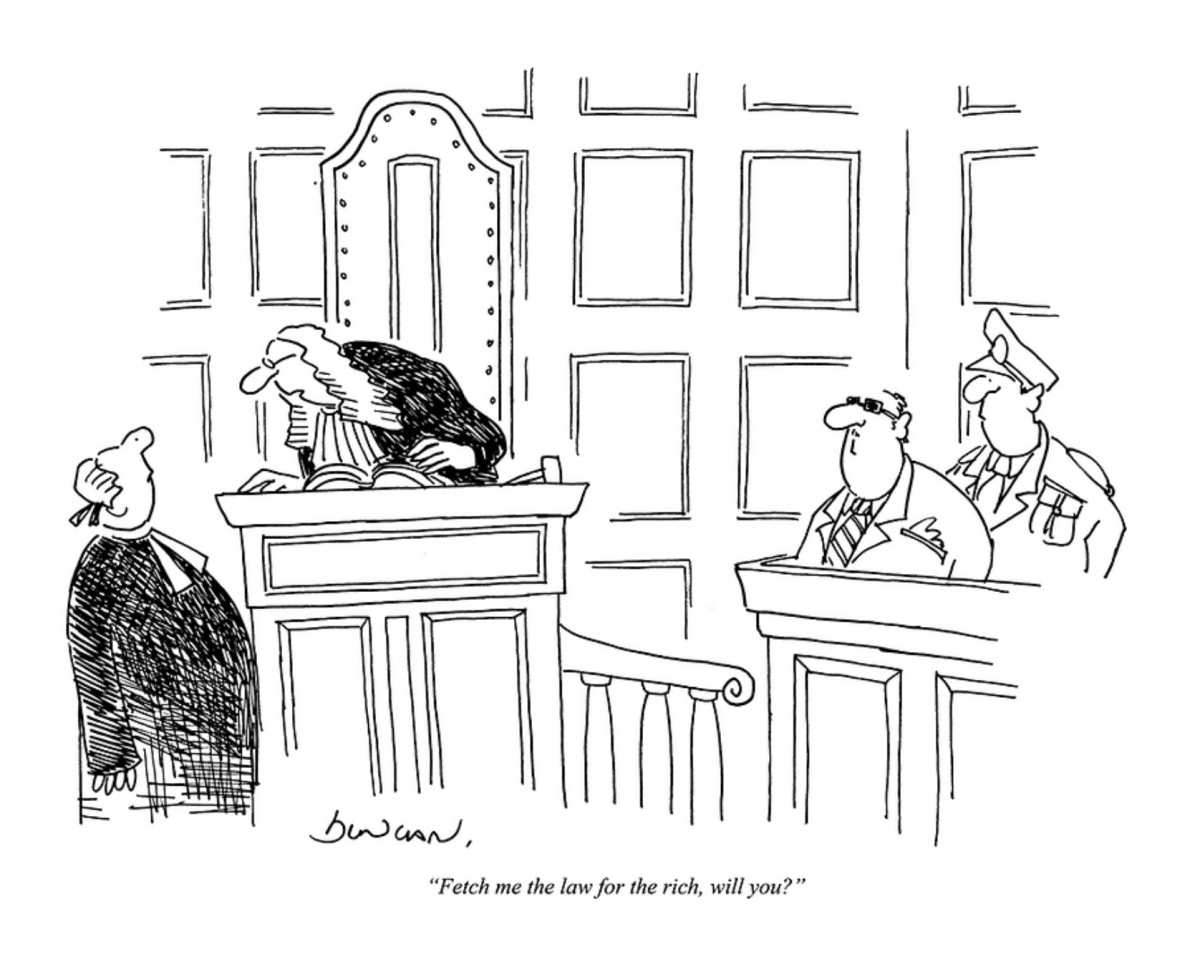
 Family Brief